
How to Collect and Store Morning Glory Seeds
Morning glory, Ipomoea purpurea, is a flowering annual vine for USDA Hardiness Zones 2 to 11. Native to Mexico, it has trumpet-shaped blooms that measure two to three inches across. Colors include blue, pink, purple, and white. Our guide to growing morning glories has all you need to know to.
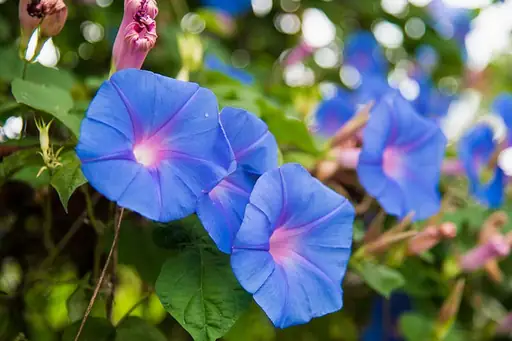
Morning glory, Ipomoea purpurea, is a flowering annual vine for USDA Hardiness Zones 2 to 11.
Native to Mexico, it has trumpet-shaped blooms that measure two to three inches across. Colors include blue, pink, purple, and white.
Our guide to growing morning glories has all you need to know to cultivate I. purpurea at your house.
And our round-up of 15 of the best cultivated varieties of morning glories offers an exciting selection from which to choose.
In this article, we zero in on how to collect and store seeds for the purpose of planting them the following year.
Here’s the lineup:
Collecting and Storing Morning Glory Seeds
- From Flower to Pod
- How to Collect
- Year-Long Storage
This is quick and easy, so let’s jump right in!
From Flower to Pod
A morning glory flower starts out as a slender puffed bud that is folded in a spiral and comes to a soft point at the tip.
It opens into a rounded hexagonal bell-shaped blossom that lasts for one day.
After blooming, the flower closes, folding its edges inward before dropping off the vine.
Photo by Dinkum, Wikimedia Commons, via CC BY-SA.It leaves behind an empty green calyx with flared, pointed tips. To me, it resembles a jewelry setting without a stone.
A seed pod forms inside the empty calyx. It looks like a rounded green bump with a little point on the bottom.
Buds, flowers, and pods may appear simultaneously on the vines.
Gradually, each pod turns brown and papery, and the seeds ripen to brown or black. That’s when they are ready to harvest.
By season’s end, all that remains of the vines are brown withered leaves, stems, and pods.
How to Collect
Morning glory pods often appear in clusters.
Photo by AnRo0002, Wikimedia Commons, via CC BY-SA.Pods that are brown, papery, and break when you touch them are ready to pick.
Here’s the collection process:
- Choose a dry day. If it rained the day before, wait until tomorrow.
- Go into the garden in the late morning, after the dew dries up.
- Hold a bag or container under a pod or cluster of dry brown pods.
Here you have options:
- Snap off entire pods and let them fall into the bag.
- Or, crumble the pods between your fingers and thumb to release the brown/black contents and let everything fall into the bag.
Either way, you’re going to have both seeds and chaff in the bag when you are through collecting.
- Spread the contents of the bag out on a light color sheet or table cloth.
- Crumble unbroken pods to release their contents.
- Keep the seeds and discard the chaff in the garden or on the compost heap.
It’s as simple as that.
In addition to I. purpurea, there are other types of morning glory, including the white night-blooming moonflower, Ipomoea alba.
The harvest and storage process is the same, however the seeds are a light tan, not brown/black, when ripe.
Year-Long Storage
To save your harvest, place the seeds in an airtight container, such as a sealed envelope or baby food jar, and store them in a cool, dark, dry location.
Some folks like to use the crisper drawer of the fridge, where the humidity is lowest, for storage. I sometimes keep mine in the freezer.
The less moisture that penetrates them, the longer they are likely to remain viable.
A Note of Caution
Morning glory seeds are toxic. Do not store them within reach of children, and label their containers to avoid accidental ingestion.
Use the seeds within the next one to three years. After that, viability may decrease.
Glorious Once Again
I like to grow morning glories. Mine are mostly hot pink, with the occasional violet-blue flower.
Believe it or not, here in southeastern Pennsylvania, I planted them five years ago, and they have self-sown and returned every year since.
So why do I collect seeds?
For three reasons:
First, if there’s a really harsh winter, my flowers may not come back.
And third, by collecting them instead of letting them all drop, I can exercise some control over where they grow.
Do you collect and share morning glory seeds? Let us know in the comments section below!
If you found this guide informative, you may want to read these articles about saving flower seeds next:
- How and When to Harvest Sweet Pea Seeds
- How and When to Save Native Perennial Aster Seeds
- How to Harvest Sunflower Seeds
- Facebook98
- X405
問題與討論