
How to Protect Rhododendrons in Winter
Like humans, there are some plants that come alive in the dead of winter and then there are some that need a little something extra to get through the cold months. Rhododendrons, like yours truly, need a little winter consideration. We’re not talking a ton of care. Depending on where you live, it.
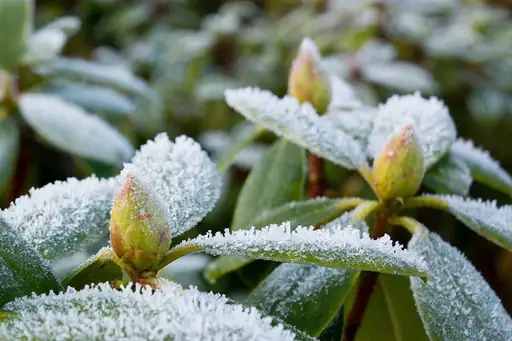
Like humans, there are some plants that come alive in the dead of winter and then there are some that need a little something extra to get through the cold months.
Rhododendrons, like yours truly, need a little winter consideration.
We’re not talking a ton of care. Depending on where you live, it could be as simple as tossing down some mulch and pruning off any broken branches. But in other areas, the process can be a bit more involved.
In our guide to growing rhododendrons, we cover how to cultivate these plants in your landscape.
In this article, we’ll help your rhodies weather the chilly months, though you’ll have to find your own solutions for mustering through the winter blahs – I hear yoga helps. Here’s what’s coming up:
Winter Care for Rhododendrons
- Pruning
- Adjust PH
- Mulch
- Protect During Heavy Snow
Depending on where you live, you might not need to do anything at all when the cold weather arrives. Those in the South or the coastal Pacific areas can just sit back with a mug of hot chocolate and relax.
In areas with occasional heavy freezes or snow, you might just need to head out now and then to provide some temporary protection. But in areas with intense winters, you’ll probably need to be a bit more proactive.
Some rhododendrons (and azaleas, which we’ll cover in more detail in a separate guide), such as the ever-popular hybrid P. J. M. (Rhododendron x ‘P. J. M.’) hardly need any winter care at all.
They’re just naturally winter hardy. Others, like those that are native to warmer regions such as R. calendulaceum, need a lot more love.
By the way, don’t panic if the leaves of your rhododendrons start to curl back and droop during particularly cold weather. This is the plant’s way of protecting itself from evaporation and freezing temps during the winter.
Here are the important things to know:
Pruning
Rhododendrons don’t need a lot of pruning. You can remove leggy branches, which are particularly common on those shrubs grown in full shade. Any shaping should be done in the late spring or early summer after all the blossoms have faded.
But if you receive heavy snow during the winter, there’s a bit more you should do.
Prior to winter, remove any dead or diseased branches. You should also take out any extremely leggy, thin, or protruding branches. These will just crack under the weight of any snow and injure the plant.
Remove any spent flower heads that you missed in the spring or summer. These just weigh the plant down.
Adjust PH
Rhododendrons famously love acidic soil and if you don’t have that naturally, you have to amend the soil regularly to keep it more on the acidic side. Changing soil pH isn’t a one-and-done type of situation. It takes regular upkeep.
Don’t go changing the soil without giving it a quick pH check, though. You can buy affordable meters that will let you know what the pH is.
If you didn’t provide your plants with fertilizer that also acidifies the soil regularly throughout the season, alter the pH before winter but don’t add any nutrients.
You want to make sure this is done prior to the dormant season to set your rhododendrons up for success.
Tiger 90CR Organic Sulfur
Following the manufacturer’s directions, add a bit to amend the soil. Do this again in the spring – you don’t want to alter the soil too much all at once. Make it a regular part of your winter and spring routine.
Mulch
A bit of mulch helps so many different species to survive the winter. It protects the roots from winter’s harsh conditions.
For rhodies in particular, four inches of straw or bark will help your plants survive inclement weather.
Spread the mulch up to the main trunk, but don’t pile the mulch up against the trunk itself. Leave an inch or two of space or you risk introducing disease. Spread the mulch to the drip line.
In the spring, rake the mulch out around the entire garden.
Protect During Heavy Snow
If you live in a mild climate that experiences occasional heavy snow, you should provide a little protection for your rhododendrons to prevent breakage. If it snows regularly, you don’t need to do anything.
Regular snowfall builds up on a plant over time, which allows the branches to bend slowly with the new weight. But occasional heavy snow forces the branches to bend dramatically all at once, which leads to breakage.
Protection involves tossing a blanket, burlap, or a tarp over the plant to provide some structure when the snow comes.
You might also want to place a few tall sticks within the plant to provide some support to the tent. I stick a shovel in the ground and it works like a charm. This cover should be removed as soon as possible after the precipitation dissipates.
If you really want to up the ante, some gardeners opt to build miniature greenhouses for their rhodies.
This isn’t necessary unless you live somewhere that is a bit colder than the region where your plant would typically thrive. For instance, if your rhodie is hardy to USDA Growing Zone 5a and you live in 4b, a little greenhouse might be necessary.
You could place a wooden crate over a small plant or construct a structure out of clear plastic over a wood frame. Be sure to remove the cover as soon as the weather improves.
Keep Old Man Winter from Killing Your Rhododendrons
Rhododendrons provide such a riot of color in the early spring when many other plants are still stretching and yawning after a long winter.
It’s such a shame when they don’t put on their full show, or even worse, are half dead after a particularly dastardly winter.
What troubles have you run into in the past with your rhodies and the cold weather?
Have they suffered from broken branches or a lack of blooms? Or worse yet, have you lost a plant entirely? Share your woes in the comments below so we can discuss how to help in the future.
I hope this guide set you on the right path for growing and caring for these marvelous plants. If so, we have a few guides to winterizing other shrubs that might be useful to you. Check these out:
- How to Overwinter Oleander Shrubs
- How to Protect Camellias from Winter Cold Damage
- How to Care for Cold-Damaged Forsythia
- Facebook50
- X




問題與討論