

此頁面以其原始語言顯示,暫無翻譯版本。
Seedsun 精選
Prunus angustifolia
SKU: PRUN-ANGU-01G
A native plum with a longer human history than any other fruit in North America. Prunus angustifolia, the Chickasaw plum, also called Cherokee plum, sand plum, sandhill plum, or Florida sand plum depending on the part of the range you are standing in, was actively cultivated by Indigenous peoples.
索取客製報價
價格、包裝規格和供貨情況將在您的專屬報價單中確認。發送詢價並不代表您已下單付款。
詢問其適宜性、播種和生長要求。
請在報價單中確認送貨方式和所需文件。
品種介紹
A native plum with a longer human history than any other fruit in North America. Prunus angustifolia, the Chickasaw plum, also called Cherokee plum, sand plum, sandhill plum, or Florida sand plum depending on the part of the range you are standing in, was actively cultivated by Indigenous peoples across the southeastern and central United States long before European contact. The Chickasaw, Cherokee, and several other nations carried the species in their orchards and food gardens, dried the fruit for winter storage, and almost certainly moved the plant eastward through pre-Columbian trade networks from what botanists now believe to be the species' true origin further west. The species was so deeply associated with Indigenous cultivation by the time European naturalists arrived that the binomial angustifolia, narrow leaf, eventually displaced earlier names like P. chicasa in formal taxonomy, though the common names kept the tribal attribution. Kansas made the plant its official state fruit in 2022. Few American native fruits carry their human history this visibly.
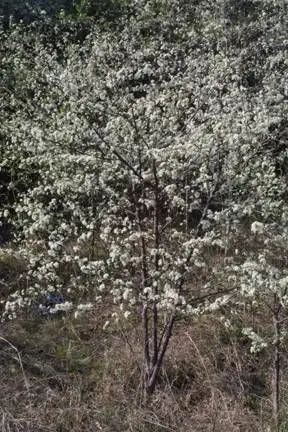
The plant itself is one of the great early-spring trees of the southeastern landscape. From late February through April, well before most other woody plants have leafed out, bare branches erupt into clouds of small white five-petaled flowers, fragrant and swarmed by every emerging pollinator within range. This is one of the most important early nectar sources in the entire eastern flora: the flowers open at the precise moment when overwintering native bees, queen bumble bees, mason bees, and early butterflies emerge from dormancy and need food before almost anything else is blooming. Without early-spring plums and serviceberries, the native bee community has nowhere to go in the gap between the last winter aconites and the first warm-season flowers. Doug Tallamy's research on native-plant ecological value places the genus Prunus in the top tier of woody natives nationwide, and P. angustifolia hosts more than 380 species of butterfly and moth caterpillars, from the coral hairstreak and eastern tiger swallowtail to the cecropia, polyphemus, imperial, and promethea silkmoths, a list that reads like a roll call of the eastern lepidoptera.
The fruit follows in midsummer. Half-inch drupes ripen from yellow to red, cherry-like in color and slightly tart in the flesh, the kind of small wild fruit that needs cooking to come into its own. Generations of southerners have made Chickasaw plum jelly, preserves, pies, and wine; the fruit dries well, cooks beautifully, and carries a flavor that improved-orchard plums have largely lost to commercial breeding. Birds, foxes, raccoons, and box turtles work the ripening fruit hard, which is why most wild stands lose their crop within days of full ripeness, so pick early or share generously.
The plants offered here are seedlings from a particular late-flowering, late-fruiting clone growing in Aiken County, South Carolina. Late timing is meaningful: it shifts the bloom past the worst frost windows, extends the bloom and fruiting periods relative to the species' typical schedule, and gives gardeners a slightly different window of wildlife support and harvest. The parent clone has been observed at for years, and the seedlings carry forward the genetic tendency toward later phenology while introducing the variability needed for good cross-pollination and resilience.
您可能也感興趣



問題與討論