

此頁面以其原始語言顯示,暫無翻譯版本。
Seedsun 精選
Sarcococca hookeriana
SKU: SARC-HOOK-01G
Of all the sweet boxes, Sarcococca hookeriana is the one most gardeners mean when they say the name, the Himalayan sweet box proper, a dense, glossy, suckering evergreen of the boxwood family, Buxaceae, that saves the whole of the year's drama for the dead of winter. The French botanist Henri.
索取客製報價
價格、包裝規格和供貨情況將在您的專屬報價單中確認。發送詢價並不代表您已下單付款。
詢問其適宜性、播種和生長要求。
請在報價單中確認送貨方式和所需文件。
品種介紹
Of all the sweet boxes, Sarcococca hookeriana is the one most gardeners mean when they say the name, the Himalayan sweet box proper, a dense, glossy, suckering evergreen of the boxwood family, Buxaceae, that saves the whole of the year's drama for the dead of winter. The French botanist Henri Baillon described the species in 1859 in his monograph of the box family, and the epithet honors the Hookers of Kew. Most accounts give the credit to Joseph Dalton Hooker, Darwin's close friend, who collected in the Sikkim Himalaya in the late 1840s and later directed the Royal Botanic Gardens, though the name was published while his father William was still at the helm, so the family may fairly share the compliment. The genus name is Greek, sarx for flesh and kokkos for berry, a plain description of the fleshy black fruits that follow the flowers.
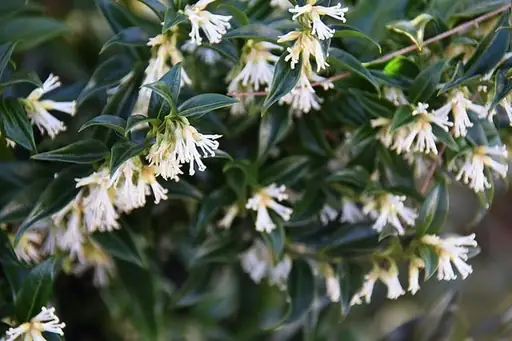
The Himalayan sweet box ranges along the central and eastern Himalaya, from Nepal and Bhutan through northeastern India into southeastern Tibet and the mountains of southwestern China, growing in the cool, humid understory of broadleaf and conifer forest where the light is broken and the soil never fully dries. In that company the shrub makes a rounded thicket of arching stems, three to five feet high and slowly wider, clothed in narrow, tapering, deep green leaves with a lacquered shine. From January into March, tiny petal-less flowers open in the leaf axils, creamy white with a tuft of pale stamens, so small they are easily overlooked until the scent arrives: a sweet, honeyed, faintly vanilla perfume that carries yards on a still mild day and stops people on the path. Glossy black berries ripen behind the flowers and hang on well into spring.
has grown the sweet boxes for decades, the dwarf variety humilis, the narrow-leaved digyna, and an unnamed Yunnan collection among them, but the straight species has been oddly hard to find in American nurseries, where the compact selections crowd the catalogs. This is the true species, taller and looser than the dwarfs, with a fuller arching habit and the same extravagant winter perfume. The plants have proven tough, tidy, and reliably fragrant here in the lower South, where some of the hardier dwarf forms can sulk through a long hot summer.
Across the Himalaya and southwestern China, the sweet boxes carry a long folk-medicine history. In Chinese and ethnic-minority traditions of Guizhou and Yunnan, the roots and stems of Sarcococca have been prepared for stomach pain, rheumatism, swollen sore throat, and the bruises and strains of injury, and Nepalese practice draws on the same genus for fevers and aches. Modern phytochemists have found the reason for the reputation in a remarkable family of pregnane-type steroidal alkaloids. Teams in Karachi and Bielefeld working with Nepalese-collected material isolated hookerianamides that inhibit cholinesterase enzymes and show activity against Leishmania and malaria parasites in the laboratory, and researchers in Guiyang have since described hookerianines and sarchookloides from the roots with cytotoxic activity against cancer cell lines. None of this makes the shrub a home remedy; those same alkaloids are the reason the plant should be admired rather than consumed. Deer leave the leathery leaves alone, and once established the plant shrugs off a dry summer with little complaint.
您可能也感興趣



問題與討論