

此頁面以其原始語言顯示,暫無翻譯版本。
Seedsun 精選
Stewartia sinensis
SKU: STEW-SINE-01G
This small tree of Chinese origin has showy white flowers and fall foliage that is red or reddish, and the smooth whitish trunks with exfoliating bark are an important ornamental feature. In truth the bark is the reason most people plant one. Old stems shed in thin plates to leave a polished,.
索取客製報價
價格、包裝規格和供貨情況將在您的專屬報價單中確認。發送詢價並不代表您已下單付款。
詢問其適宜性、播種和生長要求。
請在報價單中確認送貨方式和所需文件。
品種介紹
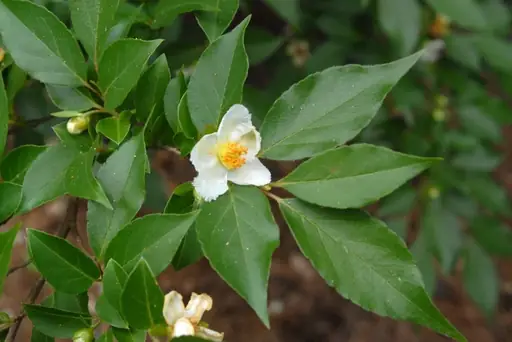
This small tree of Chinese origin has showy white flowers and fall foliage that is red or reddish, and the smooth whitish trunks with exfoliating bark are an important ornamental feature. In truth the bark is the reason most people plant one. Old stems shed in thin plates to leave a polished, mottled surface in cream, buff, and cinnamon that looks best in winter when nothing distracts from it, and improves every year for decades. The flowers arrive in early summer, white and cupped, about two inches across with a central boss of yellow stamens, unmistakably the work of a relative of Camellia. Then autumn brings a clean red. Very few small trees do three distinct things this well.
The tea family connection is not incidental. Stewartia sits in Theaceae alongside Camellia and Franklinia, and the family resemblance runs right through the flower. The genus name honors John Stuart, third Earl of Bute, a patron of botany whose name Linnaeus rendered with a w, and nomenclatural rules have preserved that spelling ever since. Sinensis places this species in China, where it grows in mountain forests, and it is one of a group of Asian stewartias that have proven considerably easier in cultivation than the two American species.
Our propagation stock comes from cuttings taken at Hopelands Gardens, a few minutes from the nursery here in Aiken. Local provenance of that kind is worth more than it sounds: these are cuttings off a tree that has already proven it will grow in this soil and this heat, rather than material shipped in from a cooler climate and hoped for.
Dirr, in his Manual of Woody Landscape Plants, says: "....a delightful small landscape plant that should be more widely used." and: "Hardy to Boston and should be pursued by discriminating gardeners." That second remark is worth attending to, because the cold hardiness surprises people. This is a tree that will grow well north of where the American silky camellia gives up, and it asks less of a gardener in every respect.
A plant for moist but well-drained acidic soil in sun or half shade, reaching fifteen to twenty-five feet. Like the whole genus, this species dislikes root disturbance, so plant young into a permanent position and mulch rather than cultivate around the base. Steady moisture matters, particularly while establishing; a droughty site produces a stunted tree that never develops the bark. Site where the winter trunk will actually be seen, near a path, a drive, or a window, since bark this good is wasted at the back of a border. Underplant with hellebores, epimedium, ferns, or low evergreens that will not compete hard at the surface, and resist the urge to limb up too early. Growth is unhurried and the tree rewards patience.
您可能也感興趣



問題與討論