

Diese Seite wird in ihrer Originalsprache angezeigt. Eine Übersetzung ist noch nicht verfügbar.
Die Seedsun-Auswahl
Aronia arbutifolia 'Brilliantissima'
Artikelnummer: ARON-ARBU-BRIL-01G
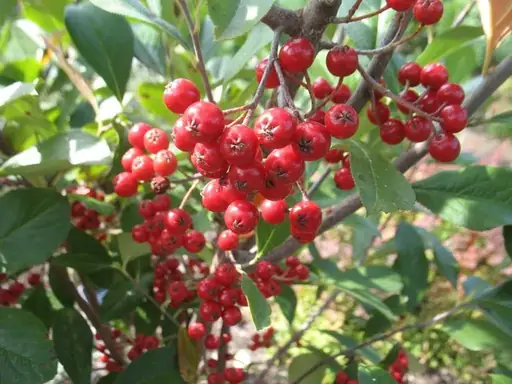
Aronia arbutifolia has grown in the wet woods and pocosins of the eastern United States for a very long time, largely unbothered by the horticultural world's attention. 'Brilliantissima' changed that. Selected for foliage with a deeper gloss and berries of a more saturated, almost lacquered red.
Fordern Sie ein individuelles Angebot an
Preise, Packungsgrößen und Verfügbarkeit werden in Ihrem persönlichen Angebot bestätigt. Mit dem Absenden einer Anfrage wird noch keine Bestellung aufgegeben.
Erkundigen Sie sich nach Eignung, Aussaat- und Anbaubedingungen.
Bitte prüfen Sie die Lieferoptionen und die benötigten Dokumente in Ihrem Angebot.
Über diese Sorte
Aronia arbutifolia has grown in the wet woods and pocosins of the eastern United States for a very long time, largely unbothered by the horticultural world's attention. 'Brilliantissima' changed that. Selected for foliage with a deeper gloss and berries of a more saturated, almost lacquered red than the straight species, this is the form that finally made gardeners look twice at a native shrub long overlooked despite centuries of quiet usefulness.
The season opens in mid spring with clusters of small white flowers, delicate and lace-like, and welcome to native bees at a moment when little else blooms. By midsummer the berries swell and deepen, and by early autumn ripen to a red so intense as to look almost artificial against the leaves. The foliage turns at the same time: the fall color of 'Brilliantissima' is among the more reliable and spectacular events of the native shrub calendar, a deep, burnished crimson that holds for weeks and earns the cultivar name outright.
The berries persist well into winter, by which point the birds have usually found them; cedar waxwings in particular descend in flocks, either a delight or a caveat depending on attachment to the fruit display. Both views are fair.
Aronia arbutifolia tolerates wet soils, adapts to dry ones once established, and asks very little in return for a great deal of seasonal interest. Native, four-season, wildlife-supporting, and genuinely beautiful, a combination still rarer than it should be. The berries are edible, very astringent fresh but good cooked, and exceptionally high in antioxidants.
Es gibt noch mehr zu entdecken



Fragen und Diskussion