

Diese Seite wird in ihrer Originalsprache angezeigt. Eine Übersetzung ist noch nicht verfügbar.
Die Seedsun-Auswahl
Camellia euryoides
Artikelnummer: CAME-EURY-01G
Camellia euryoides offers a quiet counterpoint to the camellias most familiar to American gardeners. Where Camellia japonica and Camellia sasanqua have long defined the genus in cultivation here, those two represent only a sliver of a far broader Asian lineage. C. euryoides, a shrub or small tree.
Fordern Sie ein individuelles Angebot an
Preise, Packungsgrößen und Verfügbarkeit werden in Ihrem persönlichen Angebot bestätigt. Mit dem Absenden einer Anfrage wird noch keine Bestellung aufgegeben.
Erkundigen Sie sich nach Eignung, Aussaat- und Anbaubedingungen.
Bitte prüfen Sie die Lieferoptionen und die benötigten Dokumente in Ihrem Angebot.
Über diese Sorte
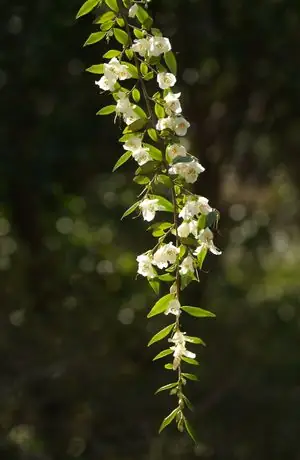
Camellia euryoides offers a quiet counterpoint to the camellias most familiar to American gardeners. Where Camellia japonica and Camellia sasanqua have long defined the genus in cultivation here, those two represent only a sliver of a far broader Asian lineage. C. euryoides, a shrub or small tree of the subtropical forests of Fujian, Guangdong, and Jiangxi, belongs to that richer world of species camellias: subtler, finer in texture, and made for gardeners curious about the genus beyond its showiest forms.
gave the plant the common name Mockorange Camellia, a nod to an unusual character. The small leaves and the profuse, modestly scaled white flowers of early spring read more like a Philadelphus than the bold, lacquered blooms most people expect of a camellia, and one of the real pleasures here is the quiet taxonomic surprise: many visitors do not recognize the shrub as a camellia at all.
The value lies in nuance rather than extravagance. Finer foliage lets the Mockorange Camellia settle naturally into woodland plantings, semi-shaded borders, and gardens where scale and leaf texture are weighed with care, the kind of place a broad-leaved evergreen would feel too heavy or too formal. What the plant gives instead is a restrained evergreen presence through the year, followed by a delicate early-spring flowering that reads with unusual clarity in shade.
Culturally, the Mockorange Camellia asks for what most camellias want: semi-shade, sandy and slightly acidic soil, steady moisture, and a dependable layer of mulch. In those conditions the shrub rewards an attentive gardener twice over, as a lovely evergreen and as a reminder that camellias are far more varied, and far more interesting, than the standard garden palette suggests.
Es gibt noch mehr zu entdecken



Fragen und Diskussion