

The Seedsun selection
Camellia euryoides
SKU: CAME-EURY-01G
Camellia euryoides offers a quiet counterpoint to the camellias most familiar to American gardeners. Where Camellia japonica and Camellia sasanqua have long defined the genus in cultivation here, those two represent only a sliver of a far broader Asian lineage. C. euryoides, a shrub or small tree.
Ask for a tailored quote
Pricing, pack sizes and availability are confirmed in your personal quotation. Sending an enquiry does not place a paid order.
Ask about suitability, sowing and growing requirements.
Confirm delivery options and required documents in your quote.
About this variety
Camellia euryoides offers a quiet counterpoint to the camellias most familiar to American gardeners. Where Camellia japonica and Camellia sasanqua have long defined the genus in cultivation here, those two represent only a sliver of a far broader Asian lineage. C. euryoides, a shrub or small tree of the subtropical forests of Fujian, Guangdong, and Jiangxi, belongs to that richer world of species camellias: subtler, finer in texture, and made for gardeners curious about the genus beyond its showiest forms.
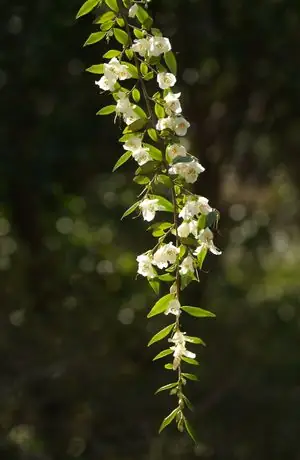
gave the plant the common name Mockorange Camellia, a nod to an unusual character. The small leaves and the profuse, modestly scaled white flowers of early spring read more like a Philadelphus than the bold, lacquered blooms most people expect of a camellia, and one of the real pleasures here is the quiet taxonomic surprise: many visitors do not recognize the shrub as a camellia at all.
The value lies in nuance rather than extravagance. Finer foliage lets the Mockorange Camellia settle naturally into woodland plantings, semi-shaded borders, and gardens where scale and leaf texture are weighed with care, the kind of place a broad-leaved evergreen would feel too heavy or too formal. What the plant gives instead is a restrained evergreen presence through the year, followed by a delicate early-spring flowering that reads with unusual clarity in shade.
Culturally, the Mockorange Camellia asks for what most camellias want: semi-shade, sandy and slightly acidic soil, steady moisture, and a dependable layer of mulch. In those conditions the shrub rewards an attentive gardener twice over, as a lovely evergreen and as a reminder that camellias are far more varied, and far more interesting, than the standard garden palette suggests.
More to discover



Questions & discussion