

Diese Seite wird in ihrer Originalsprache angezeigt. Eine Übersetzung ist noch nicht verfügbar.
Die Seedsun-Auswahl
Alniaria alnifolia
Artikelnummer: ALNI-ALNI-01G
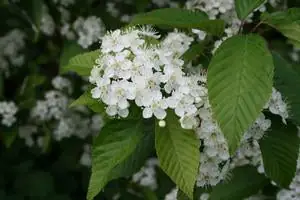
Korean mountain ash is the unusual member of the clan, a deciduous tree from Korea, recently moved by botanists from Sorbus into the genus Alniaria, with simple, finely toothed, alder-like leaves rather than the compound leaves of the familiar mountain ashes. White flower clusters open in May, and.
Fordern Sie ein individuelles Angebot an
Preise, Packungsgrößen und Verfügbarkeit werden in Ihrem persönlichen Angebot bestätigt. Mit dem Absenden einer Anfrage wird noch keine Bestellung aufgegeben.
Erkundigen Sie sich nach Eignung, Aussaat- und Anbaubedingungen.
Bitte prüfen Sie die Lieferoptionen und die benötigten Dokumente in Ihrem Angebot.
Über diese Sorte
Korean mountain ash is the unusual member of the clan, a deciduous tree from Korea, recently moved by botanists from Sorbus into the genus Alniaria, with simple, finely toothed, alder-like leaves rather than the compound leaves of the familiar mountain ashes. White flower clusters open in May, and the fall foliage turns warm shades of orange and red.
The show is the fruit. Showy pink to scarlet berries hang in clusters, and Dirr, in his Manual of Woody Landscape Plants, writes that the fruits "can be spectacular and, during a heavy flowering year, it is the equal of any fruiting tree." The berries draw birds, and the spring flowers feed pollinators.
A word of caution for warm-climate gardeners. Mountain ashes are cool-climate plants, and Dirr calls this species only "a possibility for use in the South (Zone 7-B)," adding that "mountainash and heat, particularly high night temperatures, are diametrically opposed." Best, then, in zones 3 to 7, in full sun to part shade and moist, well-drained soil, as a specimen or in a small grove where the flowers, fruit, and fall color can all be enjoyed.
Es gibt noch mehr zu entdecken



Fragen und Diskussion