
9 of the Best Cold-Hardy Cherry Trees
Baking enthusiasts everywhere would likely agree that cherries are one of the most delicious fruits available to grow at home, and yet, the areas where these lush stone fruits grow well are somewhat limited. Sour cherries, Prunus cerasus, tend to be hardy only to Zone 4 while sweet cherries, P..
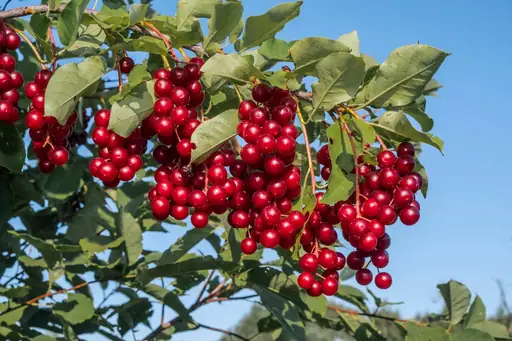
Baking enthusiasts everywhere would likely agree that cherries are one of the most delicious fruits available to grow at home, and yet, the areas where these lush stone fruits grow well are somewhat limited.
Sour cherries, Prunus cerasus, tend to be hardy only to Zone 4 while sweet cherries, P. avium, are generally only hardy to Zone 5.
So what are we cold-climate gardeners to do?
Luckily, we northern gardeners tend to be the stubborn type. While standard sweet cherry trees may not bear fruit in our northern climates, we do have other options.
Stick with me, and I’ll present you with some appetizing alternatives for growing in USDA Hardiness Zones 2 to 4, including options for sweet cherries.
Here’s what I’ll cover:
Best Cold-Hardy Cherry Trees
- Cold-Tolerant Varieties to Choose
- Juliet
- Nanking
- Canada Red Select
- Carmine Jewel
- Romeo
- Western Sand
- English Morello
- Early Richmond
- Montmorency
- Cold Hardy Cherry Comparison Table
Cold-Tolerant Varieties to Choose
If you’d like to successfully grow and harvest cherries in Zones 2, 3, and 4, you’ll have to think outside the box. Or in this case, outside the tree.
Think about your gardening and harvest goals for this fruit. Do you really need your cherries to grow from a tree? What if they grew on a shrub? Or a very small tree?
And would you be satisfied with tart cherries? If what you really want is cherries for preserves and baking (do I see some hands raised?), you will have even more options.
For Zones 2 to 4, let’s consider broadening our definition of “cherries.”
When we think of these fruits we tend to refer to two species of fruiting trees, but there are other options, including dwarf varieties, hybrids, and altogether different species.
These other species also produce fruit called “cherries.” A chokecherry refers to a wild growing tree such as P. virginiana that produces bitter fruit.
All of the plants here are rated hardy for cold climates, so their chill requirements may prevent them from performing well in warmer areas. If you live in a warmer USDA Zone, make sure to choose your cultivars accordingly.
When you want to grow cherries as far north as Alaska, your possibilities include a very sweet hybrid, as well as a couple of totally different Prunus species.
Inhabitants of Zone 2 will want to choose one of the first three options.
Moving out of the frigid temps of Zone 2 to the comparatively balmy climes of Zone 3 opens up a few more possibilities for growing cherries – a couple of hybrids and a distant relative, three more trusted options to add to your list.
For those of you in Zone 4, it’s time to relax and undo the top button of your overcoat – we’re moving on to warmer regions and some traditional sour cherry trees. Cherry lovers in Zone 4, you can consider all the varieties listed below.
1. Juliet
Cultivated to produce fruit in the colder areas of Canada, P. fruticosa x cerasus ‘Juliet’ is a dwarf cherry tree hybrid that combines the cold-hardiness of sour cherries (P. cerasus) with the higher sugar content – and small stature – of the Mongolian cherry (P. fruticosa).
Mongolian cherry (P. fruticosa). Photo by Hermann Schachner via Wikimedia Commons CC0.Offering a prolific harvest in midsummer, this cultivar will grow to six to eight feet tall at maturity with a five- to six-foot spread.
It prefers well-drained soil and is self-pollinating.
‘Juliet’
Because of its hybrid genetics, the fruits from this tree are tart but also extremely sweet, creating a wonderfully complex and deep flavor.
With a higher Brix rating than many sweet varieties, ‘Juliet,’ although technically a sour hybrid, may be your answer to a cold hardy sweet cherry – as long as you don’t mind a tart undertone.
‘Juliet’ produces deep red to purple cherries that are excellent for fresh eating but also for preserving, baking, and freezing.
2. Nanking
Who wants a whole hedge to pick cherries from that’s rated to produce fruit in Zones 2 to 6?
If this sounds like a dream come true, the multi-use P. tomentosa ‘Nanking’ cherry may be the plant you’re looking for.
Also known as downy, hedge, Chinese bush, or Manchu, this shrub will grow to eight to 10 feet tall with a spread of 10 to 15 feet at maturity.
P. tomentosa in fruitPerfect as a windbreak hedgerow when planted en masse, but also charming when used as a specimen plant, ‘Nanking’ adapts to a wide variety of soil types. It thrives in climates with cold winters and hot summers and can handle the occasional drought.
They can also be juiced, or used for baking or preserves.
‘Nanking’
If an early to midsummer crop of fruit in Zone 2 isn’t enough, ‘Nanking’ also has ornamental value in its showy spring flowers, reddish brown bark, and golden fall color.
Truly cold hardy, it’s an early bloomer with frost-tolerant flowers. Be sure to plant more than one shrub – although ‘Nanking’ is self-pollinating, it often fails to set fruit without another nearby.
3. Canada Red Select
P. virginiana ‘Canada Red Select’ is a variety of chokecherry, a shrub or understory tree that was traditionally highly regarded as a food by Native American populations such as the Cheyenne and Blackfoot peoples.
Chokecherries are extremely cold hardy, surviving and thriving in Zones 2 to 7.
Chokecherry covered with ripe berriesThis plant is not picky about its soil, and if a 25-foot-tall tree sounds a little tall for harvesting fruit, don’t worry, it can be pruned to a manageable shrub size or shaped into a small tree.
‘Canada Red Select’
Ripening late, the deep red to black fruits of this US native are very tart but are made more palatable when transformed into a sprightly jelly or wine with the help of a little sugar.
If you’re a fan of all things sour, you might enjoy eating this fruit raw – the flesh is edible without cooking, but pits contain cyanide and should never be eaten.
Does giving chokecherry a spot in your orchard sound like a brilliant idea?
This plant is only partly self-fertile, so make sure you buy more than one.
4. Carmine Jewel
Like ‘Juliet,’ P. fruticosa x cerasus ‘Carmine Jewel’ is a dwarf hybrid tree created from the parentage of sour and Mongolian cherries. This cultivar will flourish in Zones 3 to 8.
‘Carmine Jewel’ tree covered with blossomsA self-pollinator that requires well-drained soil, its small size means that it can be used as an ornamental shrub as well as a fruit-producer.
‘Carmine Jewel’
A heavy producer for its small size, ‘Carmine Jewel’ bears an early harvest of small, deep red cherries that are both tart and sweet. With small pits, the fruits are excellent for all manner of culinary preparations.
5. Romeo
Along with ‘Juliet’ and ‘Carmine Jewel,’ P. x kerrasis ‘Romeo’ is a result of the breeding efforts by the University of Saskatchewan to produce cold hardy sour cherries with a higher sugar content.
Rated hardy in Zones 3 to 7, ‘Romeo’ will yield a mid- to late summer harvest of up to 25 pounds of fruit at maturity.
Best planted in well-drained soil, this dwarf tree will mature to 6-8 feet tall with a spread of five to six feet, and can be treated as a shrub in the landscape.
‘Romeo’
‘Romeo’ produces fruits that are dark, almost black, with small pits. They are excellent for baking, canning, winemaking, and gobbling straight from the tree.
While ‘Romeo’ is self-fruitful, this variety blooms at the same time as ‘Juliet,’ making them excellent companions.
6. Western Sand
Native to the Northern Great Plains, P. pumila var. besseyi ‘Western Sand’ cherry is a cold hardy shrub that will produce a heavy crop of dark fruit with a flavor reminiscent of plums.
Western Sand Cherry via Wikimedia CommonsThriving in Zones 3 to 6, ‘Western Sand’ cherries reach a height and spread of five to six feet at maturity, and can be used as hedges, borders, or specimen plants.
Also known as ‘Rocky Mountain Sand,’ this shrub can be planted in any type of soil and has silver-green foliage that transforms into striking shades of burgundy and purple in autumn.
‘Western Sand’
The early-ripening, dark purple to black fruits of this self-pollinator are sweet with an astringent edge, and can be eaten raw or used to make jellies and pies.
7. English Morello
Grown in Europe since the 1700s, P. cerasus ‘English Morello’ is a self-fertile, naturally dwarf sour cherry tree that produces a late harvest of fruit in Zones 4 to 9.
Espaliered ‘English Morello’ treeWhile it will adapt to all soil types, if given the choice this heirloom prefers rich, well-draining, moist soil.
Without pruning it can reach 15 to 20 feet tall with a spread of 12 to 30 feet at maturity.
‘English Morello’
‘English Morello’ produces juicy, dark red cherries with red flesh and a sour flavor, which can be enjoyed fresh, or turned into beautiful pies or jams. They hold their shape, so will work well for freezing and preserves, too.
8. Early Richmond
An ancient variety, P. cerasus ‘Early Richmond’ has been around since the 1500s. It was so popular in Europe that it was brought to America by English settlers.
This sour cherry tree is adapted to Zones 4 to 8, will thrive in moist to well-drained soil, and is drought tolerant.
‘Early Richmond’ tree in bloomThis self-pollinating variety is semi-dwarf, growing to a mature height of 15 to 18 feet tall with a 12- to 30-foot spread, and will benefit from pruning to keep its delicious fruit within easy reach.
‘Early Richmond’
‘Early Richmond’ produces an abundant, early harvest of tart cherries with light red skins and juicy flesh, great for cooking, baking, and preserving – if you can manage to keep yourself from eating all of them straight off the tree.
9. Montmorency
Developed in the Montmorency Valley in France, the semi-dwarf P. cerasus ‘Montmorency’ cultivar dates back to at least the 17th century and is now the most popular sour variety used in commercial production, due to its adaptability to different growing conditions.
Ripe ‘Montmorency’ fruit on treeAvailable from , ‘Montmorency’ will thrive in Zones 4 to 7 and is easy-going about its soil.
Loamy, well-drained, and sandy soils are all just fine by this cultivar, which will reach a mature height of eight to18 feet and a spread of 10 to 20 feet.
‘Montmorency’
An early producer, ‘Montmorency’ bears fruits that are large and bright red with yellow flesh and clear juice. The cherries from this variety have a rich, tangy flavor, making them excellent for use in baked goods and preserves.
‘Montmorency’ is available from . It is only partly self-fertile, so for a larger harvest you’ll need to plant two or more trees.
Cold Hardy Cherry Comparison Table
| Cultivar | USDA Zones | Height at Maturity | Flavor | Harvest | Self-fertile |
|---|---|---|---|---|---|
| Canada Red Select | 2–7 | 20–25 feet | tart | late | partly |
| Carmine Jewel | 3–8 | 6–7 feet | sweet and tart | early | yes |
| Early Richmond | 4–8 | 15–18 feet | tart | early | yes |
| English Morello | 4–9 | 15–20 feet | tart | late | yes |
| Juliet | 2–7 | 6–8 feet | extremely sweet and tart | midseason | yes |
| Montmorency | 4–7 | 8–18 feet | tart | early | partly |
| Nanking | 2–6 | 8–10 feet | sweet and tart | early to midseason | no |
| Romeo | 3–7 | 6–8 feet | very sweet and tart | early to midseason | yes |
| Western Sand | 3–6 | 5–6 feet | sweet and astringent | early | yes |
Cordial to the Cold
With nine different cold hardy varieties to choose from, it may be time to plan for a cold-climate cherry orchard including a selection of these diverse plants.
Wouldn’t a freezer full of different cherries be just the thing to brighten up a long, cold winter?
Are you feeling tempted by sweet ‘Juliet’ or enchanted by tart ‘Montmorency?’ Let us know in the comments which of these cultivars has your mouth watering – and your botanical interest piqued.
And if planning a cold hardy orchard is what warms you up, you might enjoy taking a peek at our other articles on cold tolerant fruit trees next:
- 7 of the Best Cold Hardy Apricot Trees
- 9 of the Best Cold Hardy Avocado Trees
- 7 of the Best Cold Hardy Fig Trees
- Facebook100
- X




Questions & discussion