
25 of the Best Eggplant Companion Plants
Pairing eggplants with suitable companion plants can improve yields, reduce pest problems, and create a healthier growing environment. If you’re taking an organic approach to gardening, companion planting is an important strategy that will make your other efforts even more effective. The garden.
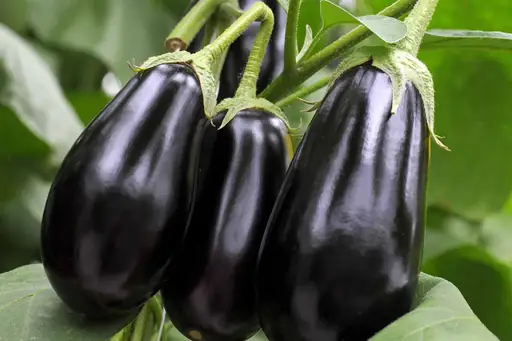
Pairing eggplants with suitable companion plants can improve yields, reduce pest problems, and create a healthier growing environment.
If you’re taking an organic approach to gardening, companion planting is an important strategy that will make your other efforts even more effective.
The garden will look like a festive party when eggplants are grown alongside appropriate herbs, flowers, and other garden veggies, but you’ll know this celebration is all about growing a healthy and abundant crop.
Our guide to growing eggplant has all the details about how to cultivate Solanum melongena in your vegetable garden.
In this article you’ll learn about 25 trusted eggplant companion plants – and three to avoid. Here’s our list:
25 of the Best Eggplant Companion Plants
1. Basil
2. Borage
3. Bush Beans
4. Catnip
5. Bunching Onions
6. Chives
7. Cilantro
8. Clover
9. Comfrey
10. Common Thyme
11. Corn
12. Cosmos
13. Cowpeas
14. Dill
15. Garlic
16. Lettuce
17. Lovage
18. Marigolds
19. Okra
20. Oregano
21. Pole Beans
22. Sesame
23. Sweet Alyssum
24. Sweet Potatoes
25. Zinnias
And Three of the Worst
Choosing the right plant partners can make the difference between a productive, healthy crop and one plagued by pest damage.
That’s because many eggplant companion plants attract beneficial insects, helping to reduce pressure on your crop from pests such as aphids, flea beetles, spider mites, tomato hornworms, and Colorado potato beetles.
Are you as excited about using eggplant companion plants as I am? Let’s get started!
1. Basil
One of the most sublime eggplant garnishes on the plate, basil (Ocimum basilicum) is an aromatic herb that also makes an excellent pairing in the garden.
Basil’s pungent leaves can help to repel some pests, while its tiny flowers will attract beneficial insects that help keep pests in check.
‘Lettuce Leaf’ basil has large, crinkled leaves that are easy to transform into pesto or can be added whole into salads.
‘Lettuce Leaf’ Basil
You can find one-gram packets of ‘Lettuce Leaf’ basil seeds available at .
Learn more about growing basil here.
2. Borage
Borage (Borago officinalis) is an annual with star-shaped blue flowers and fuzzy leaves, both of which are edible and have a mild, cucumber-like flavor.
In addition to being edible, borage serves as an ideal eggplant companion thanks to its ability to attract bees, which are an important pollinator for eggplants.
Borage has wide, spreading leaves which serve as a living mulch, helping to protect the soil and reducing water evaporation.
Borage
Read about growing borage here.
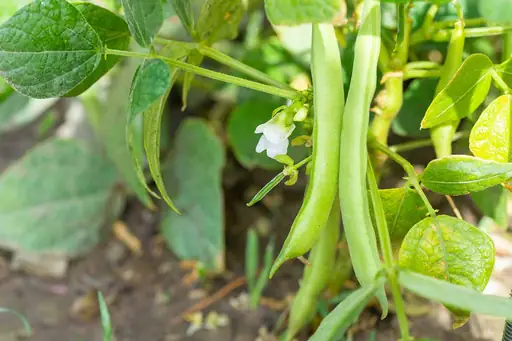
3. Bush Beans
Bush beans (Phaseolus) are annuals that produce pods on small, compact plants.
As members of the legume family, these eggplant companion plants fix nitrogen into the soil, improving soil quality rather than depleting it.
There are many different types of bush beans to choose from – ‘Faraday’ is a haricot vert type that bears delicious, slender pods.
‘Faraday’ Bush Beans
You can find ‘Faraday’ bush bean seeds available from High Mowing Organic Seeds.
Brush up on your bush bean growing skills here.
4. Catnip
Not all eggplant companion plants need to be annuals. Consider catnip (Nepeta cataria).
Grown primarily to provide mind-altering treats for our feline friends, catnip is a perennial herb and the leaves can be used for herbal teas as well.
The strong scent of catnip is also repellent to some insect pests, including flea beetles, making it an excellent eggplant companion plant.
Catnip
Purchase organic catnip seeds in a variety of packet sizes at High Mowing Organic Seeds.
Learn how to grow catnip here.
5. Bunching Onions
Bunching onions (Allium fistulosum) are non-bulbing alliums that are an excellent garden addition if you want to incorporate more perennials into your edible landscape.
And these flavorsome vegetables also serve as powerful eggplant companion plants since they help reduce insect damage by confusing and repelling pests with their strong-smelling stalks.
‘Evergreen Long White’ Bunching Onions
‘Evergreen Long White’ bunching onion seeds are available in a variety of packet sizes from .
Our guide to growing bunching onions has more information.
6. Chives
With slender green stems and a mild onion flavor, chives (Allium schoenoprasum) are perennial garden herbs that can be harvested in a cut-and-come-again style, to add to salads or pasta dishes.
Their sulfur-like aroma repels pests such as aphids, and when their globe-shaped flowers open, they also attract beneficial insects.
Chives
Learn how to grow chives here.
7. Cilantro
With its intense flavor, cilantro (Coriandrum sativum) is known for being a love-it or hate-it type of herb, but it’s unequivocally popular with beneficial insects in the garden.
This annual grows quickly in the cool months of spring, then bolts when the weather warms, producing umbrella shaped flower heads that serve as food and shelter for tiny wasps and other garden friends.
‘Moroccan’ is a type of cilantro that’s fast-growing and quick to bolt, so it’s ready to help beneficial insects defend your eggplant crop even earlier.
‘Moroccan’ Cilantro
Pick up four-gram packets of ‘Moroccan’ cilantro seeds from .
Read our guide to growing cilantro for more information.
8. Clover
Crimson clover (Trifolium incarnatum) is an annual member of the legume family that fixes nitrogen in the soil, usually grown as a cover crop.
It can be grown ahead of eggplant, between rows, or around raised beds.
However, as crimson clover can take over a garden plot, make sure you know how to properly employ cover cropping techniques.
Crimson clover also supplies forage for pollinators with its flowers. It will bloom in 70 to 90 days after sowing.
Ready to start growing crimson clover in your edible landscape?
Crimson Clover
Purchase crimson clovers seeds in a selection of packet sizes at .
9. Comfrey
Related to borage, comfrey (Symphytum officinale) has large, fuzzy leaves and small, bell-shaped flowers.
This perennial is often grown to make a nutrient-dense comfrey tea fertilizer to feed garden plants.
Since it accumulates nutrients in its leaves, it makes a great eggplant companion plant as the decomposing lower leaves return nutrients to the soil.
Comfrey
Check out our guide to growing comfrey.
10. Common Thyme
A low-growing perennial herb with small, fragrant leaves, thyme (Thymus vulgaris) is used for culinary, medicinal, and ornamental purposes.
This drought tolerant plant attracts hoverflies, which are beneficial insects that target aphids. Plus, the strong-smelling foliage can also repel pests.
Consider growing common thyme in a container, and placing it near the eggplant patch to keep your crop healthy.
Common Thyme
You can find common thyme plants and seeds available from .
Our thyme growing guide has all the details.
11. Corn
Perhaps you’ve heard of the traditional three sisters companion planting method of growing corn, beans, and squash together.
Well, there’s another winning combination that’s a variation on that traditional trio – corn, beans, and eggplant.
Growing eggplant with corn (Zea mays) and beans increases the productivity of the garden plot significantly!
‘Fisher’s Earliest’ Sweet Corn
Available in an array of pack sizes, you’ll find organic ‘Fisher’s Earliest’ sweet corn seeds at High Mowing Organic Seeds.
Discover sweet corn growing tips here.
12. Cosmos
With delicate flowers and wispy foliage on tall stems, cosmos (Cosmos) look just as great in the veggie patch as they do in the cottage garden.
Their orange, purple, white, or pink blooms attract pollinators, improving pollination and fruit production, making them perfect eggplant companion plants.
Sensation Mix is a blend of white, lavender, pink, and magenta cosmos blooms. Their flowers have simple petals arranged around yellow centers.
Sensation Mix
You can find packets of Sensation Mix seeds available at .
Learn about growing cosmos here.
13. Cowpeas
Not sure if you know what cowpeas are? If you’re familiar with the Southern US traditional food staple black-eyed peas, then you have eaten cowpeas (Vigna spp.)!
These warm-season, drought tolerant legumes are grown for their edible seeds and pods. Like other legumes, these nitrogen fixers are powerhouses at improving soil fertility.
Just make sure to add the right legume inoculant when you sow if you haven’t grown cowpeas before.
‘Phenomenal’ is a type of cowpea named for its high antioxidant content. Plan for 60 days to maturity for this cowpea.
‘Phenomenal’ Cowpeas
14. Dill
An annual herb from the carrot family, dill (Anethum graveolens) is grown for both its feathery foliage and aromatic seeds.
The leaves are delicious when added to potato salads, while the seeds are a must-have for pickling.
In the garden, dill blooms attract beneficial insects such as ladybugs and parasitic wasps, both of which are predators of common eggplant pests.
Dill is sown in cool weather, and flowers when the days grow warmer – making the timing just right for its umbrella-shaped blooms to attract pollinators, while protecting your eggplant crop.
‘Bouquet’ dill is a productive early cultivar, and is ready to harvest in 40 to 45 days. Just make sure to let some of the plants flower to reap the benefits provided by beneficial insects.
‘Bouquet’ Dill
You’ll find organic ‘Bouquet’ dill seeds for purchase in three-gram packets at .
Learn more about dill here.
15. Garlic
Another member of the allium family closely related to chives, onions, and leeks, garlic (Allium sativum) is grown for its pungent cloves, integral to numerous culinary traditions.
But the same pungency that makes it a useful ingredient also repels a wide range of problematic insects in the garden, including many eggplant pests.
‘Inchelium Red’ is a softneck garlic variety which can be planted in spring to provide its pest repellent services in the garden until harvest in the fall.
‘Inchelium Red’ Garlic
You’ll find half-pound packets of ‘Inchelium Red’ garlic bulbs available at .
Read about growing garlic here.
16. Lettuce
A cool season leafy vegetable, there are many different types of lettuce (Lactuca sativa), some of which are more resilient than others in warmer weather.
Eggplant and lettuce can be good partners since lettuce doesn’t need much room in the garden, and can help serve as a ground cover.
Meanwhile eggplant foliage can help shade the lettuce plants, keeping them cooler in the heat of summer.
‘Nevada’ lettuce is a green leaf variety that stands up to summer heat and has delicious, ruffled leaves. Start harvesting ‘Nevada’ in 55 days.
‘Nevada’ Lettuce
You’ll find organic ‘Nevada’ lettuce seeds available for purchase in a wide assortment of packet sizes at High Mowing Organic Seeds.
Our guide to growing lettuce has more details.
17. Lovage
A member of the carrot family, lovage (Levisticum officinale) is a perennial herb with a flavor somewhat like that of its relative celery, but more intense and rather unique.
Lovage flowers attract a host of beneficial insects, which will help keep pest populations at bay.
Lovage
Read about growing lovage here.
18. Marigolds
Marigolds (Tagetes spp.) are popular annual bedding flowers with bright orange, yellow, or red blooms.
In addition to attracting pollinators and beneficial insects, marigolds emit compounds that repel root-knot nematodes, a destructive underground pest that targets nearly all garden plants.
‘Red Metamorph’ is a type of French marigold that has deep red petals surrounding yellow centers. It produces blooms in 75 to 85 days.
‘Red Metamorph’ Marigolds
Pick up a packet of 36 ‘Red Metamorph’ marigold seeds at .
Read more about how to grow marigolds.
19. Okra
Related to hibiscus, okra (Abelmoschus esculentus) thrives in hot, humid climates, producing pods that can be fried, or added to casseroles and traditional gumbos.
When okra is grown as an eggplant companion plant, overall yields are increased, especially when one okra plant is grown for every three aubergine plants.
Be sure to plant the taller okra plants to the north, to prevent shading out of the eggplants.
‘Clemson Spineless 80’ Okra
You can find okra seeds in an assortment of packet sizes at High Mowing Organic Seeds.
Learn how to grow okra here.
20. Oregano
A classic mediterranean herb, oregano (Origanum vulgare) is a perennial herb with leaves that add earthy flavor to pizzas, pasta sauces, and sandwiches.
Delicious as a seasoning, the pungent foliage of oregano acts as a pest repellent in the garden, while its flowers attract pollinators.
Common Oregano
Find packets of 800 common oregano seeds from .
Our guide to growing oregano has more info.
21. Pole Beans
Like bush beans, pole beans (Phaseolus) can also be grown as eggplant companion plants.
These nitrogen fixers help improve soil quality, and can be trained to climb corn stalks if grown in an alternative three sisters system as described above.
Just be sure to situate these climbing vegetables so that they don’t shade out your aubergine crop, as they both require full sun.
‘Northeaster’ pole beans are one of my favorite short season cultivars, producing buttery tasting, long, flat pods.
‘Northeaster’ Pole Bean
You can find ‘Northeaster’ pole bean seeds available at High Mowing Organic Seeds.
Find tips for growing pole beans here.
22. Sesame
You may not yet realize you can grow your own supply of sesame seeds!
An annual herb grown for its deliciously nutty seeds, sesame (Sesamum indicum) is used to garnish breads, or the seeds are ground into that yummy mediterranean staple, tahini.
When grown with eggplant, sesame is just as helpful at protecting eggplant crops from root-knot nematodes as marigolds.
Sesame
You can pick up a packet of 500 sesame seeds from .
Read our tips for growing sesame here.
23. Sweet Alyssum
Sweet alyssum (Lobularia maritima) is an annual bedding plant with small white, purple, or pink flowers.
It grows into a ground cover, acting as a living mulch to reduce erosion and evaporation, while also providing flowers that tiny beneficial insects love.
If you aren’t sure what color to pick, why not try Allure Pastel Blend which offers a mix of purple, white, and pink flowers.
Allure Pastel Blend Sweet Alyssum
You can purchase packets of Allure Pastel Blend sweet alyssum seeds from .
Learn about planting and growing sweet alyssum here.
24. Sweet Potatoes
Sweet potatoes (Ipomoea batatas) are tubers grown for their delicious flesh that can be transformed into oven baked fries, muffins, or stir fries.
When sweet potatoes are planted at the same time as eggplant, the yield of both crops increases.
‘Vardaman’ is a sweet potato cultivar from Mississippi that produces tubers with deep, red orange flesh.
‘Vardaman’ Sweet Potatoes
‘Vardaman’ sweet potato slips are available in packs of 12 or 25 from .
Read our guide to growing sweet potatoes next.
25. Zinnias
Annual flowers that are just as welcome in the vegetable garden as in the flower border, zinnias (Zinnia spp.) come in both intensely bright hues, as well as pastel tints.
The big blooms attract pollinators such as bees, which are essential to a bountiful crop yield, making these flowers lovely as eggplant companion plants.
One type of zinnia with the biggest blooms is California Giants, which features four- to six-inch flowers in shades orange, pink, purple, red, white, and yellow.
California Giants Blend Zinnias
Purchase two-gram packets of California Giants Blend zinnia seeds at .
Check out our guide to growing zinnias here.
And Three of the Worst
When planning your garden, try to avoid combining eggplant with bell peppers, potatoes, and tomatoes.
The reason is all of these crops are members of the nightshade family, Solanaceae, and they attract the same pests and are susceptible to many of the same diseases.
Tasty Eggplant Pals for the Garden
Now that you have 25 tried and true eggplant companion plants to choose from, you can plan and grow the summer garden with confidence.
While there are a lot in this list, these are by no means the only plant pals that will grow in harmony with eggplant.
Do you have any favorite eggplant companion plants of your own? If you do, let our other readers know in the comments section below! And if you have any questions, post them there as well.
Still looking for more eggplant growing guidance? Be sure to keep reading right here:
- 5 Reasons Your Eggplant Blossoms Are Falling Off
- Eggplant Spacing: How Far Apart to Plant
- How to Grow Eggplant in Containers
- X
Questions & discussion