
11 Essential Greenhouse Supplies to Get Started
Having a greenhouse, big or small, is a game-changer. You can use it to grow all kinds of plants that would never be able to survive in your climate, whether that’s in summer or winter. But the greenhouse structure itself is just the beginning. Once you have yours all set up, you’re going to need.
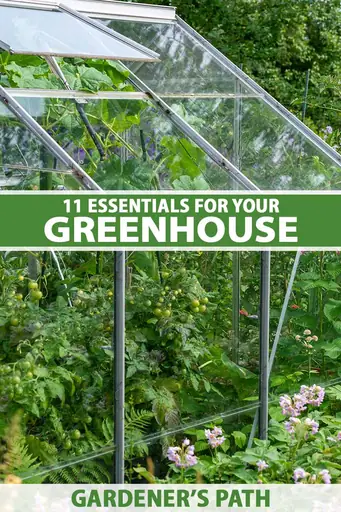
Having a greenhouse, big or small, is a game-changer. You can use it to grow all kinds of plants that would never be able to survive in your climate, whether that’s in summer or winter.
But the greenhouse structure itself is just the beginning. Once you have yours all set up, you’re going to need the right equipment to grow your plants and keep them healthy.
There are a few supplies that you can’t live without, like some sort of container or bed in which to grow the plants. Then there are the nice-to-haves, like seed drills.
Coming up in this guide, here are the supplies we’re going to go over:
Essential Greenhouse Supplies
- Containers, Trays, or Beds
- Flooring
- Garden Tools
- Heating
- Lighting
- Miscellany
- Shade
- Shelving
- Temperature and Humidity Monitoring
- Ventilation or Fans
- Water
Have a pencil and paper ready to make your shopping list? Great, let’s go:
1. Containers, Trays, or Beds
Once you’ve got your structure built, you need somewhere to put your plants. The options here are pretty endless.
You can use pots or trays, either set on the ground or on shelves or tables. Or you can plant directly in the ground or in raised beds. You can even use hanging baskets for some plants.
Depending on what you plan to grow, you’ll need a seed tray (or 20!) to start your seeds.
Heavy Duty 1020 Tray
You absolutely must label your seeds. I can’t count how many times I told myself I would remember what seeds I’d sown or I stuck a piece of paper under the tray, thinking it would last until the seedlings emerged and at that point I could tell them apart.
It never worked, and I finally invested in some plant markers. I don’t know why I waited so long – it’s not like they’re expensive!
Wooden Plant Markers
Anyway, don’t make the same mistake I did. Mark your plants.
If you want to start your plants in individual pots instead of trays, I’m a huge fan of compostable or biodegradable pots.
I especially love CowPots because they’re made of cow manure, which is an endlessly renewable resource.
CowPots Biodegradable Pots
If you opt to grow your plants in a raised bed, has a 12-in-1 system that can be configured in one of 12 different shapes to suit your space.
12-in-1 Galvanized Raised Bed
If you plant in the ground, you need to heap up the soil in rows or hills and create walking space in between.
2. Flooring
Greenhouse flooring doesn’t have to be fancy. You could simply leave the ground bare, but by doing this you run the risk of weeds popping up, pests sneaking in, and big old muddy patches forming.
If you have the time and budget, you’ll never regret putting in some flooring.
You can do something as simple as putting down a thick layer of gravel, but if you can go one step further and level out the gravel and then put matting on top of that, you’ll be in greenhouse heaven.
There are lots of different flooring options out there. You can find custom-made wood slats, rubber mats, or interlocking or roll-out vinyl.
I’ll tell you from experience that choosing mats that allow the water to run through but keep you off the wet ground while offering some anti-fatigue properties are heaven-sent when you are putting in long hours in the greenhouse.
I use – and love – the rubber mats that are made to line horse stalls. They’re incredibly heavy-duty because they’re made to withstand the stomping of a 1,000-pound animal.
They also have an anti-slip texture and holes for drainage. Many of them are made to lock with each other so they won’t separate and slip around.
Redbarn Interlocking Rubber Mats
When they inevitably get dirty from spills or as you drag in mud from outside the greenhouse, you can just hose them off.
Whatever you choose, make sure it can be washed, allows water to drain, won’t become slippery when wet, and is comfortable enough that you can stand on it for hours, if necessary.
If you have mobility issues, take into consideration the ease of moving a wheelchair, cane, or scooter across the material.
Those who have balance issues, or who want to be extra safe, should level the ground underneath the greenhouse before installing any type of flooring.
3. Garden Tools
It’s going to be pretty hard to grow healthy, thriving plants using just your fingers to dig around in the dirt. And let’s not even imagine a greenhouse without some basic pest and disease treatment options.
Of course, you’ll want to consider hand trowels, a shovel or two, rakes, seed drills, dibber, wand, gloves, pruners, and anything else to make your growing life easier.
At a minimum, I have a three-prong cultivator, a trowel, a hand rake, a hori hori, bypass pruners, and a weeder on hand.
You can check out our guide to 13 must-have tools for gardeners for more ideas.
If you do a lot of seed starting and seedling transplanting, find yourself some seedling transplant tongs.
They make transplanting so much easier and reduce the amount of stress on your young plants.
Seedling Transplant Tongs
Also, you should keep an all-purpose pesticide in your gardening toolbox, like an insecticidal soap.
Bonide Insecticidal Super Soap
You should also have a broad-spectrum fungicide on hand. I find that liquid copper tackles the majority of the problems I come across.
Bonide Copper Fungicide
Learn more about greenhouse pests and how to deal with them.
4. Heating
Heating is totally optional. You can grow a whole host of plants through the winter even in an unheated greenhouse.
But if you decide to add heating, it opens a whole new range of options, enabling you to extend your growing season dramatically.
Heating can be in the form of something as simple as plug-in heat mats, a compost pile, a portable heater, or built-in warming lights or fans.
Heater.
It has 1500 watts of power, which is enough to keep a small greenhouse toasty during the colder days.
You can also find solar options that will harness the power of the sun to provide several degrees of additional warmth.
Keep in mind that the effectiveness of your heater depends largely on how thick your greenhouse’s walls are and how airtight it is. A thin layer of plastic will be more challenging to heat than a greenhouse with wood framing and glass windows.
Learn more about how to heat your greenhouse here.
5. Lighting
You might not think you need lighting when you’re working in the greenhouse during the long days of summer, but once the days get shorter, you’re going to need some illumination.
One year, I used a headlamp to help me see what I was doing and it worked fine, but some simple clamp lights worked even better when I tried them the next year. Or you can go big and install overhead fluorescent or LED lights.
Then there is the matter of grow lights. Many of us live in northern or southern latitudes where the days are short for half of the year.
Many plants you want to grow need more hours of sun than nature provides during this time, and that’s where supplemental lighting comes in.
You can’t use grow bulbs as double duty in your ceiling fixtures. Grow lights need to be situated close to the plants that you’re growing.
With a little supplemental lighting, you can grow plants that would otherwise be unavailable to you.
LED Grow Light
Or you can just stick a few grow bulbs into clamp lights to supply a seed tray with enough light to germinate.
LED Full Cycle Grow Light Bulb
Learn more about grow lights in our guide.
6. Miscellany
Depending on what plants you’re growing, there are a few other supplies you might need.
Keep a variety of cleaning cloths around for wiping leaves, cleaning up spills, and handling other messes.
A broom or rake for cleaning the floor and a brush for shelves and tables will also come in handy.
To reduce heat loss at night, invest in some blankets to cover the greenhouse during the cold nights. Not only does this keep the heat inside longer so your plants experience warmer temperatures overall, but it reduces the fluctuation between day and night.
A scoop is also handy if you find yourself filling a lot of containers with soil.
You might also want a seat to take a load off while you’re doing long hours of potting and other work.
Garden Kneeler and Seat
While you can use a trowel, I recently invested in a beautiful wooden seed chute, and it has made planting so much simpler. Seed chutes are little funnel-like tools that allow you to ration the seeds as you put them in or on the soil.
Some have ridges on the bottom and you can run a wood piece along the bottom to create a steady vibration that naturally portions the seeds. It basically eliminates seed waste and the need for thinning.
If you’re growing tomatoes, fruit trees, or berry bushes, keep some baskets around for harvest time. You can only fit so many fruits in your shirt, right?
I used Fiskars’ Harvest Basket this year and it made harvesting much easier. It’s lightweight and has divided sections, so I could put plums in one, pears in another, and apples in the last section.
I could also separate the hottest chilis from the milder ones that looked similar. Don’t want to make that mistake twice!
Fiskars Harvest Basket
7. Shade
If you can’t provide enough ventilation because of the greenhouse material or design, you’ll definitely want to invest in some sort of shading to reduce the temperature of the greenhouse on sweltering hot days.
Shade cloth can be draped over the structure like a blanket to deflect and absorb the sun’s rays.
Shade cloth can be opaque or partially translucent, depending on whether you want to block light completely or just let a little in.
For example, Coolaroo makes black fabric that blocks 30 percent of the sun’s UV light. Cut it into shape and drape it over all or part of the greenhouse when needed.
Shade Cloth
8. Shelving
Okay, now where are you going to put all those containers filled with plants? You could put them in rows on the ground, but shelving can dramatically increase your growing space.
Normally, you don’t want to place tall shelving on the sides of the greenhouse because then you’ll block morning and evening light.
At least avoid going too tall on the south-facing wall. But some waist-height shelves will go a long way toward making it easier to work on your plants, and they’ll increase the amount of growing area you have as well.
Look for shelves or benches with holes so air and water can move through them.
Monticello Workbench System
The bench itself can hold up to 360 pounds, which is important because all that soil can add up to a lot of weight.
Of course, you could always opt for some basic metal shelves.
I use the Amazon Basics three-shelf system because it can hold a lot of weight at 250 pounds per shelf, is rust-resistant, and is just the right height for my needs.
Heavy Duty Shelving Unit
9. Temperature and Humidity Monitoring
If you don’t have heating or fans installed, you might not be able to do much to adjust the temperature beyond opening or closing doors and vents, or maybe rolling some blankets over the building.
But you still need to be able to monitor the temperature in the structure. That way, you can act quickly to protect your plants if it drops below or climbs above a temperature they can tolerate.
At the same time, you probably want to know what the humidity is like. Remember, too much humidity is a quick route to disease-ville.
Digital Hygrometer Thermometer
It will send that info to your phone so you can check what’s going on even when you aren’t out in the garden.
If you’re the kind of person who wears an analog watch and has a clock with a pendulum, this one is going to be perfect for you.
10. Ventilation or Fans
Ventilation is absolutely crucial, and yet it’s one of the things that many people forget.
Plants growing in greenhouses with no or inadequate ventilation are more prone to disease. Fungal diseases, in particular, thrive in humid environments.
If you have a simple structure with single-piece walls that lack windows or vents, it might be as simple as using a floor fan and propping the door open on nice days, or you can go fancier and install overhead fans and vents.
You can grab an automatic vent kit at Shelter Logic.
Automatic Vent Kit
It will open and close according to the temperature in your greenhouse to reduce humidity and adjust the temperature.
You don’t need access to electricity to install a fan as there are solar-powered options out there.
Eco-Worthy Ventilator Fan
11. Water
You can certainly water your plants by hand with a garden hose or watering can.
Depending on how many plants you have, there’s no need to invest in a big, elaborate watering system. It’s the method I and many backyard growers like me use.
You don’t need anything fancy.
Watering Can
I have to admit that your life will be much easier if you invest in a watering system.
Universal Watering System
It hangs from the ceiling and includes a timer for hands-off daily watering.
Stock Your Greenhouse Supplies Toolkit
A greenhouse on its own is just a clear structure without the supplies you need to grow healthy, vibrant plants.
While you don’t need everything on this list, many of them will certainly make your gardening life easier.
Did I miss any tools that you can’t live without? Something you find invaluable for your greenhouse growing? Let us know in the comments section below!
Then, learn new ways to use and expand your greenhouse with the following guides:
- How to Avoid 11 Common Greenhouse Mistakes
- How to Grow Plants Year-Round in an Unheated Greenhouse
- How to Grow Herbs in a Greenhouse
- Facebook10
- X




Questions & discussion