
How to Grow Norfolk Island Pine, Your Living Christmas Tree
Araucaria heterophylla How about bringing an evergreen tree into your home for the holidays, one that you won’t have to put on the curb once the festivities are over? Norfolk Island pine is a living Christmas tree that you can keep as a houseplant and enjoy throughout the seasons, year after year..
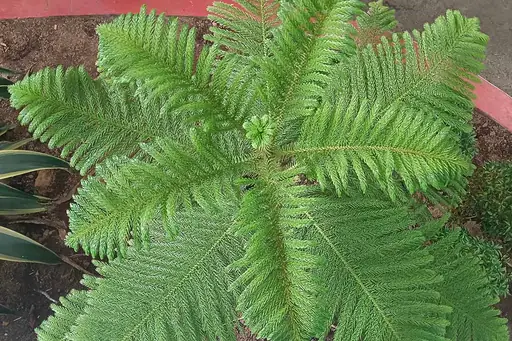
Araucaria heterophylla
How about bringing an evergreen tree into your home for the holidays, one that you won’t have to put on the curb once the festivities are over?
Norfolk Island pine is a living Christmas tree that you can keep as a houseplant and enjoy throughout the seasons, year after year.
My husband and I have one of these trees among our houseplant collection. But this tree narrowly escaped becoming fodder for the compost pile!
I’m going to introduce you to the best care practices for these conifers so you can keep yours green, healthy, and at a manageable size for more than just one holiday season.
And by following these tips, your tree should never have a question mark next to its name on your “To Compost” list.
Here’s what I’ll cover:
What You’ll Learn
Quick Look
How to Grow
Where to Buy
Maintenance
Propagation
Pests and Disease
Araucaria heterophylla, or Norfolk Island pine also goes by the names house pine, star pine, triangle tree, Australian pine, or Polynesian pine.
The other common name you may be most familiar with is “living Christmas tree.”
Quick Look
Common name(s): Norfolk Island pine, Australian, house, star, Polynesian pine, living Christmas tree, triangle tree
Plant type: Evergreen coniferous tree
Hardiness (USDA Zone): 9-11 (outdoors)
Native to: Norfolk Island
Bloom time / season: Evergreen
Exposure: Full sun to partial shade, bright, indirect light
Soil type: Loose, sandy loam, well-draining
Soil pH: 6.1-7.3, slightly acidic to neutral
Growth Rate: 3-6 inches per year (houseplants)
Mature size: 5-8 feet tall by 3-5 feet wide (indoors)
Best uses: Ornamental houseplant, holiday decor, landscaping tree in suitable Zones
Taxonomy
Order: Pinales
Family: Araucariaceae
Genus: Araucaria
Species: Heterophylla
This coniferous tree has a symmetrical form with widely spaced layers of whorled branches held out horizontally from a straight trunk.
Its younger leaves look like needles, while the more mature leaves resemble scales. Both types of leaves can be found growing on the tree at the same time.
Mature leaves on A. heterophylla.Mature leaves are a quarter of an inch long and scale-like. They can be lanceolate or triangular.
Juvenile leaves are half an inch long and may be mistaken for fir or spruce needles.
Juvenile leaves on A. heterophylla. Photo by Kristina Hicks-Hamblin.The foliage has a wonderfully soft and fine texture – except, that is, along the trunk.
The needles that emerge from along the grayish-brown trunk are not to be trifled with, so watch your digits when relocating this conifer!
A new layer of branches emerges from the top of the tree each year. The branches radiate out symmetrically, giving it the classic pyramid-like shape.
When these trees grow outdoors, at about 10 to 15 years old, they start producing large cones that contain edible seeds similar to pine nuts.
Despite the common name, Norfolk Island pines are not true pines.
They are members of the Araucariaceae family, an ancient family of coniferous trees that were widespread throughout the globe when dinosaurs roamed the Earth.
The same events that caused the dinosaurs to go extinct also caused most of the species in this family to perish.
However, 41 known species in this family remain, most of them in the Southern Hemisphere.
They are considered “relicts” or living fossils, since the majority of their relatives are extinct.
The Norfolk Island pine originated on a small island that gives it its name – Norfolk Island, a territory of Australia that is located between Australia, New Zealand, and New Caledonia.
In the US, it can be grown in the landscape in USDA Hardiness Zones 9 to 11.
For those of us who don’t live in such climates, Norfolk Island pine is grown indoors as a houseplant, where it usually maxes out at five to eight feet tall.
How to Grow
These plants are fairly forgiving houseplants as far as care goes.
Choosing a Plant
Some Norfolk Island pines are sprayed with green paint or glitter at the holidays – the time of year they are most widely available.
Photo by Kristine Lofgren.If you want to keep your tree as a long-term houseplant, make sure you purchase one that is in its natural state, sans paint or glitter, which can interfere with the plant’s ability to photosynthesize.
Here are a few other things to look for:
- Inspect plants for signs of pests or disease before purchasing.
- Choose the size that will be best suited to your living space.
- Select speciments without browning or yellowing foliage, or foliage that looks dry or wilted.
Next up, it’s all about giving your new acquisition everything it needs to thrive.
Light
These trees will tolerate full sun to partial shade but when grown indoors they do best with plenty of bright, indirect light.
If you can provide a few hours of direct morning sunlight, followed by bright, indirect light the rest of the day, your tree will be extremely happy.
I have mine situated several feet from a bright south-facing window and also a few feet from a western window.
It seems to be quite tolerant of this position – but during summer, when the light from these two windows is strongest, I use sheer curtains to cover both, making the sun rays more diffused.
The more bright, indirect light you can give your plant, the more this will help to keep its needles a bright green color.
Too much direct sun can result in foliar bleaching – and the needles can take on a yellow hue.
To prevent your plant from growing crooked, give it a quarter turn every week, so that it receives sun from all angles.
If you don’t have a lot of bright light coming into your home, you may need a grow light.
Temperature and Humidity
When kept in average indoor conditions, these plants will do just fine – they prefer a range of 60 to 72°F during the day, and a slightly cooler temperature at night.
Photo by Kristine Lofgren.Humidity needs to be above 50 percent, for best results.
Exposure to temperatures below 35°F can kill the plant.
Just make sure you avoid placing your living Christmas tree in a drafty location, such as near an exterior door or drafty window.
If you give your Norfolk Island pine outdoor time in summer, remember to bring it back indoors when the mercury falls into the 50s.
Soil
Norfolk Island pine can grow in soil with a slightly acidic, neutral, or slightly alkaline pH.
It grows natively in a sandy, chalky loam, and is tolerant of salty soils.
Use a well-draining potting mix that has some sand in it – the sand will help with drainage and provide stability, to prevent the trunk from leaning.
I like Tank’s Pro Coco-Soil Potting Mix for this purpose. It contains coconut coir for drainage and water retention, compost for nutrients, and it is peat-free.
Tank’s Pro Coco-Soil Potting Mix
Water
While living Christmas trees prefer moist soil, they are quite drought tolerant, as my own Norfolk pine can attest to.
After a stressful move one year, my plant was neglected and it was not watered for (I’m ashamed to say) at least two summer months, if not longer.
Its needles started to turn brown – including those of its growing tip – and my husband and I both thought it was a goner.
Photo by Kristina Hicks-Hamblin.But before we relegated it to the compost pile, we decided to see if we could revive it. And amazingly, it rallied! It soon began putting out new, bright green foliage and looking quite happy and undaunted.
As a rule of thumb, water when the top inch of soil feels dry. These plants prefer moist but not soggy soil.
When it’s time to water, pour water evenly over the soil until it begins to run out of the bottom of the pot.
Younger plants will need more frequent watering than more mature trees.
If you’re not sure if you’re watering enough, look out for browning on the tips of branches – this often means the plant is being underwatered.
And once the days start to cool and winter arrives, your Norfolk pine should require water less frequently.
Find more watering tips here.
Fertilizer
Fertilizing twice a year is plenty to provide your plant with the nutrients it needs.
You can use a general-purpose houseplant fertilizer and apply during the growing season.
Or you can take a more natural, organic approach, like I do, by using worm compost tea to fertilize your plant. You can make your own worm compost tea from your worm castings.
TeaDrops are tea packets containing dry worm compost that are ready to use.
TeaDrops Organic Houseplant Fertilizer
Where to Buy
These plants are available to purchase in a range of sizes, from table-top to floor sized.
When purchasing one of these festive conifers, keep in mind that the more outdoor time and fertilizer you give them, and the more often you repot them, the faster they will grow – and choose your size accordingly.
Norfolk Island Pine
Maintenance
Norfolk Island pines are truly low maintenance.
The branches of these trees aren’t as sturdy as those of a Fraser fir, and won’t stand up well to a heavy load of decorations.
So if you are hanging ornaments, limit them to those that are lightweight. Bows, ribbons, and lightweight glass ornaments make good choices.
Photo by Kristina Hicks-Hamblin.The lower branches will turn brown and die as these plants grow. This is a normal process – you can remove them with a pair of garden snips or pruners.
However, it’s best to avoid pruning green growth since this can as it can affect the overall shape of the tree.
Your choice to repot this plant – or not – will contribute to how quickly it grows, and the size it ultimately attains.
If you’re hoping for a huge tree to make an impact in a large space, repot your Norfolk Island pine every year or two, moving it up to the next sized pot.
But if you want it to stay relatively small, just refresh the soil and keep it in the same size pot.
Propagation
Most of us will purchase a sapling from the nursery, but if you want to give propagating this plant a try, you have a few different options.
Photo by Kristine Lofgren.You can grow clones from cuttings, air layering, or start new plants from seeds.
Read our full guide to propagating Norfolk Island pines here.
Pests and Disease
Part of a living Christmas tree’s no-drama care routine is that it isn’t very susceptible to pests or disease.
However, it’s good to be on the lookout for certain insects and pathogens – just in case.
Pests
While insects may never be a problem for your plant, here are the most common ones to be aware of:
Mealybugs
Mealybugs are a frequent pest of houseplants and they can, on occasion, attack your Norfolk Island pine just like they can infest your succulents.
Mealybugs appear with a telltale white, cottony appearance on the branches. They attach and suck nutrients from the tree, which can lead to weakened growth.
You can control a small infestation by rubbing away the pests with a paper towel damped with rubbing alcohol.
For more severe problems, neem oil can be used. Follow the manufacturer’s directions for applying this product.
Monterey Neem Oil
Read more about fighting a mealybug infestation here.
Scale
Scale looks like raised brown spots on your plant. These pests suck nutrients from your houseplants, weakening them and eventually killing them.
To treat scale, you can use the same technique as described for mealybugs – depending on the severity of the infestation, either use rubbing alcohol or apply neem oil.
Find more tips on combating scale insects here.
Spider Mites
Spider mites tend to be more of a problem in winter when the air is dry.
You may notice dappled yellow spots on the foliage. In the case of severe infestations, you’ll see webs, but probably not the pests themselves as they are tiny.
To treat a spider mite problem, first wipe them away with a damp paper towel. Then treat as needed with neem oil.
Learn more about controlling spider mites here.
Disease
With good care, you are unlikely to encounter disease in your living Christmas tree. If you notice any discoloration in your plant’s foliage, here are a few problems to look for:
Anthracnose
Anthracnose is caused by a fungal pathogen, Colletotrichum derridis.
Symptoms include notice dead needles and black areas on the needles, which is the fungus itself.
Fungi thrive in damp conditions, so make sure to water at the soil level – not overhead.
And if you mist the foliage, do this in the morning so that water doesn’t collect over night when temperatures are cooler.
Neem oil can be used to treat anthracnose.
Root Rot
Some of the signs of root rot include stunting, wilting, and dying branches.
If you have a Norfolk Island pine that is growing in soil that drains poorly, in a pot without drainage holes, or if you simply gave it a little too much love (i.e. water), root rot might be a problem.
To treat root rot, correct whatever is going on:
If the soil doesn’t drain well, replace the soil. If the pot has no drainage holes, switch out your pot.
While repotting, you can trim off any rotting roots from your plant – just remember to use sterilized pruners for this operation.
Learn more about root rot here.
Your Keeper Christmas Tree
You should now be well-prepared to keep your living Christmas tree happy and healthy year round.
Just remember to give it lots of bright but indirect light, make sure its soil is well-draining, and keep it moist but not soggy.
What about you? Do you have a beloved Norfolk pine in your home? What’s the story behind your tree? Let us know in the comments section below, and feel free to share a picture!
If you love adding houseplants to your home at the holidays, here are a few more guides that might be helpful:
- How to Grow and Care for Poinsettia Plants
- How to Grow and Care for Christmas Cactus
- How to Grow and Care for Amaryllis Flowers
- Facebook198
- X




Questions & discussion