
How to grow caraway
Seed to Harvest Herb Guide How to grow caraway A practical guide to establishing biennial caraway, carrying its rosette through winter, supporting second-year flowers, and harvesting aromatic seed. Plan for two seasonsProtect the first-year rosetteGather seed before it drops Shop caraway seed.
Seed to Harvest Herb Guide
How to grow caraway
A practical guide to establishing biennial caraway, carrying its rosette through winter, supporting second-year flowers, and harvesting aromatic seed.
Plan for two seasonsProtect the first-year rosetteGather seed before it drops Shop caraway seed →Start the guide ↓ Life cycleBiennialSeed in year twoSow depth1/4 inchDirect sow preferredLightFull sunLight shade toleratedSpacing8–12 inchesThin the rosetteSeed harvestSecond summerWhen umbels brownBefore you begin
Caraway trades a quick harvest for a flavorful second-year seed crop.
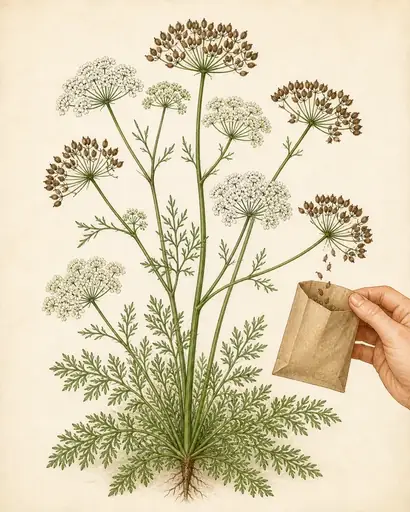
Common caraway usually forms a low rosette and edible taproot in its first season, survives winter, then sends up furrowed stems, delicate white umbels, and aromatic curved seed in year two.
Best first decisionChoose a well-drained site that can remain undisturbed through winter. Mark the row so the dormant rosettes are not accidentally cultivated.Caraway at a glance
The two-season path from seed to spice
Select any milestone to jump directly to its full instructions.
01Sow1/4 inch02Thin8–12 inches03RosetteYear one04OverwinterKeep drained05FlowerYear two06HarvestBrown umbelsEstablishment
Direct sow shallowly and leave the taproot undisturbed
Caraway can be sown in spring or late summer where winters are suitable, but it needs time to establish a sturdy rosette before hard cold.
01Prepare a lasting site
Choose full sun and loose, moderately fertile soil that drains well in winter.
- Aim for pH about 6.0–7.5.
- Avoid waterlogged low spots.
- Mark the biennial row clearly.
Sow about 1/4 inch deep
Cover lightly, firm the seedbed, and maintain even moisture. Germination often takes about 7–21 days.
Direct sow is preferredTransplanting can disturb the developing taproot; if necessary, move biodegradable pots while plants are young. 03Thin the rosettes
Snip extras to leave plants 8–12 inches apart and keep weeds from overtaking slow young growth.
- Water after thinning.
- Mulch lightly after soil cools.
- Do not bury the crown.
Year one to year two
Carry healthy crowns through winter and into bloom
Even growth in the first season builds the reserves that support flowering and seed production after vernalization.
WWater consistently
Keep establishing plants evenly moist, then water when the upper soil dries without saturating the crown.
DProtect drainage
Winter wet is more dangerous than cold in many gardens; keep mulch loose and away from the crown.
CControl weeds
Weed shallowly around the rosette so competing roots do not reduce first-year reserves.
SSupport flower stems
Stake loosely in exposed sites once second-year stems and umbels begin to rise.
Growth checkpoints
Follow caraway across both growing seasons.
Rosette health, winter survival, and umbel color are the clearest milestones.
7–21 daysSeedlings emerge
Fine young foliage appears across an evenly moist seedbed.
First seasonRosette expands
Low, finely divided leaves feed the thickening taproot and crown.
Second springStems and flowers rise
Furrowed stems branch into delicate white compound umbels.
Second summerSeed heads brown
Curved ridged fruits darken and begin loosening from drying umbels.
Text-only diagnostics
Diagnose caraway problems early
Match the symptom, then open the card for prevention and the next practical action.
EstablishmentPoor or patchy germinationFew seedlings after three weeks or gaps in the rowShallow seed can dry or crust over. Re-sow into a fibed, cover lightly, and maintain gentle, even moisture.
Winter injuryRosette or crown rotSoft dark crowns and plants that fail to regrowImprove drainage, pull mulch away from crowns, and avoid planting in low areas that remain wet during dormancy.
PestAphidsCurled tips, sticky growth, or colonies on flower stemsRinse colonies with water, conserve beneficial insects, and inspect umbels before seed begins to mature.
MaturitySeed shatterRipe fruits drop before the whole umbel is brownCut umbels when most fruits are brown but still attached, then finish drying them inside paper bags.
Second-year harvest
Cut browning umbels before the seed scatters
Caraway fruits ripen unevenly, so inspect plants often and harvest mature heads in more than one pass.
- Watch: Wait until most fruits on an umbel turn brown and smell strongly aromatic.
- Cut: Clip heads on a dry morning before the loosest seed falls.
- Dry: Place heads in paper bags, finish drying in airflow, then rub, winnow, and store airtight.
Urban Farmer’s current caraway offering
Grow classic common caraway
This biennial develops finely cut leaves, delicate white flowers, edible roots, and uniquely flavored seed for baking and preserving.
Classic biennial spice herbCommon CarawayA furrowed-stem plant grown for its aromatic curved seed, edible flowers, leaves, and first-year root.Shop Common Caraway →Questions herb gardeners ask
Caraway growing FAQ
Quick answers for sowing, overwintering, flowering, seed harvest, and storage.
Is caraway an annual or biennial?Common caraway is usually biennial: it grows a rosette in year one and flowers and sets seed in year two.
When should caraway be planted?Sow in spring, or in late summer where plants have time to establish before winter and local conditions favor overwintering.
How deep should caraway seed be planted?Sow about 1/4 inch deep, firm lightly, and keep the shallow seed zone evenly moist.
How long does caraway take to germinate?Seed often emerges in about 7–21 days depending on temperature, moisture, and seedbed conditions.
How far apart should caraway plants be?Thin established seedlings to approximately 8–12 inches apart.
Can caraway be transplanted?Direct sowing is preferred because of its taproot. If transplanting, use biodegradable pots and move plants while young.
Can caraway grow in a container?Yes, if the container is deep, drains well, and can remain outdoors in suitable winter conditions for vernalization.
Does caraway need full sun?Full sun produces strong stems and seed crops, though light shade is tolerated.
Will caraway flower the first year?Usually not. It normally needs winter cold after forming a first-year rosette before flowering.
How can I tell when caraway seed is ready?The fruits turn brown, become strongly aromatic, and loosen from drying umbels.
How should caraway seed be dried and stored?Finish drying cut umbels in paper bags, separate the seed, and store it completely dry in an airtight container.
Which parts of caraway are edible?The aromatic fruits commonly called seeds are the main crop; young leaves, flowers, and the first-year root are also edible.
Ready to plant?
Grow aromatic caraway from seed.
Establish a healthy first-year rosette, then gather fragrant seed from white second-year umbels.
Shop caraway seed →



Questions & discussion