
How to grow comfrey
Seed to Harvest Herb Guide How to grow comfrey A practical guide to germinating true comfrey, placing its permanent crown, building a vigorous perennial clump, harvesting leaves for garden use, and managing spread. Expect slow, low germinationChoose a permanent siteCut leaves after establishment.
Seed to Harvest Herb Guide
How to grow comfrey
A practical guide to germinating true comfrey, placing its permanent crown, building a vigorous perennial clump, harvesting leaves for garden use, and managing spread.
Expect slow, low germinationChoose a permanent siteCut leaves after establishment Shop comfrey seed →Start the guide ↓ Life cycleHardy perennialDeep, persistent crownGerminationAbout 25%Often 3–4 weeksLightSun to part shadeMoist, drained soilSpacing24–36 inches36–48 inches tallLeaf harvestAfter establishmentGarden mulch or compostBefore you begin
Comfrey is easy to keep—but difficult to move.
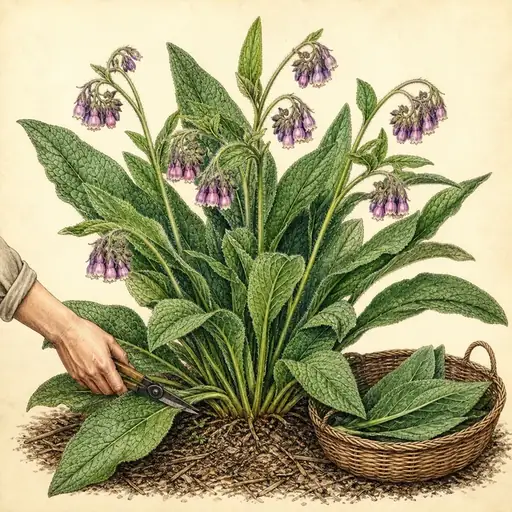
True comfrey is a large, long-lived clumping perennial with deep roots, coarse leaves, and pollinator-friendly bell flowers. Root fragments can regrow, and seed-grown true comfrey may self-sow.
Best first decisionPlace it in a permanent corner with room for a 3–4 foot clump, away from beds that will be frequently redesigned or cultivated.Comfrey at a glance
The path from patient germination to perennial leaf harvests
Select any milestone to jump directly to its full instructions.
01ChillImprove dormancy break02SowPatient germination03PlantPermanent site04EstablishDeep crown05FlowerPollinator bells06CutGarden-use leavesEstablishment
Use cold treatment and allow extra seed for a low-germination crop
True comfrey seed naturally germinates at a low percentage. Cold-moist pretreatment and patience improve the chance of a useful stand.
01Cold-treat the seed
Mix seed with barely moist medium and refrigerate for about 4–6 weeks, or sow outdoors in fall for natural winter chilling.
- Label the seed clearly.
- Keep medium damp, not wet.
- Sow more than the final count needed.
Sow shallowly and wait
Cover about 1/8–1/4 inch and maintain even moisture. Germination may take 3–4 weeks and average only about 25%.
Do not discard trays too soonSeedlings can emerge irregularly; keep viable-looking trays moist and bright beyond the first sprouts. 03Plant the final position
Harden seedlings and space them 24–36 inches apart in deep, well-drained soil with sun or partial shade.
- Keep the crown at soil level.
- Water deeply after planting.
- Mark the permanent clump.
Ongoing care
Build the crown before taking heavy leaf cuts
Young comfrey needs steady establishment; mature plants become drought tolerant but recover faster with moisture after cutting.
WWater deeply
Keep new plants evenly moist, then water mature crowns during extended drought or after heavy cutting.
SKeep space open
Allow airflow around the broad leaves and prevent the mature clump from shading small crops.
FManage flowers
Leave some bells for pollinators or remove fading stems before true comfrey scatters unwanted seed.
RAvoid root chopping
Digging can spread persistent root fragments; remove the entire crown only with careful, repeated follow-up.
Growth checkpoints
Follow germination, crown growth, bloom, and recovery.
Crown size and new leaf production determine when harvest is appropriate.
3–4 weeksIrregular seedlings
A minority of chilled seed may emerge over an extended period.
First seasonCrown establishes
Broad rough leaves expand while deep roots build reserves.
Mature clumpBell flowers open
Nodding violet-pink clusters attract bees and other pollinators.
After cuttingNew leaves return
A healthy crown produces fresh growth when moisture is adequate.
Text-only diagnostics
Diagnose comfrey problems early
Match the symptom, then open the card for prevention and the next practical action.
GerminationVery few seedlingsOnly a small share of seed sprouts after several weeksLow germination is normal. Cold-treat seed, sow extra, maintain moisture for 3–4 weeks or longer, and avoid discarding trays early.
Leaf diseaseRust or powdery mildewOrange pustules or pale powdery patches spread on leavesImprove airflow, water at the base, remove badly affected foliage, and avoid leaving cut debris around the crown.
PestSlugs or snailsRagged holes and slime trails on new growthInspect after dark, remove damp hiding places near crowns, handpick pests, and protect tender regrowth after cutting.
PersistenceUnwanted regrowth or seedlingsNew plants return from root fragments or dropped seedDeadhead before seed ripens, avoid chopping roots, and repeatedly remove regrowth while exhausting missed fragments.
Established-clump harvest
Cut outer leaves for mulch and compost
Let first-year plants build strong roots before removing much foliage. Mature clumps can supply repeated garden-use cuts.
- Choose: Harvest vigorous outer leaves from an established, actively growing crown.
- Cut: Wear gloves and cut near the base without injuring the central crown.
- Use: Apply leaves as garden mulch or add them in balanced amounts to compost.
Urban Farmer’s current comfrey offering
Grow seed-producing true comfrey
This hardy, drought-tolerant clumping perennial grows 36–48 inches tall, attracts pollinators, and supplies leaves for garden mulch and compost.
Large permanent perennialTrue ComfreyA broad-leaved flowering clump for sun to partial shade, with naturally low and slow seed germination.Shop True Comfrey →Questions herb gardeners ask
Comfrey growing FAQ
Quick answers for germination, cold treatment, placement, harvest, spread, and safety.
Is comfrey an annual or perennial?True comfrey is a hardy, long-lived perennial that regrows from a deep persistent crown.
Why is comfrey germination low?Comfrey seed is naturally dormant and may average around 25% germination even with careful treatment.
Does comfrey seed need cold stratification?Four to six weeks of cold-moist treatment, or fall sowing outdoors, can improve dormancy break.
How deep should comfrey seed be planted?Sow shallowly, about 1/8–1/4 inch deep, and keep the medium evenly moist.
How long does comfrey take to germinate?Seed may take 3–4 weeks or longer and can emerge irregularly.
How far apart should comfrey plants be?Allow approximately 24–36 inches because mature clumps reach 36–48 inches tall and wide.
Does comfrey need full sun?It grows in full sun to partial shade, with best leaf production in fertile, moist but well-drained soil.
Can comfrey grow in a container?It can grow temporarily in a very large deep container, but its vigorous permanent root system is better suited to an intentional in-ground site.
When can comfrey leaves be harvested?Wait until the crown is well established, generally avoiding heavy cuts during the first season.
How are comfrey leaves used in the garden?They can be applied as mulch or added in balanced amounts to compost after cutting.
Will true comfrey spread?Yes. It can self-sow and regrow from root fragments left after digging.
Is comfrey safe to eat?Comfrey contains pyrrolizidine alkaloids and this guide does not recommend internal use. Follow current professional and regulatory safety guidance.
Ready to plant?
Establish a permanent comfrey clump.
Grow broad leaves for garden mulch and compost while supporting pollinators with nodding flowers.
Shop comfrey seed →



Questions & discussion