
How to grow kohlrabi
Seed to Harvest Growing Guide How to grow kohlrabi Grow crisp, mild kohlrabi by planting in cool weather, spacing plants for rapid growth, keeping moisture even, and harvesting the swollen stem before it becomes woody. Cool-season crop for spring and fallHarvest at 2–3 inches for tendernessEat the.
Seed to Harvest Growing Guide
How to grow kohlrabi
Grow crisp, mild kohlrabi by planting in cool weather, spacing plants for rapid growth, keeping moisture even, and harvesting the swollen stem before it becomes woody.
Cool-season crop for spring and fallHarvest at 2–3 inches for tendernessEat the swollen stem and leaves Shop kohlrabi seed →Start the guide ↓ Crop family: Brassicaceae SeasonCool seasonSpring and fallDepth¼–½ inchDirect sow or transplantSunFull sunLight shade in heatSpacing4–6 inchesRows 12–18 inchesHarvest45–60 daysAt 2–3 inches wideBefore you begin
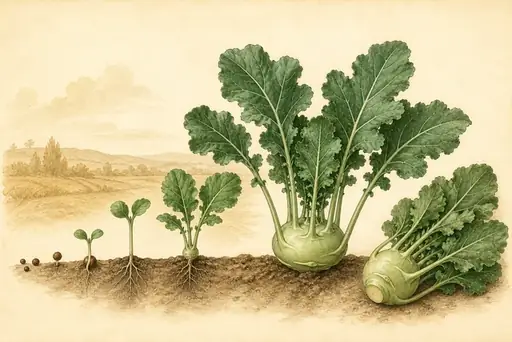
Kohlrabi is an enlarged stem—not a root.
The round edible portion develops above the soil line with leaves emerging like spokes. Rapid, uninterrupted growth produces the mildest flavor and crispest texture.
Best first decisionPlan for cool weather. Extended heat encourages tough, woody stems, while prolonged cold below about 45°F can trigger bolting.Build your kohlrabi growing plan
Match the planting window, bed space, seed quantity, and succession dates.
Small sowings every two to three weeks can extend a cool-season harvest.
When to plant kohlrabiFind your local cool-season windowUse your ZIP code to compare spring and fall planting opportunities.Check kohlrabi timing →Lay out the rowPlan compact spacingReserve fertile soil, full sun, irrigation access, and room for successive sowings.Plan the kohlrabi bed →How much seedCalculate seed quantityEstimate seed from row length and 4–6-inch final spacing.Calculate kohlrabi seed →Keep harvests comingPlan succession sowingsSchedule small plantings two to three weeks apart while weather remains cool.Plan succession dates →Kohlrabi at a glance
The path from seed to harvest
Select a milestone to jump to the full instructions.
01PlanCool seasons02Sow¼–½ inch deep03Plant4–6 inches apart04GrowFast and steady05ProtectScout weekly06Harvest2–3 inches wideStages 1–3
Plant for quick growth in cool weather
Kohlrabi can be direct sown or transplanted. Avoid severe cold, crowding, and a harvest period dominated by summer heat.
01Prepare fertile, well-drained soil
Choose full sun and incorporate compost according to soil needs.
- Spring crops can begin 1–2 weeks before the last frost.
- For fall, count back about 50–60 days from the desired harvest.
- Use light shade for young seedlings during hot late-summer starts.
Sow ¼–½ inch deep
Direct sow thinly or start transplants 5–6 weeks before setting out. Keep the seedbed moist through emergence.
Transplant targetSet out sturdy plants with 4–6 mature leaves and a well-developed but not root-bound root system. 03Thin to final spacing
Space most plants 4–6 inches apart with rows about 12–18 inches apart.
- Thin when plants have 3–4 true leaves.
- Transplant thinnings promptly or eat them as tender greens.
- Keep the swollen stem above the soil line.
- Use row cover early against flea beetles and caterpillars.
Stage 4
Keep growth fast, cool, and uninterrupted
Shallow roots make kohlrabi sensitive to moisture stress. Consistency is the difference between crisp stems and woody ones.
WWater
Supply about 1–2 inches weekly, adjusted for soil and rain. Prevent repeated wet-dry swings.
FFeed
Use a soil test. Side-dress lightly about three weeks after thinning if growth is pale or slow.
MMulch
Mulch after establishment to cool soil, conserve moisture, and suppress weeds.
SScout
Check leaf undersides and growing points weekly for pests and disease symptoms.
Growth checkpoints
Know what to watch for.
Harvest quality depends on steady development rather than maximum size.
3–4 true leavesThin plants
Create the final 4–6-inch spacing before stems begin enlarging.
Stem begins swellingHold moisture steady
Prevent stress while the edible stem expands above the soil.
About 1 inch wideBegin harvest checks
Early stems are especially mild and crisp.
2–3 inches wideHarvest promptly
Do not wait for oversized stems to become fibrous.
Stage 5
Diagnose kohlrabi problems early
Open a symptom to compare what you see with the next practical step.
PestCabbage worms and loopersRagged holes, green caterpillars, and dark droppingsInspect leaf undersides, handpick larvae, use insect netting before butterflies lay eggs, and apply a labeled biological control while caterpillars are small if needed.
PestFlea beetlesTiny black beetles and many round shot-holes on seedlingsProtect young plants with row cover, control brassica weeds, keep plants growing steadily, and rotate the crop. Seedlings are most vulnerable.
PestAphidsColonies beneath leaves, curling, yellowing, and sticky residueDislodge colonies with water, protect beneficial insects, remove badly infested leaves, and use insecticidal soap according to its label when necessary.
DiseaseBlack rotYellow V-shaped lesions enter from leaf margins and veins darkenUse clean seed and transplants, avoid working wet plants, remove infected debris, sanitize tools, and rotate away from brassicas. Do not compost badly infected tissue.
Stage 6
Harvest while stems are small and tender
Begin at about 1 inch and finish most harvests by 2–3 inches across unless the variety is specifically bred to remain tender at a larger size.
- Cut: Slice the plant at soil level or pull it and trim the root.
- Trim: Remove leaves for storage; cook the young leaves like kale or cabbage.
- Store: Refrigerate stems in a humid bag for roughly two to three weeks; use leaves within several days.
Choose with purpose
Find the right kohlrabi variety
These verified Shopify links lead to the live kohlrabi collection and specific green, purple, early, and container-friendly options.
Fast spring cropQuickstarExceptionally early maturity with uniform growth and crisp mild stems.Shop Quickstar →Heirloom colorPurple ViennaPurple skin, white flesh, and tender 3-inch stems for spring or fall.Shop Purple Vienna →Containers and gardensKonanSmooth upright globes suited to compact plots and larger containers.Shop Konan →Questions gardeners ask
Kohlrabi growing FAQ
Quick answers for planting, quality, harvest, and storage.
Is kohlrabi a root vegetable?No. The edible globe is a swollen stem that forms above the soil.
When should kohlrabi be planted?Grow it during cool spring or fall weather. Seed can be planted about 1–2 weeks before the last frost; fall crops are commonly timed 50–60 days before harvest.
Can kohlrabi tolerate frost?Established plants tolerate light frost, but hard frost can damage young plants and prolonged temperatures below about 45°F may trigger flowering.
How deep should seed be planted?Sow seed ¼–½ inch deep and keep the surface evenly moist until emergence.
How far apart should plants be?Most varieties perform well at 4–6 inches apart with rows 12–18 inches apart.
Why is my kohlrabi woody?Heat, moisture stress, slow growth, or delayed harvest can make stems fibrous. Harvest most varieties by 2–3 inches across.
Why is my kohlrabi flowering?Extended cold exposure, stress, or an overly mature plant can trigger bolting. Choose suitable timing and avoid holding large transplants too long.
Can the leaves be eaten?Yes. Young leaves and tender stems can be cooked like kale, collards, or cabbage greens.
Can kohlrabi grow in containers?Yes. Use a container deep enough for roots, space plants at least 4–6 inches apart, and water consistently.
How much water does kohlrabi need?About 1–2 inches per week is a useful general target, adjusted for rainfall and soil. Shallow roots require consistent moisture.
How do I know when it is ready?Harvest when the swollen stem is firm and roughly 2–3 inches across, or according to the variety description.
How should kohlrabi be stored?Remove leaves and refrigerate the stem in humid storage. Use leaves quickly; stems commonly keep for two to three weeks.
Ready to plant?
Choose kohlrabi for a cool-season harvest.
Compare early green, purple heirloom, hybrid, and container-friendly selections.
Shop all kohlrabi seed →
Questions & discussion