
How to grow phlox
Native Species · Seed to Bloom How to grow phlox Grow native annual and woodland phlox for fragrant color, pollinator forage, groundcover, containers, and bouquets. Prepare seed correctlyMatch the habitatSupport wildlife Shop phlox seed →Start the guide ↓ Life cycleAnnual or perennialSpecies.
Native Species · Seed to Bloom
How to grow phlox
Grow native annual and woodland phlox for fragrant color, pollinator forage, groundcover, containers, and bouquets.
Prepare seed correctlyMatch the habitatSupport wildlife Shop phlox seed →Start the guide ↓ Life cycleAnnual or perennialSpecies dependentSow depth1/4 inchFirm light coverPretreatment60 cold-moist daysProduct MasterSpacing8–10 inchesAllow spreadingGermination7–30 daysSpecies dependentNative plant profile
Match the species to its lasting site.
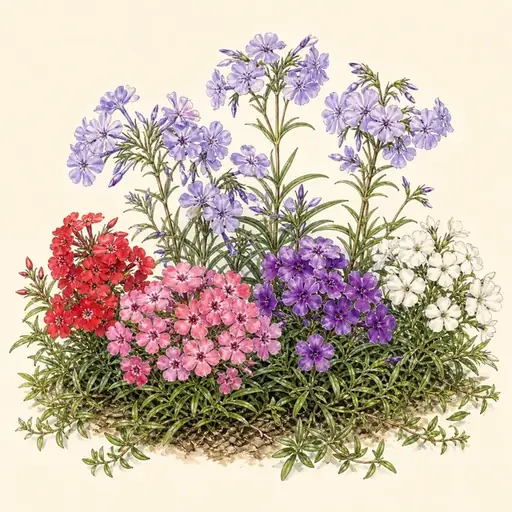
Annual Phlox (Phlox drummondii) brings quick red, pink, violet, and white color to sunny plantings. Wild Blue Phlox (P. divaricata) is a fragrant perennial groundcover for partial shade and woodland edges.
Native-range cueThe Product Master records the annual species across parts of Appalachia, the Plains, Southeast, and South Central regions, while Wild Blue Phlox spans much of the eastern woodland range.Phlox at a glance
From prepared seed to an established planting
01Chill60 moist days02Sow1/4 inch03Sprout7–30 days04Space8–10 inches05TrimEncourage branching06BloomSpring–fallEstablishment
Prepare the seed, then protect early roots
Cold-moist stratify seed for 60 days, then sow about 1/4 inch deep. Keep evenly moist through germination, harden seedlings carefully, and place them 8–10 inches apart. Give annuals more sun and Wild Blue Phlox light woodland shade.
01Prepare a clean seedbed
Control weeds first and use a fine, firm surface.
02Sow at the listed depth
Use gentle watering and keep the surface evenly moist.
03Thin or transplant carefully
Honor mature spacing and match the permanent habitat.
Ongoing care
Use four simple habits
Match light to species
Use full sun for annual phlox and partial shade for woodland Wild Blue Phlox.
Protect even moisture
Water young plants regularly; keep woodland roots cool without leaving crowns saturated.
Keep foliage open
Respect spacing and water at soil level so leaves dry between irrigations.
Trim after bloom
Deadhead annuals for continued color and shear woodland mats lightly after flowering if needed.
Establishment checkpoints
Watch the planting build toward maturity.
7–30 daysSeedlings emerge
4–6 weeksPlants branch
Late springEarly flowers open
Summer–fallAnnual color continues
Bloom, seed, and habitat
Keep wildlife value in the garden
Cut when several flowers in a cluster are open. Strip leaves below the water line, refresh vase water often, and leave selected late blooms to mature seed or support pollinators.
Urban Farmer selections
Choose a native selection for your site
Questions native gardeners ask
Phlox growing FAQ
Does phlox seed need stratification?The featured Product Master selections specify 60 cold-moist days.
Which phlox tolerates shade?Wild Blue Phlox is adapted to partial shade and woodland edges.
Is every phlox perennial?No. Annual Mix and Moody Blues are annual; Wild Blue is perennial.
Should phlox be deadheaded?Deadheading annuals extends color; woodland phlox may be lightly trimmed after bloom.
Ready to plant?




Questions & discussion