
How to grow prairie coneflower
Native Species · Seed to Bloom How to grow prairie coneflower Grow Prairie Coneflower and Mexican Hat for tall textured cones, drought-ready color, bouquets, pollinators, and bird seed. Prepare seed correctlyMatch the habitatSupport wildlife Shop prairie coneflower seed →Start the guide ↓ Life.
Native Species · Seed to Bloom
How to grow prairie coneflower
Grow Prairie Coneflower and Mexican Hat for tall textured cones, drought-ready color, bouquets, pollinators, and bird seed.
Prepare seed correctlyMatch the habitatSupport wildlife Shop prairie coneflower seed →Start the guide ↓ Life cyclePerennialZones 4–9Sow depth1/8 inchLight coverPretreatment30 cold-moist daysProduct MasterSpacing12–18 inchesOpen clumpsGermination10–30 daysAfter chillingNative plant profile
Match the species to its lasting site.
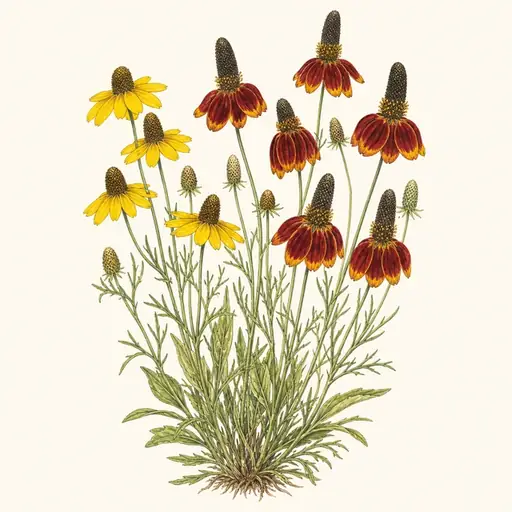
Both featured forms are Ratibida columnaris. Prairie Coneflower carries yellow rays around elongated cones, while Mexican Hat adds drooping reddish-brown petals edged with yellow for its familiar sombrero silhouette.
Native-range cueThe Product Master records a broad native range across the Midwest, mountains, Plains, and South Central states, especially in prairie, dry-site, and open meadow habitats.Prairie Coneflower at a glance
From prepared seed to an established planting
01Chill30 moist days02Sow1/8 inch03Sprout10–30 days04Space12–18 inches05RootLean dry soil06BloomSummer–fallEstablishment
Prepare the seed, then protect early roots
Cold-moist stratify seed for 30 days, then sow 1/8 inch deep and keep evenly moist through germination. Harden seedlings and place them 12–18 inches apart in full sun and well-drained, relatively lean soil.
01Prepare a clean seedbed
Control weeds first and use a fine, firm surface.
02Sow at the listed depth
Use gentle watering and keep the surface evenly moist.
03Thin or transplant carefully
Honor mature spacing and match the permanent habitat.
Ongoing care
Use four simple habits
Maximize sun
Use six or more hours for upright stems, abundant flowers, and compact crowns.
Build drought-ready roots
Water through establishment, then deeply only during prolonged dry periods.
Keep soil lean and open
Avoid heavy fertilizer and crowding that encourage weak, floppy stems.
Share cones with birds
Cut selected flowers while leaving late cones for seed-eating birds and winter structure.
Establishment checkpoints
Watch the planting build toward maturity.
30 daysCold-moist treatment
10–30 daysSeedlings emerge
First seasonDeep roots establish
Summer–fallTall cones carry color
Bloom, seed, and habitat
Keep wildlife value in the garden
Cut when ray petals have unfolded and the central cone is firm. Deadhead some stems for tidiness, but retain late cones for birds, seed saving, and winter interest.
Urban Farmer selections
Choose a native selection for your site
Questions native gardeners ask
Prairie Coneflower growing FAQ
Does Prairie Coneflower need stratification?Yes. Both Product Master selections specify 30 cold-moist days.
Are Mexican Hat and Prairie Coneflower the same species?The featured forms are both listed as Ratibida columnaris with different flower colors.
Does it tolerate drought?Yes after establishment, especially in full sun and well-drained soil.
Should all cones be deadheaded?No. Leave late cones for birds, seed, and winter structure.
Ready to plant?
Questions & discussion