
Squashes and Courgettes Step by Step
Squash are not hardy bedfellows and if you plant out any earlier than June into an open bed you will inevitably lose them all, as many an allotment holder has, unless you protect them. Squash do not deal well with fluctuations in temperature and weather, they will sulk in open ground if they are.
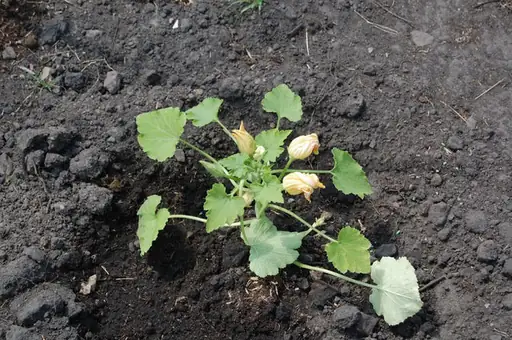
Squash are not hardy bedfellows and if you plant out any earlier than June into an open bed you will inevitably lose them all, as many an allotment holder has, unless you protect them. Squash do not deal well with fluctuations in temperature and weather, they will sulk in open ground if they are not protected by cloches early on in their growth.
I am going to show you how we sow them from early May onwards in our greenhouse:
1) Fill a pot with good quality compost, squashes are incredibly hungry plants and need this.
2) Plant in one pot two seeds on their edge, push down into the soil to the depth of your first knuckle on your index finger.
3) Then place the pots in an unheated propagator, if there is any sign of frost, cover with fleece.
4) If both seeds germinate, select the strongest and discard the other one (you can, if they are both strong, carefully separate and pot on into two new pots). Do not be tempted to let the two plants grow on in the same pot, they will quickly suck the soil dry of nutrients and kill each other.
5) When you see roots appear out of the bottom of the pot, pot on into a larger pot, you want them in one litre pots when you come to plant them outdoors.
6) At the start of June, start to harden off the plants – you do this over seven days by simply leaving the squash plants outside during the day and bringing them back undercover each night. Each day you leave them out a little longer until they are acclimatised.
7) To plant any squash, you need to dig a hole and fill it with good quality compost/well-rotted manure (anything under six months is risking the transmission of E. coli) into which you will place the plant.
8) Plant the squash on a mound, creating a moat around it with your fingers. This allows water to pool in the moat and feed this hungry plant.
You want to follow the guidance on the product page to when to harvest your squash. After which all you must do is eat and enjoy.

Questions & discussion