
All About Rose Growing Habits
If you’ve ever tried to disentangle the many different categories of roses, you know it can be a bit, erm, confusing. Not to get too into the weeds here (who are we kidding, I could talk roses all day!), but when a rose is hybridized, it’s registered with the American Rose Society by the breeder or.
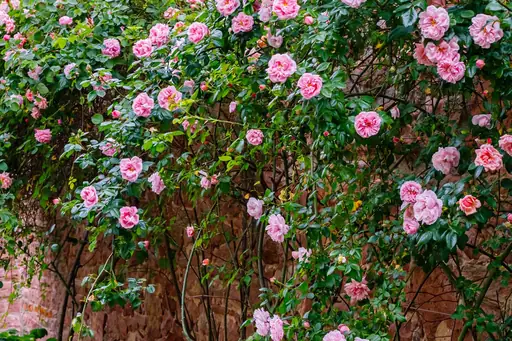
If you’ve ever tried to disentangle the many different categories of roses, you know it can be a bit, erm, confusing.
Not to get too into the weeds here (who are we kidding, I could talk roses all day!), but when a rose is hybridized, it’s registered with the American Rose Society by the breeder or nursery.
The breeder determines how to classify the new plant, usually classifying in the same category as one of the parents.
The official classifications according to the American Rose Society are species (or wild), old garden (or antique), modern, hybrid tea and grandiflora, floribunda and polyantha, miniature (or miniflora), climber, and shrub.
So a hybrid created from a tea and a floribunda might be classified as a tea simply because that’s what the individual breeder chose. But it may actually have more qualities that are common to a floribunda type.
As a result, we have a somewhat chaotic classification system in which these plants aren’t classified via any sort of structured method.
But it doesn’t have to be that complicated. Some growers and hobbyists simply group them by their growth habit. Some are climbers while some stay low to the ground, where they spread wide rather than tall. Others grow in that familiar shrub shape that you see in gardens across the globe.
These aren’t official classifications, but they sure are easier to understand and they give you a better idea of how the plant will perform in your garden, which I’d argue is more important than knowing whether it’s a hybrid tea or an antique.
While we’re talking classification, note that a given classification grouping doesn’t necessarily indicate growth habit. Climbing, ground cover, and shrub hybrid teas all exist, for instance.
Up ahead, we’ll talk about the different growth habits these plants can have, and I’ll tell you about a few of my favorites for each one.
Rose Growth Habits
- Climbing
- Ground Cover
- Shrub or Bush
- Rambling
- Tree
So without further ado, let’s explore the different growing habits. Knowing the difference will help you figure out what style will work best in your space.
Then, you can head over to our guide on rose classifications if you want to further narrow down your choices.
Climbing
If you want to cover an arbor, gazebo, or unsightly pole with a plant that won’t become invasive (I’m looking at you, wisteria), a climbing type is perfect.
Roses with climbing habits generally reach up to 20 feet high and up to three feet wide. Climbers are often hybrid teas, floribundas, polyanthas, or species, though I’ve seen old garden climbers out there too.
Climbing types don’t have tendrils or any other way of “holding” onto a structure, so you have to do it for them. You can either twist the canes around a support, or tie them using a flexible material like rubber.
‘Blaze Improved’ has clusters of semi-double scarlet blossoms.
‘Blaze Improved’
It can grow to be 14 feet tall with training and needs little maintenance beyond that from you.
Find tips on growing climbing roses here.
Ground Cover and Drift
If you want to replace your grass lawn or cover an area in vibrant blooms, ground cover types are the answer.
Photo by Kristine Lofgren.These are, as you can imagine, low-growers that spread rather than growing upwards. They generally stay under a foot tall, but make up for their short stature by spreading far and wide.
You’ll sometimes see these called drift or carpet roses.
Drifts are a cross between ground cover and miniature roses. They’re generally considered to be tough and disease-free options, so pick one of these if you’re new here and want to dip your toe in the rose water.
‘Apricot Drift’
‘Apricot Drift’ is a particularly appealing option. It has double blossoms in pinky orange. It’s a continuous bloomer with resistance to many diseases.
‘Sunshine Happy Trails’ has fruity, fragrant yellow-gold flowers.
‘Sunshine Happy Trails’
It trails up to 30 inches across the ground with blossoms from spring through fall.
Rambling
Some people group rambling and climbing types together, but they do have some differences, so I’m making an executive decision to call them out separately.
Ramblers tend to grow bushier and they are more vigorous than climbers. If you want something to cover the side of your garage, pick a rambler and reserve the climbers for decorating a trellis.
Ramblers can grow up to 20 feet tall, but most stay about 12 feet or under. They can spread up to six feet wide without training.
‘The Lady of the Lake’ is an English rambler with pale pink semi-double blossoms that have a wonderful citrus fragrance. When they open fully, you can get a glimpse of their golden stamens.
Shrub or Bush
This category can be a little confusing, since the term “shrub” is also an official classification. But it’s also a way to refer to growth habit.
Photo by Kristine Lofgren.Shrubs generally grow anywhere from one to six feet tall and one to 10 feet wide. They don’t require any sort of support to keep them upright.
Some have a more sparse growth habit, while others are bushier and can be used as a privacy hedge.
Hybrid teas, floribundas, grandifloras, and polyanthas often, but not always, grow in a shrub habit.
You can find hybrid tea climbers and floribunda ground covers, so don’t assume that a rose classified as one of these will definitely have a shrub habit.
One of my favorites is ‘Oso Easy Italian Ice,’ which is a self-cleaning plant that features pink petals on the exterior that gradually transition to yellow on the interior. Self-cleaning means that it does not require deadheading.
‘Oso Easy Italian Ice’
This is one of those varieties that is hard to kill, even if you neglect it.
carries these plants so you can add one to your garden.
‘Easy on the Eyes’ has semi-double blossoms that come in a range of colors on a single plant. Some blooms will be lavender, some will be peach, and all have deep magenta centers.
‘Easy on the Eyes’
As an added bonus, it has a heady citrus scent and is hardy enough for the beginner to master.
Read more about shrub roses here.
Tree
Tree types (also called standards) don’t naturally grow in the shape of a tree, with a main trunk topped with a canopy of leaves and blossoms.
Instead, they are grafted using a single cane with no foliage with a hybrid tea, floribunda, grandiflora, or shrub top.
As you might imagine, they look like miniature trees and they’re ideal for containers, flanking doorways, or as centerpieces in a garden.
Most of them need extra support while they’re young, and I’ve had a few that refused to grow upright even after years and years.
They don’t work in windy areas and if they aren’t in full, direct sun, they tend to lean to reach for the light.
As a quick aside, don’t confuse tree types with those varieties that grow as tall as a tree. There are some 10-foot-plus cultivars and hybrids out there, but these are climbers, ramblers, or shrubs, not trees. Plants grown in a tree habit don’t usually grow taller than three or four feet.
Some of the most popular tree types come from the breeder David Austin, but the famous Knock Out® breeders have also made their own trees.
Knock Out
Hardy in Zones 5-10, they’re drought tolerant and fragrant.
How Do Your Flowers Grow?
Knowing how a plant will grow in your garden is essential to selecting the best one for you.
After all, it won’t do you much good if you want a centerpiece for your cutting garden, but instead of a shrub you pick up a ground cover.
Now you’re armed with the knowledge that will get you in and out of the nursery without leaving you feeling bewildered about the different growth habits. Let us know your choice in the comments section below!
If this guide helped you become a little bit more knowledgeable about roses, check out these articles next:
- Roses 101: Getting Started
- How to Identify and Treat Common Rose Diseases
- 5 Tips for Pruning Roses Like a Pro
- 13 of the Best Hardy Roses to Grow at Home
- Facebook18
- X




Questions & discussion