

このページは原文のまま表示されています。翻訳はまだご利用いただけません。
Seedsunセレクション
Conradina verticillata
SKU: CONR-VERT-01G
Federally listed as threatened since 1991, which means this plant cannot be sold across state lines. South Carolina and in-person purchase only. A small shrub of the Cumberland Plateau, found only on the flood-scoured cobble and sand bars of three river systems in eastern Tennessee and a sliver of.
個別の見積もりをご依頼ください
価格、梱包サイズ、在庫状況は、お客様専用の見積書にてご確認いただけます。お問い合わせを送信しても、お支払い済みの注文は確定されません。
適性、播種方法、栽培条件について尋ねてください。
お見積書に記載されている配送オプションと必要書類をご確認ください。
この品種について
Federally listed as threatened since 1991, which means this plant cannot be sold across state lines. South Carolina and in-person purchase only.
A small shrub of the Cumberland Plateau, found only on the flood-scoured cobble and sand bars of three river systems in eastern Tennessee and a sliver of Kentucky: the Big South Fork of the Cumberland, the Caney Fork, and the Obed. The rest of the Conradina clan keeps to the sand scrub of Florida and the Gulf Coast of Alabama, sun-baked and semitropical. This species took a different path, north into the cooler uplands, and is the only member of the genus that never reached Florida at all. The cold-hardiness that came with the move is the gift to gardens farther north.
Cumberland rosemary lives by disturbance. The plants grow on bars scoured by spring floods and baked dry by August, and they need that rhythm to survive. Flooding strips out the taller competition that would otherwise shade them off the bar; the drought that follows is the condition their roots are tuned to. Extended floods snap off stem fragments and carry them downstream, where they root in fresh gravel and start new colonies. This is a plant that requires the river to behave like a river. Dam the system, stabilize the banks, and the species quietly disappears.
There are other oddnesses. Cumberland rosemary is the only triploid in the genus, which makes seed set unreliable and most reproduction clonal, so what looks like a colony of separate plants is often a single sprawling individual rooting at the nodes. Pollinators moving between flowers are frequently moving pollen around one genetic plant, which is part of why recovery is measured in genetically distinct individuals rather than in stems. The genus honors Solomon White Conrad, 1779 to 1831, a Philadelphia printer, bookseller and mineralogist who ended up professor of botany at the University of Pennsylvania, and whose name attached to this small clan of southeastern mints almost by accident. The leaves, crushed, smell startlingly like culinary rosemary; a 2022 study formally characterized the odor and found eucalyptus and clove notes running under it, from 1,8-cineole and eugenol. We would rather you grew the plant than cooked with a federally threatened species.
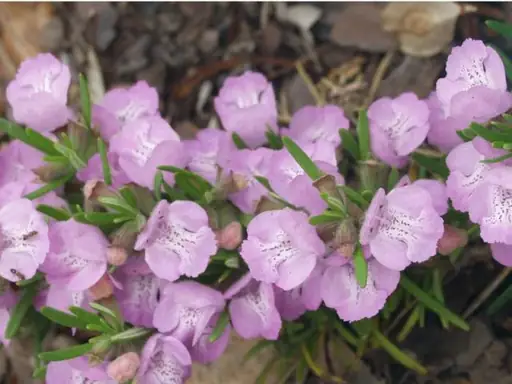
Lavender-pink flowers with darker throat spotting come in May and June, two-lipped and small but freely produced along the trailing stems. The low evergreen mat runs six to twelve inches high and spreads to two or three feet, the foliage holding through winter with a faint bronze cast in cold. Excellent in a rock garden, tumbling over a stone wall, or anywhere the conditions of the native cobble bars can be approximated: full sun, sharp drainage, acid sand or gravel, and no competition. Nursery propagation is the quiet argument for growing this one. When plants are easy to buy, there is no reason for anyone to lift a wild clump, and the Fish and Wildlife Service declined to map critical habitat at listing partly for fear of showing collectors where to look.
Photos courtesy of Sally and Andy Wasowski.
Learn more about the Conradina genus here.
さらに多くの発見があります



質問とディスカッション