

このページは原文のまま表示されています。翻訳はまだご利用いただけません。
Seedsunセレクション
Hosta yingeri
SKU: HOST-YING-01G
Hosta yingeri is one of the more recent hostas to reach gardens and one of the most distinct, a species found only on a scatter of rocky islands in the Huksan Archipelago off the southwestern coast of Korea. The American plantsman Barry Yinger collected the plant on Taehuksan Island in 1985, and.
個別の見積もりをご依頼ください
価格、梱包サイズ、在庫状況は、お客様専用の見積書にてご確認いただけます。お問い合わせを送信しても、お支払い済みの注文は確定されません。
適性、播種方法、栽培条件について尋ねてください。
お見積書に記載されている配送オプションと必要書類をご確認ください。
この品種について
Hosta yingeri is one of the more recent hostas to reach gardens and one of the most distinct, a species found only on a scatter of rocky islands in the Huksan Archipelago off the southwestern coast of Korea. The American plantsman Barry Yinger collected the plant on Taehuksan Island in 1985, and the botanist Samuel B. Jones formally named the species in 1989 in Yinger's honor. For a genus most gardeners associate with the woodlands of Japan, this Korean islander broadened the family map.
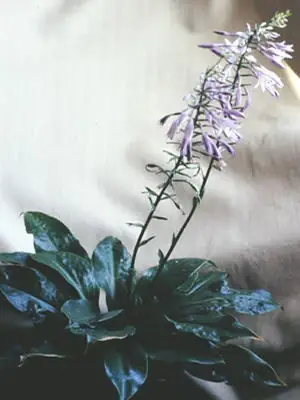
What sets the plant apart is a hard, lacquered shine. The elliptic leaves are thick and almost succulent, a deep to medium green polished to a gloss on top and a pale grey-green beneath, built to endure sun-warmed rock and salt wind. Rather than the soft, quilted mounds of a classic blue hosta, this Korean species forms a low, tidy rosette barely a foot high, more chiseled than billowy, holding a clean shape through the season.
The flowers are the real surprise. Where most hostas hang their bells to one side of the stem, Hosta yingeri spaces near-radial, star-shaped purple flowers evenly all the way around the scape in late summer, with an unusually long second set of stamens giving each bloom a spidery, almost orchid-like poise. Bees work the flowers, and the airy purple spikes rise well above the glossy leaves just as the summer garden starts to tire.
Like other hostas, the plant belongs to a long tradition of shade gardening across East Asia, where the tightly rolled spring shoots of several species, called urui in Japan, are gathered as a seasonal vegetable. In the garden, Hosta yingeri earns a spot at the front of a shady bed, tucked into a shaded rock garden, or edging a woodland path where the polished leaves can catch what little light reaches them. Ferns, sedges, and epimediums make natural companions, and the glossy, substantial foliage shrugs off much of the slug damage that plagues thinner-leaved hostas, though deer will still browse a tender clump.
さらに多くの発見があります



質問とディスカッション