
7 Tips for Pruning Perennial Asters
Perennial asters are transition plants that refresh gardens from late summer to fall with masses of small blossoms in shades of blue, pink, purple, and white. In our guide to growing asters, we discuss all you need to know to cultivate various species and cultivars in the home landscape. This.
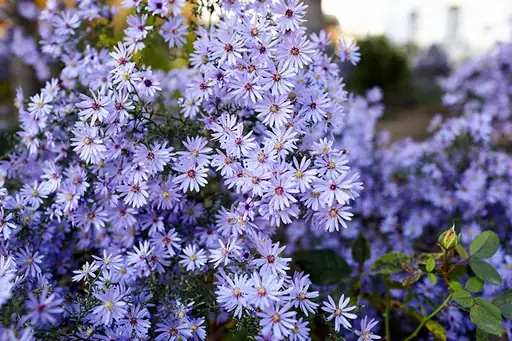
Perennial asters are transition plants that refresh gardens from late summer to fall with masses of small blossoms in shades of blue, pink, purple, and white.
In our guide to growing asters, we discuss all you need to know to cultivate various species and cultivars in the home landscape.
This article zeroes in on seven tips for pruning perennial asters that enable you to manage their stature, limit self-seeding, encourage blooming, promote airflow, and maintain vigor.
Here’s the lineup:
7 Tips for Pruning Asters
- Cut and Enjoy
- Cut Back at Season’s End
- Deadhead to Promote Blooming
- Divide in Spring
- Pinch to Shape
- Prune on Dry Mornings
- Use Sharp, Sanitary Pruners
1. Cut and Enjoy
One way to stimulate lush growth is to randomly cut blooming stems to make bouquets and vase arrangements. When stems are cut, flora is stimulated to grow new ones and produce even more flowers.
Use this technique to restore balance to a plant with wayward, leggy stems. Removing them to enjoy as cut flowers is an excellent way to maintain shape.
2. Cut Back at Season’s End
When the growing season draws to a close, cut all stems to about two inches above the ground, and dispose of the debris. This keeps the garden tidy, and inhibits the wintering over of pathogens and pests.
Some folks like to leave end of season stems in place, but unless you’ve deadheaded the spent blossoms during the growing season, you’ll have masses of fluffy seed heads with the potential to sow themselves throughout the landscape.
Native seeds produce true replicas of parents, but hybrids may produce variable results, non-viable seed, or no seed at all.
Be sure to mark the location of plants so you know where they are next spring.
3. Deadhead to Promote Blooming
Deadheading is the process of cutting an entire stem to its point of origin as soon as all of the blossoms on it finish blooming.
The removal of spent stems keeps flora looking fresh, prevents the setting of seed and self-sowing, and stimulates the urge to rebloom.
Read more about deadheading spent flowers here.
4. Divide in Spring
Another type of pruning is done for manageability and vigor.
Dividing is the process of digging up clumps in early spring, and slicing down through the thick rhizomes and fibrous roots to make one plant into two or more individual ones. Divisions are then replanted as desired.
This enables growers to keep garden flora within established boundaries, instead of allowing them to naturalize at will.
It also improves airflow, which goes a long way toward inhibiting the development of fungal diseases to which asters are prone.
Learn more about how to divide asters in our guide.
5. Pinch to Shape
Tall varieties are notorious for getting very leggy and requiring staking late in the growing season.
To promote more compact growth, in late spring to early summer, pinch off the soft growing tips to remove a maximum of one-third the total height.
This makes for shorter, laterally-branching growth that is bushier and less likely to require staking.
When pruned in this way, asters are better companions to other plants in mixed groupings, as they don’t flop over and dominate.
6. Prune on Dry Mornings
Regardless of whether you are cutting for vases, deadheading, or pinching back, it’s best to do your work on a dry morning, after the dew has evaporated.
Why?
Severing stems creates wounds in plants, making them more vulnerable to pests and disease.
Asters are prone to fungal conditions that are activated by moisture, and open stem wounds are ideal disease entry points.
In addition, plants that have been cut are temporarily stressed. In the morning, they are less likely to be dehydrated and already stressed, conditions that also make them more vulnerable to insects and pathogens.
7. Use Sharp, Sanitary Pruners
And finally, keep all cutting tools sharp and clean. Dull tools make ragged cuts that may expose an excess of plant tissue, resulting in poor wound healing, and vulnerability to infestation and infection.
Pruners and shears that are not clean can transfer pathogens from plant to plant, and affect an entire garden.
Wear gloves and sanitize tools with a 10 percent bleach to water solution. Clean them before and after use. Rinse thoroughly, and dry all equipment before putting it away.
Love Your Asters
Once you know how to prune your plants, you can control their stature, spread, and seed drop. And while some species can get quite large, compact cultivars offer manageable alternatives.
Aromatic aster, S. oblongifolium ‘Raydon’s Favorite’Enjoy asters in the garden, as well as in containers, for a late summer to fall rejuvenation of your outdoor living space.
And even if you don’t want to tame their wild and wooly ways, cutting for vases and dividing are still excellent ways to promote optimal blooming, prevent crowding, and restore their robust nature.
Are you growing these flowers in your landscape? Let us know in the comments section below and share your top pruning tips!
For more information on growing asters in your garden, you may enjoy reading the following guides next:
- When and How to Save Native Perennial Aster Seeds
- 11 Perennial Aster Species for Summer’s Last Hurrah
- 21 Tips for Managing Perennial Asters in the Garden
- Facebook106
- X405




질문 및 토론