

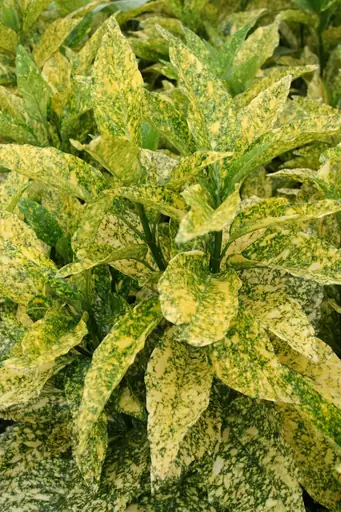
The Seedsun selection
Aucuba japonica 'Golden King'
SKU: AUCU-JAPO-GOLD-KING-01G
There is a strange romance buried in this plant's history, and 'Golden King' sits on the male side of it. Aucuba japonica reached England in 1783 as a single female, the yellow-flecked gold dust shrub that Victorians went on to plant by the thousand. Aucuba carry their sexes on separate plants, and.
Ask for a tailored quote
Pricing, pack sizes and availability are confirmed in your personal quotation. Sending an enquiry does not place a paid order.
Ask about suitability, sowing and growing requirements.
Confirm delivery options and required documents in your quote.
About this variety
There is a strange romance buried in this plant's history, and 'Golden King' sits on the male side of it. Aucuba japonica reached England in 1783 as a single female, the yellow-flecked gold dust shrub that Victorians went on to plant by the thousand. Aucuba carry their sexes on separate plants, and for eighty years every aucuba in the country was a clone of that one female, waiting on the famous red berries that never came, because Japan had sealed its borders and no male could be had.
Only when Robert Fortune reached the newly opened country around 1861 and sent a male home did the first berried plant appear, a sensation when shown in London in 1864. Someone later wrote a whole book about the saga and called it A Virgin for Eighty Years.
'Golden King' is a male clone, and a generous one. They set no berries themselves, being the wrong sex for it, but they are exactly what you plant beside a female aucuba to draw hers into color, all the while wearing some of the boldest variegation in the genus: large, leathery, glossy leaves splashed and marbled in gold, often more gold than green, no two quite alike. They came to us through Michael Dirr's evaluations of the best forms. Give them the hard places, dry shade under trees, a sooty city corner, the spot where nothing else will brighten, and they will hold their light there straight through winter. The old Japanese name for them, aoki, means blue tree, from a time when one word still covered blue and green both.
More to discover



Questions & discussion