

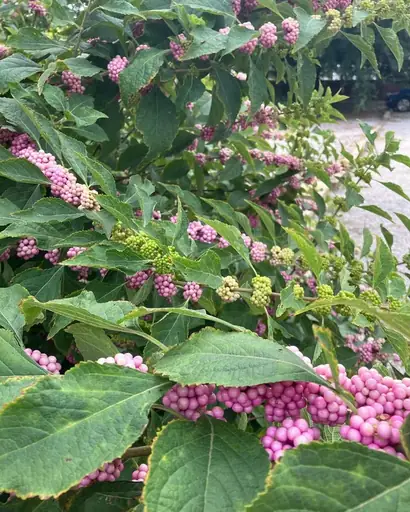
The Seedsun selection
Callicarpa americana ‘Welch's Pink’
SKU: CALL-AMER-WELC-PINK-01G
Everyone who grows the native beautyberry knows the plant by the autumn display: those improbable whorls of magenta-purple fruit circling every stem like something a florist arranged and forgot to bill for. 'Welch's Pink' is that plant, in a color the species was not supposed to have.Matt Welch.
Ask for a tailored quote
Pricing, pack sizes and availability are confirmed in your personal quotation. Sending an enquiry does not place a paid order.
Ask about suitability, sowing and growing requirements.
Confirm delivery options and required documents in your quote.
About this variety
Everyone who grows the native beautyberry knows the plant by the autumn display: those improbable whorls of magenta-purple fruit circling every stem like something a florist arranged and forgot to bill for. 'Welch's Pink' is that plant, in a color the species was not supposed to have.
Matt Welch found the original while working at the SFA Mast Arboretum and the Pineywoods Native Plant Center in Nacogdoches, a single wild plant fruiting clear, warm pink where every neighbor fruited purple. Michael Dirr, not one to leave a question unanswered, grew out several thousand seedlings expecting the color to break apart. None did. Every one came true. What Welch found in the East Texas piney woods proved genuinely stable, a new expression baked into the genetics rather than a fluke of one season.
The berries are larger than the typical species and carry a clear, bright pink, not pastel, not blush, but a frank, saturated color that reads from a distance and holds through the first hard frosts. The fruit whorls encircle each stem from August through October and often persist into winter, until the birds decide otherwise. Before any of that, small pink flowers appear in midsummer, modest enough to miss, vivid enough to be glad you didn't.
Seeds come true to the pink, so a naturalized colony stays a colony, with no purple reversions drifting back through the planting over time. In a woodland edge, a rain-garden margin, or a border where autumn needs something to say for itself, 'Welch's Pink' makes the point plainly.
More to discover



Questions & discussion