

The Seedsun selection
Callistemon phoeniceus
SKU: CALL-PHOE-01G
Of the thirty-odd bottlebrushes, this is the one Australian growers reach for when they want the word spectacular to mean something. Callistemon phoeniceus is endemic to the southwest corner of Western Australia, a hard, sandy, summer-dry country, and the shrub arrives in spring and summer carrying.
Ask for a tailored quote
Pricing, pack sizes and availability are confirmed in your personal quotation. Sending an enquiry does not place a paid order.
Ask about suitability, sowing and growing requirements.
Confirm delivery options and required documents in your quote.
About this variety
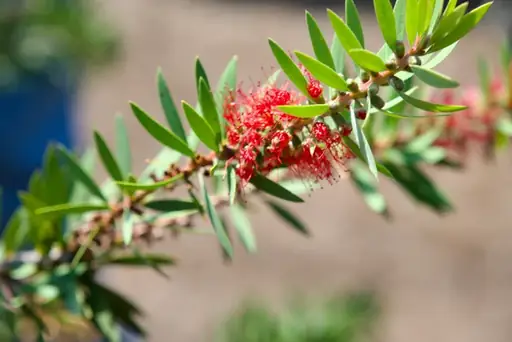
Of the thirty-odd bottlebrushes, this is the one Australian growers reach for when they want the word spectacular to mean something. Callistemon phoeniceus is endemic to the southwest corner of Western Australia, a hard, sandy, summer-dry country, and the shrub arrives in spring and summer carrying scarlet brushes four to six inches long, each one finished with a dark tip so the whole spike reads as red shading into near-black. The leaves are the other half of the appeal: thick, stiff, and distinctly blue-green, holding that cool grey cast right through the year, which makes the red land harder than red on ordinary green ever does.
The genus name is a small piece of Greek praise, kallos for beauty and stemon for a thread or stamen, and for once a botanist named a plant for the part that actually matters. What looks like petals is nothing of the kind; the true petals are small, round, greenish, and gone almost before you notice. The show is stamens, dozens to every flower, standing free of one another in a loose forest around the stem. Phoeniceus means crimson, from the Tyrian purple-red the Phoenicians traded, and the epithet is doing honest work here. Robert Brown described the genus in 1814; the molecular work of the last twenty years has since argued that the bottlebrushes sit inside Melaleuca rather than beside, so you will also find this plant as Melaleuca phoenicea. We keep the name gardeners search for and note that a botanist correcting you is not wrong, only reading from a different book.
Watch the shoot after bloom and the genus gives away where the plant comes from. The tip does not stop at the flower; the stem pushes a tuft of new leaves straight out past the brush and carries on, so by late summer you find a spent ring of woody capsules sitting partway down a branch with a foot of ordinary foliage beyond. Those capsules stay shut and clustered along the old wood like buttons pressed into the bark, waiting on fire to crack them open over ash-cleared ground. A shrub whose reproduction assumes the landscape will burn is a shrub built for hardship, and the drought toughness gardeners notice first and the fire history they learn later are the same fact seen from two directions.
Site the plant in the hottest, brightest, sharpest-drained spot on the property, the west-facing bank where a hydrangea would sulk, and expect eight to twelve feet in time. Lean ground gives better brush than rich ground, which buys leaf instead. The one thing no bottlebrush forgives is wet feet in winter, so plant high on heavy clay and let gravity do the work. In flower the nectar draws hummingbirds and carpenter bees the way the same flowers draw honeyeaters at home. One honest caution: C. phoeniceus takes frost and drought in stride but has not been proven through a piedmont winter the way our own Callistemon 'Woodlander's Hardy' has, so treat the plant as zone 8b to 10, give a sheltered wall in 8a, and consider a container north of that. These are the first cuttings we have struck, and the plant is very rarely offered in American horticulture at all.
More to discover



Questions & discussion