

The Seedsun selection
Cassia corymbosa
SKU: CASS-CORY-01G
September is a difficult month to write for. The garden is still technically in summer, but the light has shifted, lower and more golden, arriving at an angle that changes everything it touches. Cassia corymbosa reads that shift and answers it. While most summer shrubs are winding down, this one is.
Ask for a tailored quote
Pricing, pack sizes and availability are confirmed in your personal quotation. Sending an enquiry does not place a paid order.
Ask about suitability, sowing and growing requirements.
Confirm delivery options and required documents in your quote.
About this variety
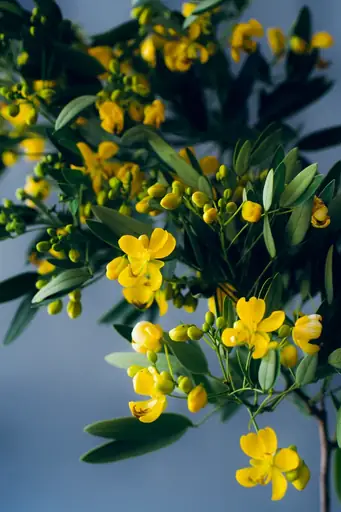
September is a difficult month to write for. The garden is still technically in summer, but the light has shifted, lower and more golden, arriving at an angle that changes everything it touches. Cassia corymbosa reads that shift and answers it. While most summer shrubs are winding down, this one is only beginning, throwing dense corymbs of deep golden-yellow flowers at the branch tips with an enthusiasm that seems almost contrarian for the season.
Native to the grasslands and gallery forests along the Río de la Plata in Argentina and Uruguay, the species has been grown in warm-climate gardens long enough that the origins are often forgotten. That is a shame, because the ecology of the Southern Cone, the windswept Pampas and the subtropical gallery forest pressing against open grassland, explains a great deal about the plant: upright, fast-growing, sun-hungry, and tuned to the kind of dramatic seasonal turn that September in the garden approximates, at least in spirit.
The distinction from the close relative Cassia bicapsularis is worth understanding before planting both, which you should. C. corymbosa blooms a full six weeks earlier, September rather than November, and is meaningfully more cold hardy, surviving zone 7 winters with careful siting and reliably root-hardy through zone 8. Where bicapsularis closes the season, corymbosa bridges summer and autumn, the golden clusters opening just as the first Salvia purples deepen and the ornamental grasses begin to catch the light differently. Grown together, the two make a Cassia succession that carries a warm-climate garden from September through the first hard frost, which is, by most measures, an excellent arrangement.
The cylindrical seed pods that follow are architecturally satisfying in their own right, persisting on bare branches through winter. The butterflies arrive reliably. The taxonomists, as with the sibling, continue to debate whether the plant belongs in Cassia or Senna. remains diplomatically agnostic.
More to discover



Questions & discussion