

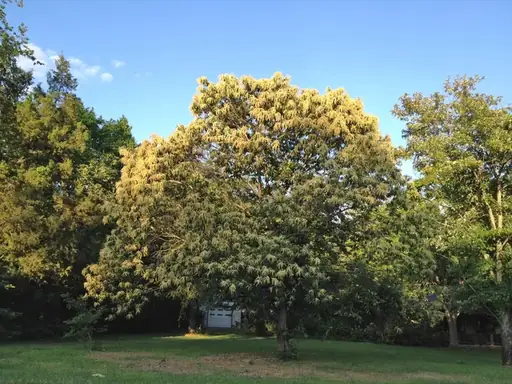
The Seedsun selection
Castanea mollissima
SKU: CAST-MOLL-01G
Few trees carry as much historical weight as the chestnuts, and Castanea mollissima carries it gracefully. This handsome, wide-spreading Chinese native stepped into the void left by one of the great ecological tragedies of the twentieth century, the near-total collapse of the American chestnut, and.
Ask for a tailored quote
Pricing, pack sizes and availability are confirmed in your personal quotation. Sending an enquiry does not place a paid order.
Ask about suitability, sowing and growing requirements.
Confirm delivery options and required documents in your quote.
About this variety
Few trees carry as much historical weight as the chestnuts, and Castanea mollissima carries it gracefully. This handsome, wide-spreading Chinese native stepped into the void left by one of the great ecological tragedies of the twentieth century, the near-total collapse of the American chestnut, and has been feeding people, wildlife, and the soil ever since. Come fall, the spiny husks crack open to reveal some of the largest, sweetest chestnuts a gardener can grow.
The story behind the tree is worth knowing. When chestnut blight (Cryphonectria parasitica) arrived from Asia in 1904, the disease moved through eastern North America with devastating efficiency, killing an estimated four billion Castanea dentata trees within fifty years and erasing an entire ecological keystone, mast producer, wildlife anchor, and timber tree from the canopy. Native to China and Korea and having evolved alongside the blight for millennia, Castanea mollissima carries a natural resistance the American chestnut never had the chance to develop.
What this tree brings to the garden is considerable on its own terms: vigorous and generous growth, broad and leafy, casting real shade by midsummer, and in autumn a harvest that can be genuinely abundant. The nuts are large by chestnut standards, rich-flavored, and surprisingly versatile in the kitchen, and the wildlife find them just as compelling, honestly probably more so. A living thread connecting the ecological history of two continents, and a deeply worthwhile addition to any landscape with room to let the canopy breathe.
Photos courtesy of Jim Robbins and Cathy Dewitt.
More to discover



Questions & discussion