

The Seedsun selection
Chionanthus retusus
SKU: CHIO-RETU-01G
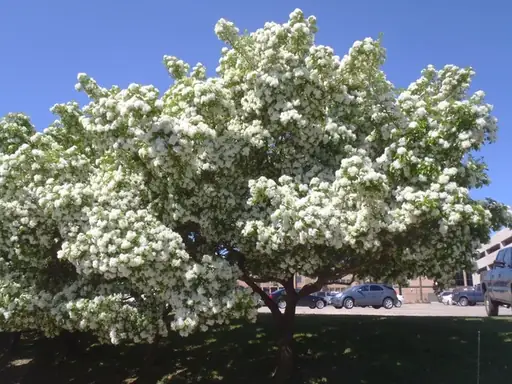
For a week or two in late spring, the Chinese fringetree vanishes under what looks like a fresh fall of snow. Chionanthus retusus is a deciduous small tree of eastern Asia, native across China, Korea, Japan, and Taiwan, and the whole performance turns on the flowering: dense, lacy panicles of.
Ask for a tailored quote
Pricing, pack sizes and availability are confirmed in your personal quotation. Sending an enquiry does not place a paid order.
Ask about suitability, sowing and growing requirements.
Confirm delivery options and required documents in your quote.
About this variety
For a week or two in late spring, the Chinese fringetree vanishes under what looks like a fresh fall of snow. Chionanthus retusus is a deciduous small tree of eastern Asia, native across China, Korea, Japan, and Taiwan, and the whole performance turns on the flowering: dense, lacy panicles of narrow, strap-shaped petals, pure white and softly fragrant, break over the entire canopy until the leaves all but disappear beneath the froth. The genus name records the effect exactly, from the Greek chion, snow, and anthos, flower.
Few trees carry so much affection in their common names. In Korea the fringetree is known as the rice tree, 이팝나무, because the massed white bloom reads like heaped mounds of freshly steamed rice, and a generous flowering was long taken by farmers as a happy omen for the season's harvest. In Japan the same tree earned the delighted nickname nanja monja, roughly the what-on-earth-is-that tree, a name once handed to any striking specimen whose true identity had been forgotten. Old fringetrees are cherished across the region, several standing as protected natural monuments in Korea and Japan, among them a celebrated grove near Inuyama honored since 1923, and the species now ranks among the most planted street trees in Seoul.
The rest of the year the fringetree keeps quieter company with the seasons. Glossy, leathery, dark green leaves, finely toothed along the young margins, carry the summer and turn a clear gold in fall. On female trees the spent flowers give way to clusters of oval, blue-black fruits in late summer, a favorite of songbirds, for the species holds male and female flowers on separate plants and only the females set fruit. With age the bark grows handsomely ridged and furrowed and begins to peel in strips, so even the bare winter tree keeps something to show.
In the garden, Chionanthus retusus makes an exceptional small specimen or courtyard tree, slow and clean and thoroughly well-mannered, building a rounded, spreading head on a scale that suits a patio, a modest lawn, or a clearing beneath taller canopy. Site the tree where the late-spring bloom can be met at close range, near a path, a terrace, or a window, and set a dark evergreen behind to throw the white forward. Underplant with spring bulbs or low groundcovers that will not crowd the trunk, pair with dogwoods or other small flowering trees to lengthen the season, and, where fruit for the birds is wanted, plant a female within sight of a male.
More to discover



Questions & discussion