

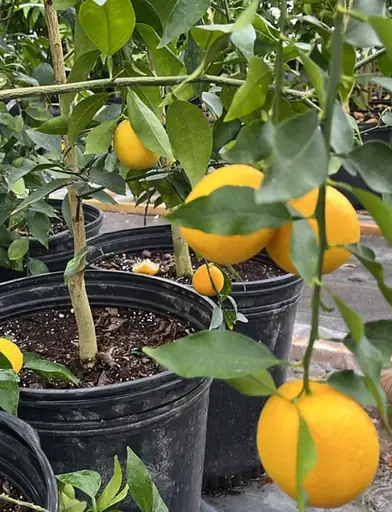
The Seedsun selection
Sunquat Tree
SKU: CITR-FORT-SUNQ-01G
The Sunquat began as an accident in a Beeville, Texas dooryard in the early 1940s, when a man named Leslie Cude noticed a seedling carrying fruit that looked like a small lemon and behaved like a kumquat. Walter Swingle, the great citrus authority of the day, took one look and guessed a cross of.
Ask for a tailored quote
Pricing, pack sizes and availability are confirmed in your personal quotation. Sending an enquiry does not place a paid order.
Ask about suitability, sowing and growing requirements.
Confirm delivery options and required documents in your quote.
About this variety
The Sunquat began as an accident in a Beeville, Texas dooryard in the early 1940s, when a man named Leslie Cude noticed a seedling carrying fruit that looked like a small lemon and behaved like a kumquat. Walter Swingle, the great citrus authority of the day, took one look and guessed a cross of Meyer lemon and kumquat, which is where the name Lemonquat comes from and how it entered the collections as Citrus limon × Fortunella. The trouble is that the curators who have kept the tree at Riverside ever since have come to doubt him. The fruit, they think, points to a mandarin somewhere in the parentage rather than a lemon, which would make the plant a mandarinquat wearing the wrong label. Nobody has settled the question. The plant has gone out as Sunquat, Lemonquat, Lemondrop, and Marmaladequat, four names for one tree, each a different theory and not one of them proven. Asking a citrus to hold still long enough to be classified rather misunderstands the family.
What is not in dispute is the fruit, which comes round to faintly pear-shaped, an inch and a half to three inches across, about the size of a hen's egg, ripening from green to a clear orange-yellow. The peel is thin, soft, and sweet, the flesh sharply acidic beneath, and the whole thing is built to be eaten in hand, skin and all, the way you would a kumquat that had grown up. Picked early the fruit is all bright sourness. Left on the branch into late winter the fruit sweetens, and by March the balance tips toward something you can eat without flinching. Whatever you do not eat goes into marmalade, honest enough that one of the names is built around it.
They were selected, in the first place, for gardeners whose lemons kept freezing, and that is still the practical case for growing one. They carry enough kumquat in them to take cold that would scorch a true lemon, into the mid-teens once established and dormant, while still handing you a usable acid fruit. They stay compact, six to ten feet in open ground and a good deal less in a pot, which is where most people north of the citrus belt will want the tree: out on the terrace through summer, carried to shelter before the first hard freeze. Give the tree full sun and a container that drains, a clay pot for preference, since the roots resent sitting wet. They are self-fertile, so a single plant fruits alone, and they bloom more than once a year, which means the scent comes back when you have stopped expecting it.
A lemon for people who cannot grow lemons, wearing three spare names and answering to none of them. Few plants reward a cold porch, or an argument, quite so well.
More to discover



Questions & discussion