

The Seedsun selection
Clerodendrum trichotomum
SKU: CLER-TRIC-01G
A native of China, Korea, Japan, Taiwan, and parts of South Asia, Clerodendrum trichotomum has been cultivated in Western gardens since the mid-1800s, when the shrub was introduced from Japan and quickly adopted across Europe and the American South for uncanny late-season performance. This is the.
Ask for a tailored quote
Pricing, pack sizes and availability are confirmed in your personal quotation. Sending an enquiry does not place a paid order.
Ask about suitability, sowing and growing requirements.
Confirm delivery options and required documents in your quote.
About this variety
A native of China, Korea, Japan, Taiwan, and parts of South Asia, Clerodendrum trichotomum has been cultivated in Western gardens since the mid-1800s, when the shrub was introduced from Japan and quickly adopted across Europe and the American South for uncanny late-season performance. This is the hardiest member of the genus and, for our money, the most theatrical.
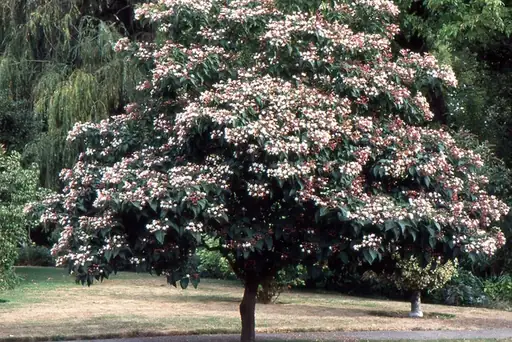
Through August and September, broad cymes of white tubular flowers open from swollen pink calyces at the branch tips, carrying a sweet jasmine-like fragrance that drifts farther than you would expect from a shrub this size. Hummingbirds, swallowtails, and night-flying moths work the flowers steadily. What follows is the part collectors plant the shrub for: the petals drop, the pink calyces flush deeper to a true rose-red and open like little stars, and at the center of each one sits a single hard berry the color of oxidized turquoise. The contrast is almost gaudy, pink, red, metallic blue, and it holds for weeks into autumn.
Harlequin glorybower reaches 10 to 15 feet as a multi-stemmed shrub, more if trained as a small tree. The roots sucker freely, which is either a feature or a problem depending on the site: in an open lawn or border the plant will form a colony; in a contained bed or beside a drive, an occasional pruning keeps it well-mannered. Sun to part shade, average to moist soil, hardy in zones 7 to 9. Crush a leaf and you will understand why some call this the peanut butter tree.
More to discover



Questions & discussion