

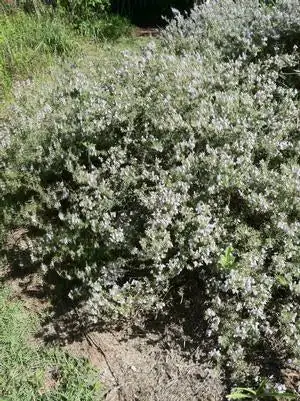
The Seedsun selection
Conradina canescens 'Gray Mound'
SKU: CONR-CANE-GRAY-MOUN-01G
Conradina canescens ‘Gray Mound’ is a silver-leaved selection of the false rosemary that grows wild on the deep, pine-fringed sands of the northern Gulf Coast, in Alabama, Mississippi, and the Florida panhandle, where the species holds the back of the primary dunes and runs inland into sand pine.
Ask for a tailored quote
Pricing, pack sizes and availability are confirmed in your personal quotation. Sending an enquiry does not place a paid order.
Ask about suitability, sowing and growing requirements.
Confirm delivery options and required documents in your quote.
About this variety
Conradina canescens ‘Gray Mound’ is a silver-leaved selection of the false rosemary that grows wild on the deep, pine-fringed sands of the northern Gulf Coast, in Alabama, Mississippi, and the Florida panhandle, where the species holds the back of the primary dunes and runs inland into sand pine scrub. A member of the mint family, this aromatic shrub carries soft, needle-like foliage in a ghostly silver-gray, and from March into November, heaviest in spring, offers pale lavender to bluish two-lipped flowers spotted with dark purple on the lower lip, which native bees work steadily.
‘Gray Mound’ is a selection made for form. Where wild plants vary considerably in leaf color and habit, this clone is remarkably uniform, dense, tidy and mounding, spreading gently in well-drained sand with a sculpted, restrained elegance. The low silver cushion suits dry native landscapes, xeriscapes, rock and gravel gardens, and coastal restorations.
The gray is the point and the name. Canescens comes from the Latin for turning white or hoary, for the fine pubescence that covers leaves and flowers alike and gives the whole plant a dusted look at a distance. That coat is not decoration; it is a dune plant’s answer to glare and salt wind. The foliage is loaded with terpenes, mostly camphor and 1,8-cineole, which is why a brushed hand smells like a cross between rosemary and a eucalyptus grove, and the same chemistry appears to suppress the fire-carrying grasses that would otherwise grow up through the mound. Four relatives in the genus are federally endangered or threatened; Conradina canescens is the common one, secure enough that Florida’s natural heritage program does not track the species at all.
Site ‘Gray Mound’ where the silver foliage and fine texture can do quiet work: near an entry, along a path, at the edge of a dry bed, or repeated through a larger planting for rhythm. Pair with stone, gravel, and other fine-textured, drought-tolerant companions that share the taste for sun and sharp drainage, and give the mound room to be read whole. Deer generally pass the aromatic foliage by. One honest caution for coastal gardeners: wild plants shrug off wind and salt spray, but nursery-grown stock is soft and wants a season of shelter before being asked to face an open beach front.
Learn more about the Conradina genus here.
More to discover



Questions & discussion