

The Seedsun selection
Echinacea tennesseensis
SKU: ECHI-TENN-01G
Some plants are grown for beauty; a few are grown for the story of their survival, and Echinacea tennesseensis, the Tennessee coneflower, is one of the latter. Endemic to a handful of limestone cedar glades around Nashville, the species was once believed extinct, then rediscovered in the middle of.
Ask for a tailored quote
Pricing, pack sizes and availability are confirmed in your personal quotation. Sending an enquiry does not place a paid order.
Ask about suitability, sowing and growing requirements.
Confirm delivery options and required documents in your quote.
About this variety
Some plants are grown for beauty; a few are grown for the story of their survival, and Echinacea tennesseensis, the Tennessee coneflower, is one of the latter. Endemic to a handful of limestone cedar glades around Nashville, the species was once believed extinct, then rediscovered in the middle of the twentieth century clinging to those thin, sun-baked soils. The Tennessee coneflower went on to become one of the first plants ever listed under the U.S. Endangered Species Act, and after decades of protection and propagation was formally delisted in 2011, recovered. To grow this coneflower is to keep a small piece of that comeback going.
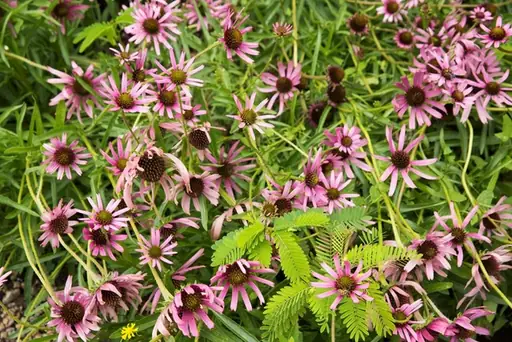
Where the familiar purple coneflowers let their petals droop, the Tennessee coneflower holds narrow, rose-pink rays upward and slightly cupped, so each bloom seems to face the sun with a hopeful tilt. At the center sits a coppery-orange cone packed with nectar, a magnet for native bees, butterflies, and, later in the season, seed-eating finches. The flowers rise on wiry, upright stems above a low rosette of coarse, dark green leaves, and carry from midsummer well into fall.
This is a plant built for lean conditions. At home in shallow, rocky, alkaline soils that would starve fussier perennials, the Tennessee coneflower thrives on heat, drought, and a degree of neglect, which makes the species a natural for meadow plantings, gravel gardens, pollinator borders, and rock gardens. Set the coneflower in generous drifts among little bluestem, prairie dropseed, and rattlesnake master for a planting that reads as wild and carries wildlife from spring bloom through winter seedhead. Leave the spent cones standing; the birds will thank you, and the plant will seed itself gently where happy.
Gardeners who know echinacea as an herbal remedy should note that the medicinal coneflowers of commerce are other species, chiefly Echinacea purpurea, E. angustifolia, and E. pallida; the Tennessee coneflower was always far too rare to enter that tradition, and belongs in the garden as an ornamental and a conservation success rather than a medicine chest. Grown here from nursery-propagated stock, this coneflower lets a Southern gardener plant a genuine rarity that asks almost nothing in return.
More to discover



Questions & discussion