

The Seedsun selection
Eucommia ulmoides
SKU: EUCO-ULMO-01G
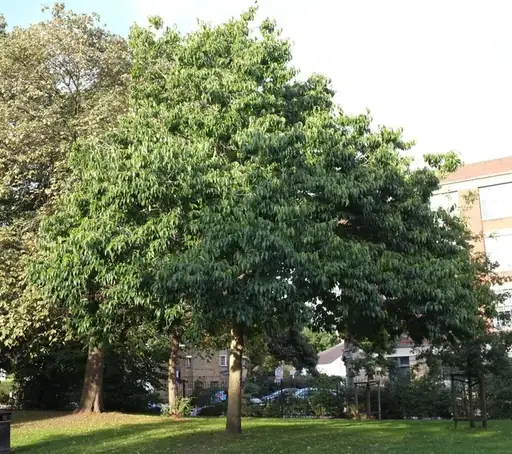
Eucommia ulmoides is a medium to large deciduous tree of forty to sixty feet, upright when young and broadening into a rounded crown with age. The leaves are elm-like, as the epithet says, dark glossy green, deeply veined and pointed, held on a clean straight trunk with grayish furrowed bark. There.
Ask for a tailored quote
Pricing, pack sizes and availability are confirmed in your personal quotation. Sending an enquiry does not place a paid order.
Ask about suitability, sowing and growing requirements.
Confirm delivery options and required documents in your quote.
About this variety
Eucommia ulmoides is a medium to large deciduous tree of forty to sixty feet, upright when young and broadening into a rounded crown with age. The leaves are elm-like, as the epithet says, dark glossy green, deeply veined and pointed, held on a clean straight trunk with grayish furrowed bark. There is no autumn color worth the name and the flowers are green, apetalous, and easy to miss, with male and female on separate trees. What this tree offers instead is a rare combination of qualities: dense shade, genuine toughness, freedom from pests and disease, tolerance of city air and poor ground, and a frame that holds up in storms.
Tear a leaf slowly and you will see the reason for the common name. Fine white threads of latex bridge the two halves and hold, elastic, before they part. Eucommia is the only latex-bearing tree native to the temperate world, and the gutta-percha it produces runs through leaves, bark, and fruit alike. The species is also the last of its line, the sole living member of the genus and the sole genus in the family Eucommiaceae, an entire branch of the flowering plants reduced to one survivor. Fossil Eucommia is scattered across Europe, Asia, and North America. What remains today is a tree of central China, so long and so thoroughly cultivated that whether any truly wild population still exists is an open question.
The reason for that cultivation is the bark. Du zhong is one of the senior tonics of the Chinese materia medica, in continuous use for more than two thousand years, classified among the herbs that nourish the kidney and liver, strengthen sinew and bone, and steady the lower back and knees. Bark is stripped, dried, and often prepared with salt; the same latex threads that appear in a torn leaf appear in a snapped piece of dried bark, and their presence is the traditional test of quality. Contemporary research has looked at du zhong extracts in relation to blood pressure, inflammation, and metabolic function, and lignans and iridoids have been isolated as likely actives. Bark can be harvested without felling the tree, which is part of why the species survived at all.
In the garden this is a superb and badly underused street and shade tree. Full sun, any reasonably drained soil, and no particular attention; Eucommia tolerates drought, compaction, and urban conditions that flatten more fashionable choices, and nothing much eats it. Growth is moderate and the habit clean enough for a lawn specimen, a parking strip, or a courtyard. Hardy well north of where most people expect, through zone 4. Worth noting that trees are dioecious, so a single specimen sets no fruit; and worth knowing that plants have escaped cultivation in a few places in the eastern United States, though nowhere at a scale that has caused concern. For anyone growing a medicinal collection, this is the plant that anchors it.
More to discover



Questions & discussion