

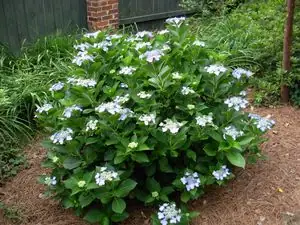
The Seedsun selection
Hydrangea macrophylla ‘Mariesii’
SKU: HYDR-MACR-MARI-01G
'Mariesii' is a piece of hydrangea history still in commerce. In the late 1870s the English plant hunter Charles Maries, collecting in Japan for the famous Veitch nursery, sent home the first lacecap hydrangea to reach the West, at a time when European gardeners knew only the round mopheads. That.
Ask for a tailored quote
Pricing, pack sizes and availability are confirmed in your personal quotation. Sending an enquiry does not place a paid order.
Ask about suitability, sowing and growing requirements.
Confirm delivery options and required documents in your quote.
About this variety
'Mariesii' is a piece of hydrangea history still in commerce. In the late 1870s the English plant hunter Charles Maries, collecting in Japan for the famous Veitch nursery, sent home the first lacecap hydrangea to reach the West, at a time when European gardeners knew only the round mopheads. That introduction, named 'Mariesii' in his honor, opened Western eyes to the wild, flat-topped grace of the lacecap and became the parent of a whole line of classic cultivars, among them 'Mariesii Grandiflora', 'Mariesii Lilacina', and the blue 'Mariesii Perfecta'.
Where a mophead crowds every flower into a solid ball, a lacecap tells the truth about how the flower head is built. Hydrangea macrophylla 'Mariesii' spreads a flat, delicate plate of tiny fertile flowers across the center, then rings the edge with a lace of large, showy, sterile florets, the whole effect airier and more naturalistic than the mophead. Like all bigleaf hydrangeas, the plant reads the soil: acid ground turns the florets blue, alkaline ground shifts them toward pink, and gardeners can steer the color with sulfur or lime.
The bigleaf hydrangeas carry a quiet cultural history in their Japanese homeland, where a sweet-leaved relative yields amacha, the fermented-leaf tea poured over images of the Buddha each spring; the ornamental garden forms are not that tea plant, and hydrangea foliage should not be eaten. Unlike the wholly sterile mopheads, the lacecap's true flowers at the center offer nectar and pollen, so 'Mariesii' earns the visits of bees and other pollinators that a snowball hydrangea cannot.
In the garden, 'Mariesii' brings an old-fashioned, woodland-edge softness that the mopheads lack. Set the shrub in a shaded border, along a path, or against a dark backdrop of evergreens where the pale lacecaps seem to float, and give the plant morning sun with afternoon shade in hot climates. Trim faded heads to tidy the shrub and coax a later flush, keep the soil moist, and hold the pH below six if a true blue is the goal. Four to six feet high and wide, the shrub settles easily into a mixed planting without taking over.
More to discover



Questions & discussion