

The Seedsun selection
Hymenocallis liriosme
SKU: HYME-LIRI-01G
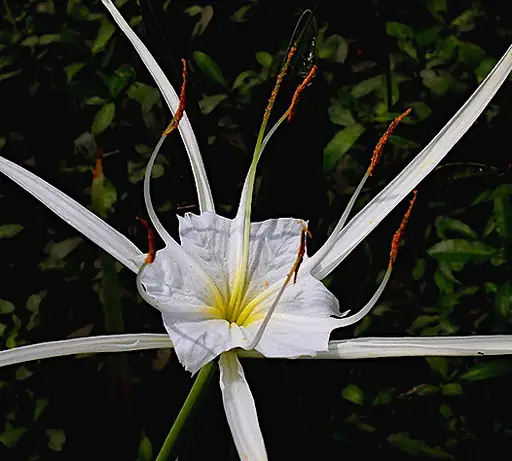
Few native bulbs command a wet margin the way Hymenocallis liriosme does. From a basal fountain of arching, strap-shaped, glossy green leaves rise leafless scapes, each crowned with several large white flowers whose narrow segments splay outward like pale spider legs around a central membranous.
Ask for a tailored quote
Pricing, pack sizes and availability are confirmed in your personal quotation. Sending an enquiry does not place a paid order.
Ask about suitability, sowing and growing requirements.
Confirm delivery options and required documents in your quote.
About this variety
Few native bulbs command a wet margin the way Hymenocallis liriosme does. From a basal fountain of arching, strap-shaped, glossy green leaves rise leafless scapes, each crowned with several large white flowers whose narrow segments splay outward like pale spider legs around a central membranous cup. The fragrance arrives at dusk, sweet and carrying, a signal to the night-flying moths that pollinate the blooms in late spring and early summer.
The name carries the flower's signature. Hymenocallis joins the Greek hymen, a membrane, with kallos, beauty, a nod to the thin translucent tissue that webs the stamens into a shallow crown, the feature that separates a true spider lily from the many look-alikes. The epithet liriosme reads as lily-scented, from lirion and osme, and the plant earns the name honestly on a warm evening. Gardeners across the Gulf know the plant as spring spiderlily or Texas spiderlily, though the range runs well beyond Texas.
Hymenocallis liriosme belongs to the amaryllis family, Amaryllidaceae, alongside crinum, rain lily, and the ornamental daffodils, and shares that clan's chemistry: the bulbs are laced with alkaloids that make them unpalatable to grazers and toxic if eaten, a quiet defense that has let wild colonies persist in ditches and low prairies. The plant is native across the south-central United States, from Texas and Oklahoma east through Louisiana, Arkansas, Mississippi, and Alabama, where the bulbs settle into the edges of marshes, swamps, sloughs, and slow streams, growing lush through a wet spring and resting through a dry summer.
In the garden the spring spiderlily asks for the conditions the bulbs know best: a low, wet spot that floods in spring and dries somewhat later, the margin of a pond, a rain garden, or a bog bed in full sun to part shade. Give the bulbs room to clump and they will thicken into a fragrant colony. Louisiana iris, swamp hibiscus, canna, and rain lilies make natural companions in the same damp ground, and a stand set near a path or seating area repays the placement each evening the flowers open.
More to discover



Questions & discussion