

The Seedsun selection
Hypericum reductum
SKU: HYPE-REDU-01G
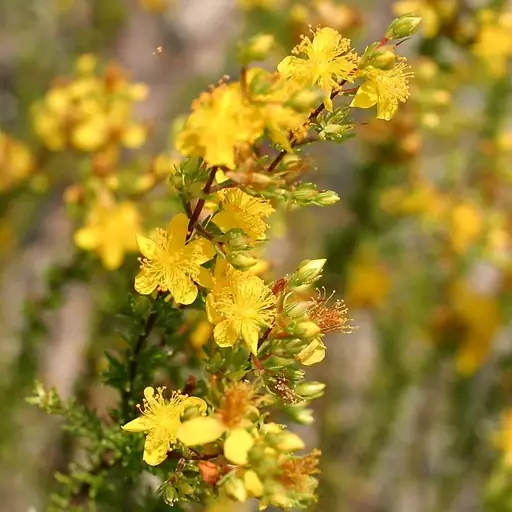
Hypericum reductum is the ground-hugging member of the family, a low, heathery evergreen that mounds and mats rather than climbing, rarely rising much above the knee. The stems are crowded with fine, needle-like, deep green leaves that give an almost coniferous texture, and through late spring and.
Ask for a tailored quote
Pricing, pack sizes and availability are confirmed in your personal quotation. Sending an enquiry does not place a paid order.
Ask about suitability, sowing and growing requirements.
Confirm delivery options and required documents in your quote.
About this variety
Hypericum reductum is the ground-hugging member of the family, a low, heathery evergreen that mounds and mats rather than climbing, rarely rising much above the knee. The stems are crowded with fine, needle-like, deep green leaves that give an almost coniferous texture, and through late spring and summer the whole low sweep is dotted with small, bright yellow, star-shaped flowers full of stamens.
The epithet reductum, reduced, suits a plant that has pared everything down: fine leaves, small flowers, low stature. Botanists now file the species under the name Hypericum tenuifolium, the thin-leaved St. John's Wort, though the older reductum still travels widely in the trade. Over both sits the genus name Hypericum, from the Greek hyper and eikon, above and image, a relic of the Midsummer custom of hanging flowering St. John's Wort above doorways and icons at the feast of Saint John to keep harm from the house.
One of our favorite Hypericums, and one of the many southeastern natives was probably the first to offer, Atlantic St. John's Wort belongs to the deep sandy soils of the coastal plain, from North Carolina south through Florida and west to Alabama. The plant colonizes beach dunes, sandhills, and scrub, often near seasonally wet depressions, thriving on lean, sharply drained ground and shrugging off drought, heat, and salt air.
For a hot, sandy, sun-baked spot where a lawn would sulk, Atlantic St. John's Wort makes an easy, good-looking groundcover, spreading into a fine-textured evergreen mat spangled with summer gold. Use the shrub on a sandy bank, in a rock or gravel garden, along a coastal border, or in a sandhill or scrub restoration, and set wiregrass, gopher apple, and prickly pear alongside for a planting that asks almost nothing. Photos courtesy of Shirley Denton.
More to discover



Questions & discussion