

The Seedsun selection
Ilex verticillata × serrata 'Sparkleberry'
SKU: ILEX-VERT-X-SERR-01G
Ilex ‘Sparkleberry’ is the aristocrat of the winterberries, a vigorous hybrid holly bred from the native winterberry, Ilex verticillata, and the Japanese winterberry, Ilex serrata. William F. Kosar made the cross at the U.S. National Arboretum in 1961, and the Arboretum released the plant in 1978,.
Ask for a tailored quote
Pricing, pack sizes and availability are confirmed in your personal quotation. Sending an enquiry does not place a paid order.
Ask about suitability, sowing and growing requirements.
Confirm delivery options and required documents in your quote.
About this variety
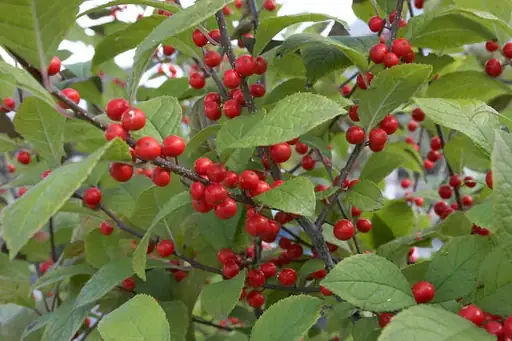
Ilex ‘Sparkleberry’ is the aristocrat of the winterberries, a vigorous hybrid holly bred from the native winterberry, Ilex verticillata, and the Japanese winterberry, Ilex serrata. William F. Kosar made the cross at the U.S. National Arboretum in 1961, and the Arboretum released the plant in 1978, together with a male from the same cross named ‘Apollo’. The pairing brought hybrid vigor and a heavier, longer-holding crop: tall, upright stems that shed their leaves in fall and blaze with bright red fruit, persisting so well that the berries often hang on into March.
That performance has made ‘Sparkleberry’ one of the most celebrated deciduous hollies in cultivation, grown for the sheer quantity and staying power of the fruit, which runs a little larger than the straight species at about five sixteenths of an inch. A mature plant reaches ten to twelve feet, upright and eventually a little leggy at the base, which is a feature rather than a flaw: the bare lower stems lift the berry display to eye level and above, and lower plants can be set in front to hide the ankles.
Winterberry is a deciduous holly of eastern North American wetlands, and the Japanese parent brings extra vigor, but the family rules still hold: only female plants fruit, and only where a male blooms at the same time within bee range, since hollies are pollinated by insects and not by wind. ‘Sparkleberry’ flowers late, in early June. The long-blooming hybrid male ‘Raritan Chief’ is the most forgiving partner, spanning early and late females alike, and the late-flowering ‘Southern Gentleman’ serves this plant well too, which is worth knowing if a winterberry hedge already has one gentleman in residence.
Give ‘Sparkleberry’ the moist to wet, acidic soil winterberry loves, in full sun to part shade, and let the tall shrub command a rain garden, a pond edge, a wet swale, or the back of a border, spectacular through the winter and feeding birds into spring. The long-lasting cut branches are prized for holiday arrangements, and a group planted with one male carries a dependable, long-running show. Expect the first real crop about three years after planting.
More to discover



Questions & discussion