

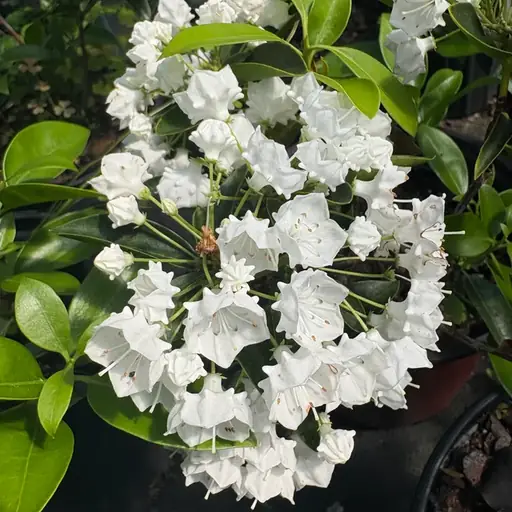
The Seedsun selection
Kalmia latifolia 'Pristine'
SKU: KALM-LATI-PRIS-01G
'Pristine' is a pure white-flowered mountain laurel, a luminous departure from the pink and rose-flushed forms of the wild species. The selection was discovered in Aiken County, South Carolina by the late Mrs. Ernestine Law and introduced to cultivation by , a distinctive regional expression of one.
Ask for a tailored quote
Pricing, pack sizes and availability are confirmed in your personal quotation. Sending an enquiry does not place a paid order.
Ask about suitability, sowing and growing requirements.
Confirm delivery options and required documents in your quote.
About this variety
'Pristine' is a pure white-flowered mountain laurel, a luminous departure from the pink and rose-flushed forms of the wild species. The selection was discovered in Aiken County, South Carolina by the late Mrs. Ernestine Law and introduced to cultivation by , a distinctive regional expression of one of the most iconic broadleaf evergreens of the eastern United States. Where typical Kalmia latifolia opens blush-toned, 'Pristine' unfurls in clean, brilliant white, a serene presence that reads especially bright planted en masse or set against darker evergreens.
The genus Kalmia was named by Linnaeus for his student Pehr Kalm, the Finnish-Swedish naturalist who explored eastern North America in the 1740s, and latifolia means broad-leaved. 'Pristine' keeps all the virtues that make mountain laurel beloved: glossy, leathery green leaves, a rounded and densely branched habit, and sculptural flower buds that open in late spring to early summer. Each bloom performs the family's small marvel, ten stamens held under spring tension in pockets of the corolla, ready to snap forward and shower a visiting bee with pollen. Originally propagated through tissue culture and now grown from cuttings, this selection stays true to the clean white of the original plant.
Mountain laurel carries a rich human history under the common name spoonwood, from the hard, close-grained wood that Indigenous peoples of the East carved into spoons and small utensils and that later served for tool handles and turned bowls. That legacy comes with a firm warning. Every green part of the plant, along with the pollen and any honey made from the flowers, contains grayanotoxins and is poisonous to livestock, wildlife, and people. 'Pristine' is grown as an ornamental and pollinator plant, never a medicinal or edible one, and the foliage is best kept away from grazing animals and curious mouths.
In the garden, 'Pristine' belongs in acidic woodland soil under the dappled light of pines and oaks, planted high rather than deep so the shallow roots never drown and mulched with pine straw to keep them cool and sour. The clean white flowers glow in the half light of a woodland border, foundation planting, or collector's garden, and compose beautifully with rhododendrons, blueberries, inkberry, and native ferns. Slow and deliberate to establish, this laurel rewards patience with decades of evergreen structure, and the toxic foliage doubles as dependable deer resistance.
More to discover



Questions & discussion