

The Seedsun selection
Kalmia latifolia 'Willowwood'
SKU: KALM-LATI-WILL-01G
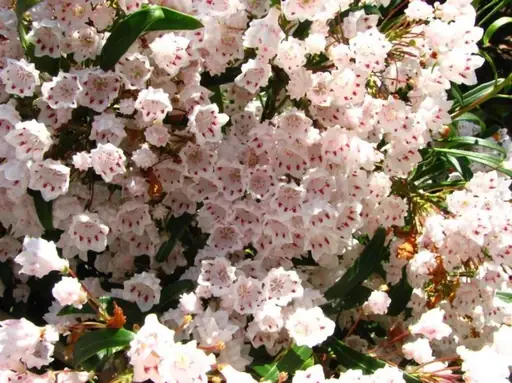
'Willowwood' is a introduction selected from a mountain laurel found growing in Aiken County, South Carolina. What sets this laurel apart at first glance is the foliage: narrow, willow-like leaves that lend the shrub a finer, more linear texture than the broad-leaved wild Kalmia latifolia. In.
Ask for a tailored quote
Pricing, pack sizes and availability are confirmed in your personal quotation. Sending an enquiry does not place a paid order.
Ask about suitability, sowing and growing requirements.
Confirm delivery options and required documents in your quote.
About this variety
'Willowwood' is a introduction selected from a mountain laurel found growing in Aiken County, South Carolina. What sets this laurel apart at first glance is the foliage: narrow, willow-like leaves that lend the shrub a finer, more linear texture than the broad-leaved wild Kalmia latifolia. In bloom, 'Willowwood' carries pink flowers with distinct banding, gathered in the familiar rounded clusters that make mountain laurel such a valued broadleaf evergreen for woodland gardens.
The genus Kalmia was named by Linnaeus for his student Pehr Kalm, the naturalist who explored eastern North America in the 1740s, and latifolia means broad-leaved, a name this narrow-leaved selection wears with a wink. Beyond the willowy foliage, 'Willowwood' tends to grow more compact and lower than the species, which makes the shrub easy to place in tighter plantings and layered understory schemes where evergreen structure is wanted without a tall, bulky mass. A comparable narrow-leaved selection, 'Willowcrest', comes from a more northern source; because 'Willowwood' is a southern-origin plant, this is the more dependable choice for zones 8 and 9, where heat and humidity can challenge some mountain laurels.
Mountain laurel carries a long human history under the common name spoonwood, from the hard, close-grained wood that Indigenous peoples of the East carved into spoons and small utensils and that later served for tool handles and turned bowls. That heritage comes with a firm warning. Every green part of the plant, along with the pollen and any honey made from the flowers, contains grayanotoxins and is poisonous to livestock, wildlife, and people. 'Willowwood' is grown as an ornamental and pollinator plant, never a medicinal or edible one, and the foliage is best kept away from grazing animals and curious mouths.
In the garden, the narrow foliage of 'Willowwood' reads cleaner and more contemporary than standard mountain laurel, a restrained evergreen with a subtle linear feel that suits foundation plantings, small woodland borders, and path-edge understory work without constant pruning. Give acidic, well-drained woodland soil in sun to part shade, plant high rather than deep, and mulch with pine straw to keep the roots cool. 'Willowwood' composes beautifully with other acid-loving plants such as inkberry, leucothoe, blueberry, and ferns, and the toxic evergreen foliage does quiet double duty as deer resistance.
More to discover



Questions & discussion