

The Seedsun selection
Leonotis leonurus
SKU: LEON-LEON-01G
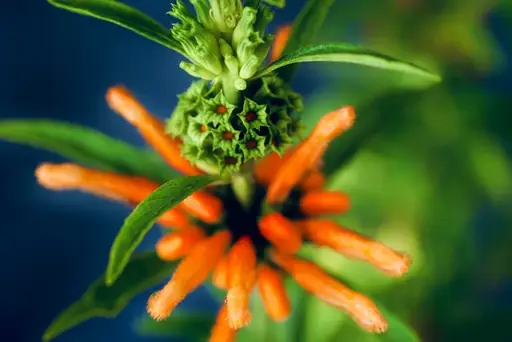
Few late-summer plants command a border like Leonotis leonurus, the lion's ear of the South African veld. Tall square stems, the signature of the mint family, Lamiaceae, rise five feet and more before breaking into tier upon tier of burnt-orange flowers, each whorl circling the stem like a ruff..
Ask for a tailored quote
Pricing, pack sizes and availability are confirmed in your personal quotation. Sending an enquiry does not place a paid order.
Ask about suitability, sowing and growing requirements.
Confirm delivery options and required documents in your quote.
About this variety
Few late-summer plants command a border like Leonotis leonurus, the lion's ear of the South African veld. Tall square stems, the signature of the mint family, Lamiaceae, rise five feet and more before breaking into tier upon tier of burnt-orange flowers, each whorl circling the stem like a ruff. The velvety, curved tubes are the source of both common names, lion's ear and lion's tail, and the botany agrees: Leonotis comes from the Greek for lion's ear, and leonurus for lion's tail.
In the homeland the plant is better known as wild dagga, a cornerstone of Khoikhoi and later Cape herbal tradition. Healers brewed decoctions and infusions of the leaves and flowers, and the dried aerial parts were smoked for a mild, calming effect that earned the shrub the nickname of wild cannabis, though the two plants are unrelated. Traditional practice reached for lion's ear against coughs, colds, and bronchitis, headaches and muscle cramps, snakebite and skin complaints, a breadth of use now drawing the interest of chemists studying the plant's labdane diterpenes and the compound leonurine.
The show builds through late summer and holds deep into autumn, sometimes into early winter where frost stays away, a season when tired gardens badly need the color. Hummingbirds treat the tubular flowers as built to order, and bees and butterflies work the whorls from dawn on. Between flushes the deep green, lance-shaped leaves give off a resinous scent when bruised, the sort of pungency that persuades deer and rabbits to browse elsewhere.
Give lion's ear the hottest, sunniest, sharpest-draining spot on the property and stand back. The bold vertical form earns a place at the back of a border, among ornamental grasses and late salvias, or in a gravel garden with agaves and other dry-country characters. In frost-free zones the shrub stays woody and evergreen; from about zone 8 the top dies down and the plant returns from the root, so cut the spent stems to the ground in late winter, mound coarse sand over the crown, and mulch well to carry the crown through. Overwatering is the one sure way to lose the plant; lean and dry is exactly how lion's ear likes to live.
More to discover



Questions & discussion