

The Seedsun selection
Lindera akoensis
SKU: LIND-AKOE-01G
An evergreen spicebush is a rare thing, and Lindera akoensis is one of the best. grew this shrub from cuttings taken in the garden of Bobby Green of Green's Nursery in Fairhope, Alabama, shared simply as an evergreen Lindera from Taiwan. The plant matches the botanical description of Lindera.
Ask for a tailored quote
Pricing, pack sizes and availability are confirmed in your personal quotation. Sending an enquiry does not place a paid order.
Ask about suitability, sowing and growing requirements.
Confirm delivery options and required documents in your quote.
About this variety
An evergreen spicebush is a rare thing, and Lindera akoensis is one of the best. grew this shrub from cuttings taken in the garden of Bobby Green of Green's Nursery in Fairhope, Alabama, shared simply as an evergreen Lindera from Taiwan. The plant matches the botanical description of Lindera akoensis, a species of low mountain woodland in Taiwan, and has proven a handsome, glossy-leaved evergreen for the southern garden.
Lindera belongs to the laurel family, Lauraceae, in company with bay, sassafras, and the North American spicebush, and shares the family gift of aromatic oils: crush a leaf and the spicy, resinous scent rises at once. The genus honors Johann Linder, an early Swedish botanist, while the epithet akoensis records Ako, the old name for the Pingtung region of southern Taiwan where the species grows. Like the familiar eastern spicebush, Lindera benzoin, the evergreen kinds are dioecious, carrying male and female flowers on separate plants.
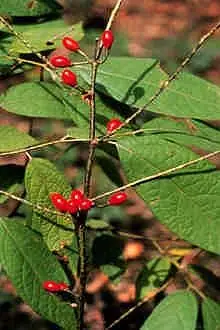
In early spring, small pale yellow flowers open in clusters along the branches before the flush of new growth, modest to the eye but sweetly spicy and welcome to the season's first bees. On a female plant with a male nearby, the flowers give way to small red fruit later in the year, glowing against the deep green, elliptical, glossy leaves. The foliage holds through winter with a polished richness, and the whole shrub carries the warm spicebush fragrance that makes the genus such a pleasure to brush past.
Give Lindera akoensis a sunny or lightly shaded border and moist, well-drained soil, and the shrub settles into a dense evergreen of eight to ten feet, useful as a screen, an anchor at the woodland edge, or a quiet evergreen backbone among deciduous companions. Plants like this one are the whole point of : the chance for a keen gardener to grow something rare and little known, seldom found through the usual sources, and to help keep an uncommon plant in cultivation.
More to discover



Questions & discussion