

The Seedsun selection
Nageia nagi
SKU: NAGE-NAGI-01G
There is something almost meditative about Nageia nagi. Named from the Japanese word nagi, meaning both calm and to mow down one's troubles, this ancient conifer carries a quiet gravitas few trees can match. At the Nyakuoji Shrine in Kyoto a sacred nagi tree has stood for centuries, believed to cut.
Ask for a tailored quote
Pricing, pack sizes and availability are confirmed in your personal quotation. Sending an enquiry does not place a paid order.
Ask about suitability, sowing and growing requirements.
Confirm delivery options and required documents in your quote.
About this variety
There is something almost meditative about Nageia nagi. Named from the Japanese word nagi, meaning both calm and to mow down one's troubles, this ancient conifer carries a quiet gravitas few trees can match. At the Nyakuoji Shrine in Kyoto a sacred nagi tree has stood for centuries, believed to cut through hardship and leave peace in its wake, and sprigs of nagi have long passed between lovers as a token of steadfast devotion, the leaves too tough and resilient to tear easily, a metaphor that has endured for a thousand years.
What makes Nageia nagi so compelling to collectors and plantspeople is how thoroughly the tree defies expectation. This is a conifer, a relative of the podocarps, and yet nothing about the foliage announces as much. The leaves are oddly monocot-like, broad and glossy with parallel veins and no midrib, more reminiscent of a tropical Dracaena than anything in the pine family. That botanical strangeness is part of the charm, and the reason the tree stops knowledgeable gardeners cold.
Native to China and Japan, the nagi has been cultivated for centuries in gardens, on temple grounds, and as a subject for bonsai, a measure of both adaptability and the deep aesthetic regard the tree commands in East Asian horticulture. In Western gardens the species remains genuinely uncommon, which makes finding a plant all the more satisfying.
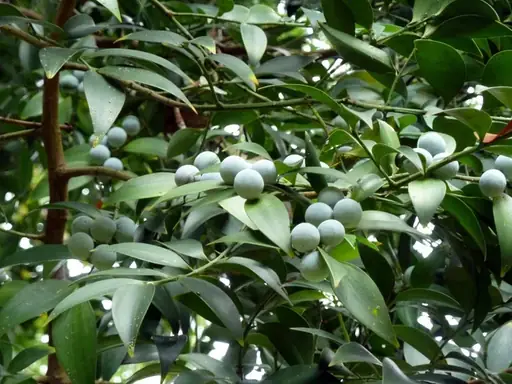
In the garden the nagi makes a slow, dense, columnar to pyramidal evergreen, handsome as a specimen, a screen, or a courtyard tree where the unusual glossy foliage and the green-to-reddish stems can be read at close range. The cut branches last remarkably well and are prized in floral work. Give full sun to part shade and well-drained soil, shelter from hard freezes at the cold edge of the range, and the patience a slow, long-lived tree deserves; on a female plant, small plum-bloomed fruit ripen blue to black in fall.
More to discover



Questions & discussion