

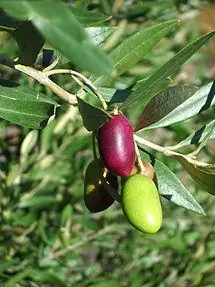
The Seedsun selection
Olea europaea 'Lucques'
SKU: OLEA-EURO-LUCQ-01G
The olive is an evergreen Mediterranean small tree or large shrub with grey-green leathery leaves and small, fragrant white flowers in axillary racemes in late summer. Fruit produced in dry climates is the source of commercial olives and olive oil. While the species is generally winter hardy in the.
Ask for a tailored quote
Pricing, pack sizes and availability are confirmed in your personal quotation. Sending an enquiry does not place a paid order.
Ask about suitability, sowing and growing requirements.
Confirm delivery options and required documents in your quote.
About this variety
The olive is an evergreen Mediterranean small tree or large shrub with grey-green leathery leaves and small, fragrant white flowers in axillary racemes in late summer. Fruit produced in dry climates is the source of commercial olives and olive oil. While the species is generally winter hardy in the warmer parts of the southeastern United States, the olive has not been a dependable fruit producer in our humid climate, and has never been readily available in the South. There is now a substantial commercial grove in south Georgia, so perhaps a suitable variety has been found; the question is more open than it was twenty years ago.
'Lucques' is an old variety from the south of France that is highly favored in some circles, and the circles in question are worth describing. This is the green table olive of Languedoc, grown in the Aude and the Hérault and protected there by an AOP since 2017. The fruit is long, slender, and distinctly crescent-shaped with a pointed tip, and stays bright green through curing rather than dulling. The flesh is fine and firm without being crunchy, comes away cleanly from the pit, and carries a light, sweet, nutty flavor that French tasters describe in terms of avocado and hazelnut. Every autumn the cured Lucques crop is genuinely awaited. The name points at Lucca in Italy, where tradition says the variety originated before finding a permanent home across the border.
The olive has been a garden and orchard plant for so long that the botany is almost beside the point, but a few things are worth knowing. Olea is simply the Latin for olive, from the same root that gave us oil itself; the tree belongs to the Oleaceae alongside ash, lilac, jasmine, and osmanthus, which explains the small fragrant flowers rather better than the fruit does. Old trees become gnarled and hollow-trunked and go on producing for centuries.
We propagated this variety originally from a tree at what was then Armstrong Atlantic State University in Savannah, Georgia, and the cuttings behind this batch came off the Armstrong campus again in August 2026, two generations of the same Savannah tree. Plant in deep, well-drained, fertile soil in full sun, with sharp drainage as the non-negotiable requirement; olives tolerate poor and rocky ground far better than wet ground. Water through establishment and then sparingly. Prune in late winter to open the canopy. One honest caution: grow this tree in the Southeast for the silver evergreen structure and the history, and treat any fruit as a bonus rather than a plan.
More to discover



Questions & discussion