

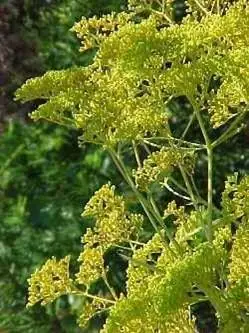
The Seedsun selection
Patrinia scabiosifolia 'Nagoya'
SKU: PATR-SCAB-NAGO-01G
Patrinia scabiosifolia 'Nagoya' is a tough, upright perennial from the meadows and grassy hills of East Asia, grown for airy, flat-topped heads of tiny golden-yellow flowers held high on wiry, branching stems. The species name scabiosifolia points to the deeply lobed basal leaves, which recall.
Ask for a tailored quote
Pricing, pack sizes and availability are confirmed in your personal quotation. Sending an enquiry does not place a paid order.
Ask about suitability, sowing and growing requirements.
Confirm delivery options and required documents in your quote.
About this variety
Patrinia scabiosifolia 'Nagoya' is a tough, upright perennial from the meadows and grassy hills of East Asia, grown for airy, flat-topped heads of tiny golden-yellow flowers held high on wiry, branching stems. The species name scabiosifolia points to the deeply lobed basal leaves, which recall those of a scabious, and the whole plant reads as a chartreuse-gold answer to Queen Anne's lace, lending height and a see-through veil to a summer border. In Japan the species is one of the classic seven flowers of autumn, and 'Nagoya' is a garden selection prized for reliable, compact performance.
From midsummer into early fall the flat umbels float above a low rosette of coarse, mid-green foliage, giving a light, vertical presence that never flops or fades. The clean, architectural form and clear yellow read beautifully against ornamental grasses, coneflowers, and the blues and purples of late perennials, and the cut stems last well in the vase. Up close the flowers carry a faint, honeyed scent.
Long before the plant reached Western borders, Patrinia scabiosifolia was a staple of traditional Chinese medicine, known as bai jiang cao, or Herba Patriniae, and used for well over a thousand years to clear heat, drain pus, and move blood stasis. The dried root carries a distinctive fermented, soy-sauce-like odor that gives the herb its Chinese name, and modern laboratories have taken an interest in the iridoids and triterpenoids behind that long tradition.
In the garden 'Nagoya' asks for full sun and well-drained soil and thrives on the hot, open, lean sites where softer perennials struggle. Set the plant in the middle or back of a sunny border, a cutting garden, or a prairie-style planting, give room for the see-through stems to rise, and pair with grasses and other sun-lovers. Deadhead to prolong bloom or leave a few heads to self-sow, and cut the plant to the ground in late fall or early spring.
More to discover



Questions & discussion