

The Seedsun selection
Pithecoctenium cynanchoides
SKU: PITH-CYNA-01G
Pithecoctenium cynanchoides, the monkey's comb, is a vigorous, tendril-climbing vine of the trumpet-creeper family, Bignoniaceae, native to the warm woodlands and thickets of South America. Semi-evergreen in mild climates, the vine climbs by many-branched tendrils and clothes a support quickly in.
Ask for a tailored quote
Pricing, pack sizes and availability are confirmed in your personal quotation. Sending an enquiry does not place a paid order.
Ask about suitability, sowing and growing requirements.
Confirm delivery options and required documents in your quote.
About this variety
Pithecoctenium cynanchoides, the monkey's comb, is a vigorous, tendril-climbing vine of the trumpet-creeper family, Bignoniaceae, native to the warm woodlands and thickets of South America. Semi-evergreen in mild climates, the vine climbs by many-branched tendrils and clothes a support quickly in heart-shaped, three-parted leaves, the terminal leaflet often turned into a grasping tendril of its own.
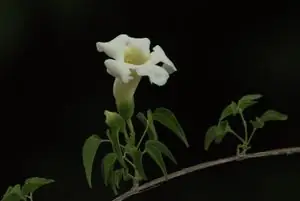
Through the warm season the vine carries showy, tubular flowers, creamy white with a soft yellow throat, held in short terminal clusters and drawing pollinators. The bloom is handsome, but the real curiosity comes after: a thick, woody, flattened capsule covered in dense bristles, so like a stiff comb or hairbrush that the plant earned the name monkey's comb, and dries to a striking oddity that splits to release papery winged seeds.
Give Pithecoctenium cynanchoides a sturdy trellis, arbor, pergola, or fence in full sun to part shade and well-drained, fertile soil, and room for a fast, twenty-foot climber to run. Water through dry spells while establishing, then let the vine take the heat in stride, and prune after flowering to keep the growth in bounds and spur the next season's bloom.
Site the monkey's comb where both the flowers and the extraordinary combed fruit can be met at close range, on a warm wall, a garden structure, or a fence along a path, and treat the plant as a conversation piece as much as a flowering vine. At the cold edge of the range, grow in a large container that can shelter through hard freezes.
More to discover



Questions & discussion