

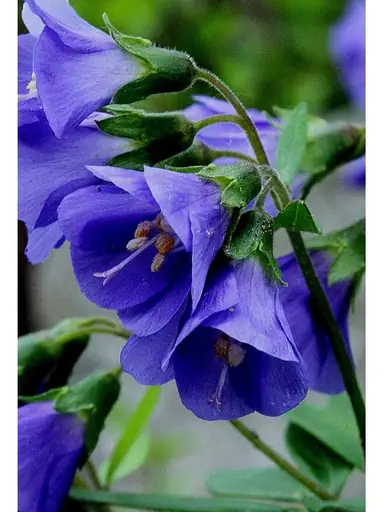
The Seedsun selection
Polemonium reptans
SKU: POLE-REPT-01Q
A spring-blooming native of the eastern woodlands, found from Ontario and Quebec south through the Appalachians and as far west as Minnesota and Oklahoma, growing on rich deciduous forest floors, along streambanks, and at the bases of sandstone canyons. Polemonium reptans is one of those native.
Ask for a tailored quote
Pricing, pack sizes and availability are confirmed in your personal quotation. Sending an enquiry does not place a paid order.
Ask about suitability, sowing and growing requirements.
Confirm delivery options and required documents in your quote.
About this variety
A spring-blooming native of the eastern woodlands, found from Ontario and Quebec south through the Appalachians and as far west as Minnesota and Oklahoma, growing on rich deciduous forest floors, along streambanks, and at the bases of sandstone canyons. Polemonium reptans is one of those native plants that rewards close attention. The leaves are pinnately compound, with seven to twenty-one paired leaflets running up each stem like the rungs of a ladder, the source of the common name, which gestures all the way back to the biblical Jacob and his dream of a stairway to heaven. The genus name is older still: Polemonium honors King Polemon of Pontus, an ancient Greek ruler with a side interest in herbalism.
In April and May the foliage is crowned with loose branched clusters of small bell-shaped flowers in pale sky blue to soft lavender, occasionally pink, five-petaled, quietly fragrant, with prominent yellow-tipped stamens. The flowers float just above the leaves on slender stems, so the whole plant reads more like a textural drift than a single specimen. After bloom, the foliage stays green and clean through the summer, unusual among spring ephemerals, most of which disappear entirely by June, which makes Polemonium a more useful design plant than the trillium-and-bluebell crowd it shares a season with.
The plant carries real ecological weight. The species is the sole food source for Andrena polemonii, a specialist native bee that visits no other genus, and a host for the meadow rue borer moth. The early bloom catches pollinators emerging into a season when late frosts can kill the tree blossoms above. In a full list of native woodland perennials, this one is a working part of an eastern forest understory rather than a token piece.
Plant in dappled to part shade in rich, moist, humus-rich soil. Creeping Jacob's ladder spreads slowly by short rhizomes and by self-seeding, building a loose drift over a few seasons rather than colonizing aggressively. Pair with Virginia bluebells (Mertensia virginica), foamflower (Tiarella), wild geranium, trillium, jack-in-the-pulpit, or the smaller native ferns for a layered spring scene. The plant goes dormant under drought stress and returns when conditions cool.
From Spring 2026: welcome to the catalog.
More to discover



Questions & discussion