

The Seedsun selection
Polygonatum commutatum
SKU: POLY-COMM-01G
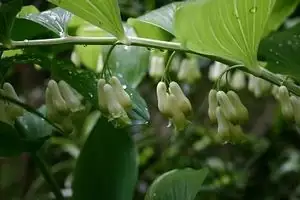
Polygonatum commutatum, the great or giant Solomon's seal, is a bold native perennial of the eastern North American woodlands, sending up tall, unbranched, gracefully arching stems clad in broad, oval, alternate leaves. From the leaf axils along the underside of each stem hang small, creamy-white,.
Ask for a tailored quote
Pricing, pack sizes and availability are confirmed in your personal quotation. Sending an enquiry does not place a paid order.
Ask about suitability, sowing and growing requirements.
Confirm delivery options and required documents in your quote.
About this variety
Polygonatum commutatum, the great or giant Solomon's seal, is a bold native perennial of the eastern North American woodlands, sending up tall, unbranched, gracefully arching stems clad in broad, oval, alternate leaves. From the leaf axils along the underside of each stem hang small, creamy-white, bell-shaped flowers, usually in pairs, in late spring and early summer.
The flowers give way to small dark blue-black berries in late summer, and the clean foliage holds through the season before turning a soft gold in fall. The largest of the native Solomon's seals, this species can rise several feet, arching over lower woodland plants and lending strong horizontal line and structure to a shaded planting.
The name Solomon's seal is old, said to come from the round, seal-like scars left on the rhizome where each year's stem breaks away, or from a long tradition of using the root to seal wounds. Native American and European herbalists alike valued that rhizome, poulticing it for bruises and joint injuries and taking it as a tonic, a use taken up again by modern herbalists.
Grow great Solomon's seal in the dappled shade of a woodland garden, a shaded border, or a forest-edge planting, in rich, moist, well-drained, humus-rich soil. The plant spreads slowly by rhizome into handsome colonies, pairs beautifully with ferns, hostas, wild ginger, and other shade companions, and is largely passed over by deer. The blue-black berries are toxic if eaten, so site away from where small children graze.
More to discover



Questions & discussion