

The Seedsun selection
Punica granatum ‘Eight Ball’
SKU: PUNI-GRAN-EIGH-BALL-01G
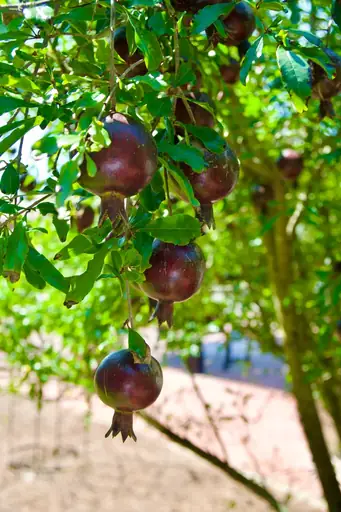
There are pomegranates grown for fruit, and pomegranates grown for flowers, and then there is 'Eight Ball', grown for sheer astonishment. Where the species bears globes the color of garnets, Punica granatum 'Eight Ball' ripens fruit so dark, round, and dusky that the pomegranates look dipped in.
Ask for a tailored quote
Pricing, pack sizes and availability are confirmed in your personal quotation. Sending an enquiry does not place a paid order.
Ask about suitability, sowing and growing requirements.
Confirm delivery options and required documents in your quote.
About this variety
There are pomegranates grown for fruit, and pomegranates grown for flowers, and then there is 'Eight Ball', grown for sheer astonishment. Where the species bears globes the color of garnets, Punica granatum 'Eight Ball' ripens fruit so dark, round, and dusky that the pomegranates look dipped in coal, closer to the ball the cultivar is named for than to anything in the produce aisle. The color runs bone-deep: the fruit is so loaded with anthocyanin pigment that even the cambium beneath the bark shows purple.
'Eight Ball' is a modern American introduction with a good story behind the strangeness. The plant is a seedling selected in 1986 by plantsman Tony Avent from a batch of pomegranates that had come through the brutal winter of 1983 to 1984, when temperatures fell to nine below zero, with little damage. Avent introduced the selection through Plant Delights Nursery and Juniper Level Botanic Garden in 1997, choosing 'Eight Ball' for cold-hardiness, productivity, and above all those improbable near-black fruits, each about two and a half inches across.
Behind the novelty stands one of the oldest cultivated plants on earth. The pomegranate has been grown across Persia, the Levant, and the Mediterranean since antiquity, the many-seeded fruit a byword for fertility and abundance from the myth of Persephone to the ornament of temple and textile, and the astringent rind long kept in the traditional apothecary. Even the botanical name reaches back: granatum, grainy or full of seeds, is the root of the word grenade, while Punica recalls Carthage and the Punic peoples through whom Rome first met the fruit. 'Eight Ball' carries all of that lineage and then takes the color somewhere the ancients never saw.
In the garden, treat 'Eight Ball' as both a conversation piece and a well-behaved fruiting shrub. The narrow, glossy leaves and flamboyant orange summer flowers give the plant ordinary pomegranate grace; the black fruit that follows is the surprise. Give full sun, sharp drainage, and room for a deciduous shrub of eight to ten feet, and site the plant where the fruit can be found and marveled at, near a path, an entry, or a collector's bed. The arils inside are fewer and paler than a dessert pomegranate and the fruit is modest on the tongue, so grow 'Eight Ball' for spectacle and for the story as much as the harvest. Drought-tolerant once established.
Additional photo courtesy of Juniper Level Botanic Garden.
More to discover



Questions & discussion