

The Seedsun selection
Pyrrosia lingua 'Kei Kan'
SKU: PYRR-LING-KEI-KAN-01G
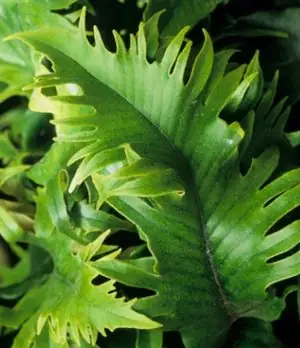
Pyrrosia lingua 'Kei Kan' is a fern for people who think they do not like ferns. Nothing here is lacy or feathery. The fronds are thick, leathery, and strap-shaped, and in this selection the tips fork and crest into ragged, comb-like divisions, the feature that earns the Japanese name Kei Kan,.
Ask for a tailored quote
Pricing, pack sizes and availability are confirmed in your personal quotation. Sending an enquiry does not place a paid order.
Ask about suitability, sowing and growing requirements.
Confirm delivery options and required documents in your quote.
About this variety
Pyrrosia lingua 'Kei Kan' is a fern for people who think they do not like ferns. Nothing here is lacy or feathery. The fronds are thick, leathery, and strap-shaped, and in this selection the tips fork and crest into ragged, comb-like divisions, the feature that earns the Japanese name Kei Kan, meaning cockscomb. The overall effect is closer to a piece of green leather sculpture than to the soft filigree most people picture when they hear the word fern.
The tongue ferns are East Asian plants, native across Japan, Korea, and China, where the species grows not in the ground but clinging to rocks and tree trunks as an epiphyte and lithophyte. That habit shows in the build: the fronds are thick and drought-resistant, and the undersides are covered in a fine, silky, rust-brown felt of star-shaped hairs, an ornamental detail in itself and a clever adaptation for holding moisture in an exposed perch. New fronds unfurl a lighter green before hardening to deep, glossy evergreen.
Behind the ornament lies a long medicinal history. In traditional Chinese medicine the dried leaves of Pyrrosia, this species among them, are the herb shi wei, literally stone leaf, gathered for centuries and classed as bitter, sweet, and slightly cold. Herbalists reached for shi wei above all for the urinary tract, and also for coughs and bleeding, and modern laboratories have since taken an interest in the flavonoids the leaves contain. 'Kei Kan' is grown as an ornamental rather than a remedy, but the plant carries that heritage in the leaf.
In the garden, treat 'Kei Kan' as a slow, sculptural evergreen for shade: a shaded rock garden or crevice, the foot of a north wall, a woodland trough, a terrarium, or a container of free-draining, bark-rich mix that echoes the epiphytic roots. Give part to full shade, steady moisture without waterlogging, and shelter from harsh sun and drying wind, and set the plant where the crested fronds and felted undersides can be studied at close range. Pair with mosses, small hostas, and other fine shade companions, and let the leathery texture play against softer foliage. Deer leave the tough fronds alone.
More to discover



Questions & discussion